




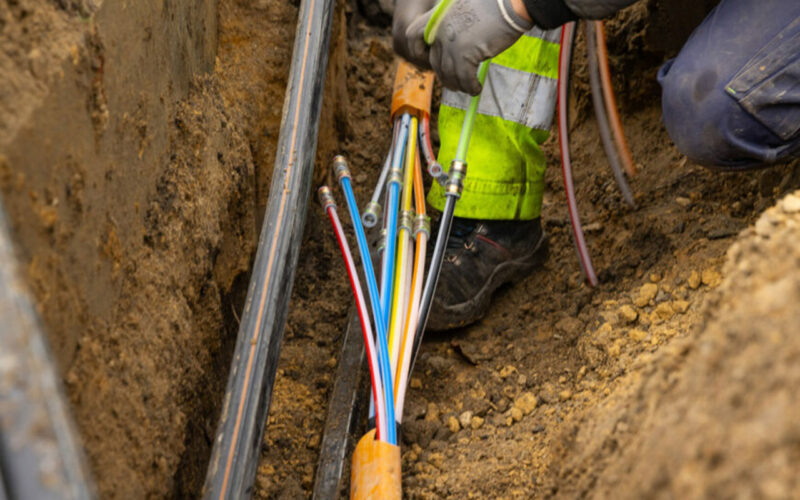
Nigeria’s telecom industry recorded more than 150,000 fibre cut incidents between April and May 2026, the highest figure ever logged in a two month stretch, as vandalism, equipment theft and road construction continued to erode network quality across the country.
Data from the Nigerian Communications Commission’s quality of experience update shows that operators suffered 74,276 fibre cuts in April. The number climbed by 6.5 percent to 79,121 in May, pushing the combined total to 155,397 cuts across both months. For millions of subscribers already frustrated by dropped calls and failed transactions, the figures confirm what many have been experiencing on the ground: a network under sustained assault.
Vandalism remains the single biggest driver of the crisis, accounting for more than 54,000 of the recorded cases. This persists despite the Critical National Information Infrastructure framework, which classifies telecom equipment as a national asset and prescribes up to ten years in prison, without an option of a fine, for anyone convicted of damaging it. The law has done little to slow the trend so far.
Degradation, largely tied to ageing infrastructure and environmental wear, accounted for over 40,000 incidents, while cable and converter faults triggered roughly 30,100 cuts. Road construction, often flagged by industry stakeholders as an avoidable cause, contributed 14,600 incidents. A smaller share, 3,161 cases, was attributed to force majeure, meaning circumstances beyond the control of operators or contractors.
To put the scale of the damage in context, the two month total represents a 2,428 percent jump compared to the first quarter of 2026, when operators recorded 5,934 fibre cuts, or roughly 500 a week. That earlier figure had already alarmed industry watchers. What played out in April and May shows just how quickly the situation can deteriorate.
Fibre cuts were not the only threat to network stability during the period. Telecom operators also reported 675 equipment theft incidents, spanning batteries, cables, diesel and generators. Diesel diversion from base stations was the most common form, with nearly 300 cases logged across the two months.
YOU MAY READ:NCC Claims Telecom Service Quality Is Improving
Access denial to base stations, which blocks technicians from carrying out repairs, maintenance checks and refuelling, also worsened. The Commission recorded 4,319 such cases, with 74 percent linked directly to insecurity in the affected areas. The remaining incidents stemmed from community disputes, often involving so called area boys, landlord disagreements, government actions tied to regulation, and force majeure.
For everyday users, the consequences are immediate and tangible. Every fibre cut severs the underground pathway that carries voice and data traffic, leaving subscribers unable to complete simple tasks like transferring money or loading a webpage. Businesses in commercial hubs such as Lagos are particularly exposed, with even brief outages capable of halting digital transactions and customer communication.
The broader picture remains sobering. Despite roughly 35,000 kilometres of fibre already laid across the country, only 16 percent of Nigerians currently have access to quality network coverage, a gap that recurring cuts and theft continue to widen.
Industry stakeholders have renewed calls for a Dig-Once policy that would see fibre ducts installed alongside road and rail construction, reducing the need for repeated digging in the same corridors. The proposal gained fresh momentum at a Lagos forum in April, where Huawei also unveiled a fibre sensing technology capable of detecting and locating cable damage in real time using an artificial intelligence powered algorithm. The NCC has since begun work on a national Dig-Once framework, including a transparent, cost based pricing structure to guide how operators and infrastructure companies share underground ducts going forward.
Whether these interventions can meaningfully slow the pace of destruction remains to be seen, but for now, Nigeria’s fibre network is being cut faster than it can be repaired.