


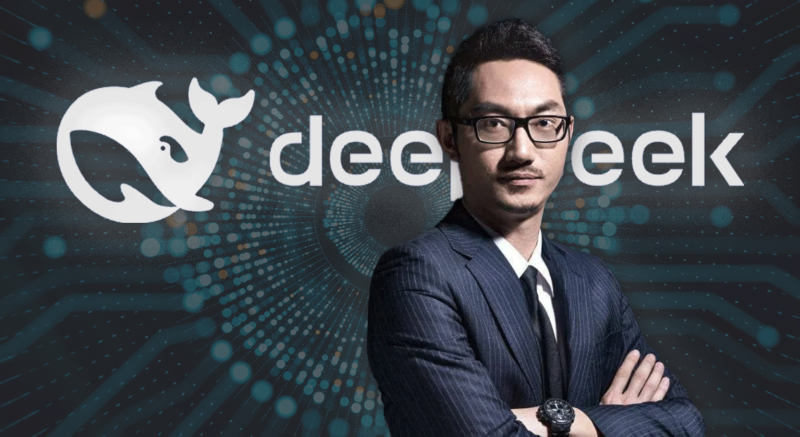
Liang Wenfeng, the reclusive founder of Chinese AI startup DeepSeek, has become the richest person among the world’s AI model builders, with his net worth jumping to $36 billion according to the Bloomberg Billionaires Index. The figure marks more than a doubling of his previous fortune of roughly $16.7 billion, and it now places him above Anthropic co-founder Dario Amodei and OpenAI president Greg Brockman, the two executives who had long anchored the top end of AI founder wealth.
The surge traces back to a single event. DeepSeek closed its first ever external fundraising round in June, pulling in more than $7.4 billion and pushing the company’s valuation from roughly $10 billion in April to about $50 billion, a nearly fivefold jump in just a few months. Bloomberg updated its calculation on July 13 to reflect the new numbers, and Liang reportedly gained close to $19 billion in net worth overnight as a result.
Notably, Liang did not simply watch outside money roll in. He personally contributed around $3 billion to the round himself, close to 40 percent of the total capital raised, funded by profits from High-Flyer, the quantitative hedge fund he co-founded in 2015. That personal investment diluted his ownership stake in DeepSeek, but only slightly, from an earlier estimate of about 84 percent down to roughly 78 percent. He still controls the overwhelming majority of the company he built.
The terms attached to the new investors are unusually restrictive by industry standards. Outside backers face a five year lock up period and receive zero voting rights, meaning Liang retains full strategic and operational control over DeepSeek’s direction, including its stated pursuit of artificial general intelligence. It is a structure that stands in sharp contrast to how most frontier AI companies in the United States have scaled, typically by giving up large blocks of equity to venture capital firms and big technology partners in exchange for growth capital and governance influence.
It is worth noting how the Bloomberg index arrives at this specific ranking. It only considers founders whose companies derive their primary business and revenue directly from AI models themselves, a boundary that deliberately excludes diversified technology conglomerates such as Alibaba and Tencent, as well as chipmakers and data center firms that sit elsewhere in the AI supply chain. Within that narrower lens, Liang now sits at the very top.
Liang was born in 1985 in Zhanjiang, a city in China’s Guangdong province, the son of an elementary school teacher. He studied electronic engineering at Zhejiang University before moving into quantitative finance, eventually co-founding High-Flyer in 2015. His team began buying Nvidia graphics processing units as early as 2019, well before most people outside the semiconductor industry were paying close attention, and those chips ultimately became the computing backbone that allowed DeepSeek to build competitive AI models without relying on venture capital. DeepSeek itself was spun out of High-Flyer’s internal AI research division in July 2023.
ALSO READ:Meta to Begin Manufacturing Its Own AI Chip ‘Iris’ in September
Liang’s global profile shifted dramatically in January 2025, when DeepSeek released its R1 model. The release wiped out roughly $600 billion from Nvidia’s market value alone and contributed to a broader single day selloff that erased close to $1 trillion from American technology stocks, as investors abruptly questioned whether frontier AI development really required the enormous spending that US labs had assumed. That moment turned Liang from a relatively obscure quant investor into a figure the global AI industry could no longer ignore.
The momentum has continued since. DeepSeek currently accounts for roughly 16.3 percent of all token volume on OpenRouter, reportedly more than any other single AI provider, including Google, Anthropic and OpenAI.
Its newest V4 series of models is priced far below what leading Western labs charge for comparable capability, a gap that has been pulling real enterprise workloads away from more established competitors even as rivals such as Alibaba’s Qwen and Moonshot’s Kimi have occasionally outperformed DeepSeek on individual benchmarks.
Some caution is warranted around the headline figure itself. Nobody has actually sold a share of DeepSeek on a public market at the implied $50 billion valuation, and the Bloomberg estimate rests on a private funding round priced by investors who accepted no governance rights in exchange for their capital.
Estimates of Liang’s fortune have varied wildly across different outlets in the past, a reflection of just how opaque and privately held the company remains. Still, by the measure that matters most to markets right now, Liang has overtaken the men running the two most prominent AI labs in the United States, even though DeepSeek itself remains worth only a fraction of what OpenAI and Anthropic are valued at.