




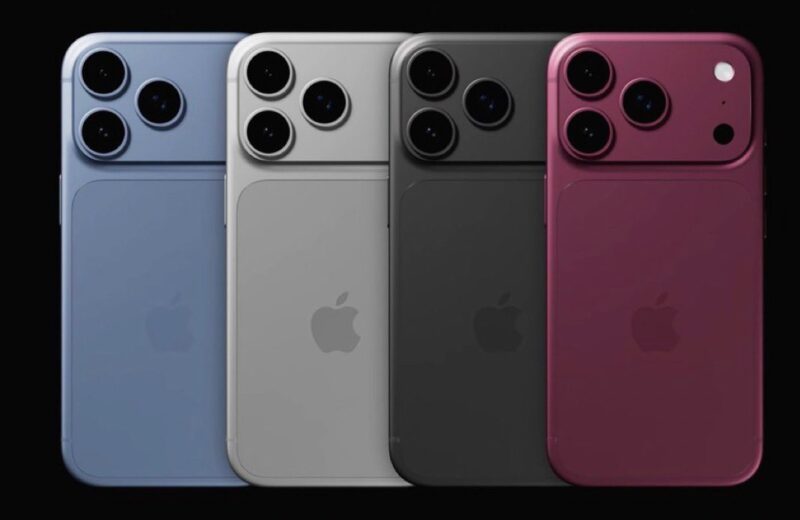
Smartphone upgrades have started to feel predictable in recent years. nothing exciting, just few tweaks from already existing ones, they promise Faster processors, slightly better cameras, thinner bezels but at the end, most yearly improvements have been incremental rather than transformative.
But early leaks surrounding Apple’s upcoming iPhone 18 Pro lineup suggest the company may be preparing a much bigger shift this time.
According to reports from internal builds, supply chain sources, and CAD leaks, Apple may be redesigning parts of the iPhone with AI in mind.
Instead of focusing mainly on appearance, the company seems to be paying more attention to things like performance, memory speed, heat control, and how different parts of the system work together.
The goal appears to be preparing the iPhone for more advanced AI features in iOS 27 that can run smoothly on the device itself.
SEE ALSO: Apple Gives Siri a Major AI Upgrade, coming with the iOS 27
If the speculations are accurate, the iPhone 18 Pro could represent one of Apple’s biggest hardware strategy changes in years.
According to reports, what Apple has planned for the iPhone 18 Pro Max are as follows
Split Launch
One of the more surprising rumors is that Apple could abandon its traditional four-model September launch strategy.
Several reports suggest the company may split the iPhone 18 lineup into two release windows:
- the premium iPhone 18 Pro models arriving first
- standard and lower-cost versions launching later in 2027
If that happens, Apple’s high-end devices would take center stage during the holiday season, while the more affordable models arrive months later.
The strategy would allow Apple to focus early production on its most advanced hardware, particularly devices capable of handling demanding on-device AI features.
It would also mark a major business shift for the company, which has traditionally launched the full lineup at the same time.
The A20 Pro Chip Could Be the Real Story
At the center of the leaks is Apple’s next-generation A20 Pro chip, which is expected to be built on TSMC’s upcoming 2nm manufacturing process.
While yearly chip upgrades are common, this transition could be more important than usual because of the growing demands of AI processing.
Early reports suggest the chip may deliver:
- improved performance
- lower power consumption
- better thermal efficiency
- faster memory access for AI-related tasks
Apple is also rumored to be testing new chip packaging methods that place memory closer to the processor itself. The goal is simple: reduce latency and improve how quickly the phone can process large AI workloads directly on the device.
That matters because Apple reportedly wants more AI features running locally instead of relying entirely on cloud servers.
This could help power things like:
- real-time voice processing
- advanced photo editing
- AI-assisted writing tools
- app automation
- contextual Siri features
without draining battery life as aggressively.
Introduction of True Pro Camera System
The camera system may also receive one of its biggest upgrades in years.
According to current leaks, Apple is testing a variable aperture lens for the main camera sensor — something more commonly associated with dedicated cameras than smartphones.
Unlike fixed smartphone lenses, a variable aperture system physically adjusts how much light enters the camera.
That could improve:
low-light photography
exposure control
background depth
cinematic video recording
For creators and mobile filmmakers, this may be especially important because it allows for more natural motion blur and better lighting control without relying heavily on software processing.
Reports also suggest Apple may slightly increase the thickness and weight of the Pro models to make room for:
- larger batteries
- improved cooling
- upgraded camera hardware
If true, it would signal a noticeable shift away from Apple’s long-standing obsession with ultra-thin designs.
iOS 27 May Become aware of your situation
The hardware changes appear closely connected to Apple’s AI plans for iOS 27.
Leaks suggest the company is working on a more dynamic interface that blends search, app actions, and AI assistance together more naturally.
One rumored feature is a universal “Search or Ask” system built directly into the interface. Instead of simply searching the web or opening apps, users could ask questions that pull information directly from apps, files, messages, and live activities across the device.
Apple is also reportedly simplifying some of its recent hardware experiments.
For example, the capacitive camera control gestures, introduced in earlier models may be replaced with more traditional physical controls after mixed feedback from users.
Meanwhile, reports claim Apple has managed to shrink the Dynamic Island further by moving more Face ID components beneath the display.
A fully invisible front camera system still appears to be years away, but Apple seems to be steadily moving in that direction.
Apple Continues Its Push Away From Qualcomm
(Qualcomm is a major tech company that designs the chips and wireless systems used in many smartphones)
Beyond AI and cameras, Apple is also expected to continue expanding its in-house hardware ecosystem.
The iPhone 18 Pro lineup is rumored to include Apple’s next custom modem, reducing the company’s reliance on Qualcomm for wireless connectivity.
This would give Apple tighter control over:
- power efficiency
- network optimization
- satellite communication features
- future connectivity systems
The company has spent years slowly bringing more hardware development in-house, and the modem appears to be the next major step in that strategy.
The Bigger Picture
What makes the iPhone 18 Pro rumors interesting is not just the hardware itself, but what the hardware seems designed to support.
For years, smartphone upgrades were largely about design refinements and camera improvements. But the rise of AI is changing what companies now expect phones to do.
Instead of simply launching apps faster or taking sharper photos, future smartphones may act more like intelligent systems that understand context, automate tasks, and assist users in real time.
That requires far more processing power, memory efficiency, and thermal management than previous generations of mobile software demanded.
If current reports are accurate, Apple appears to be preparing the iPhone for exactly that future.