




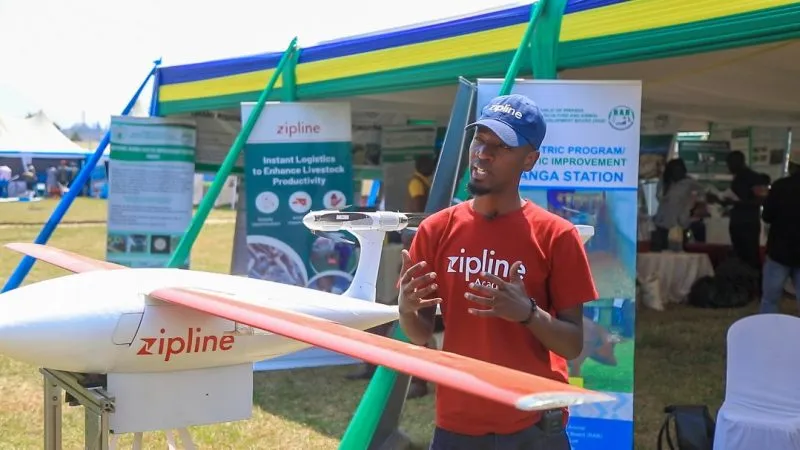
When drone delivery company Zipline first launched operations in Nigeria back in 2022, it seemed like just another ambitious health-tech pilot. Autonomous drones were quietly delivering vaccines and medical supplies across a small handful of underserved states, solving problems that hospitals and clinics had grappled with for decades. But what started as a three-state operation has evolved into something far more significant. Today, Zipline is making Nigeria its biggest African market and planning to build 12 new distribution hubs that could eventually reach nearly 100 million Nigerians by 2028.
This expansion marks a turning point not just for Zipline, but for how Africa approaches healthcare logistics at scale. Instead of continuing with isolated state-by-state pilots, the company is now pursuing a federal-scale framework that could fundamentally reshape how medical supplies flow to even the most remote communities in Africa’s most populous nation. The shift is significant enough that Zipline’s newly appointed Nigeria Country Director, Anthonio Pinheiro, sees it as emblematic of a broader evolution in the company’s philosophy.
Currently, Zipline operates in Kaduna, Cross River, and Bayelsa states, serving over 1,300 health facilities and about six million people. Those existing operations have already demonstrated measurable impact. According to the company, vaccine stockouts in supported areas have fallen significantly, and maternal mortality rates in supported facilities have dropped by more than fifty percent thanks in part to faster blood deliveries. One emergency case Pinheiro referenced involved anti-venom being delivered to a remote hospital within 47 minutes of an urgent request—a delivery that quite literally saved someone’s life.
The vision Pinheiro outlined during a recent interview reveals how transformative this expansion could become. By building 12 additional distribution centres, Zipline aims to serve up to 20,000 health facilities and provide access to healthcare commodities for nearly 100 million Nigerians. That’s roughly half the country’s population with access to fast, reliable medical supply delivery. For context, that’s moving from serving 1,300 facilities to serving 20,000. The scale is almost difficult to grasp, yet the company is approaching it with the kind of methodical, infrastructure-focused planning that has made Zipline successful in Rwanda and other markets.
What makes this expansion particularly noteworthy is that it represents a fundamental shift in how technology companies approach African markets. Instead of negotiating isolated deployments with individual states, Zipline is now pursuing a federal-scale framework that would allow states to integrate more seamlessly into a national autonomous delivery network, with support from Nigeria’s Federal Ministry of Health and the U.S. government. This kind of federal coordination hadn’t been possible before, but the success Zipline has already demonstrated is making it feasible now.
At its core, Zipline’s expansion addresses one of Nigeria’s most persistent healthcare challenges: unreliable medical supply chains. Across rural communities throughout the country, health facilities regularly run out of essential items,vaccines, blood supplies, anti-venom, malaria medication, maternal care products. The problem is particularly acute in rural areas. Research shows that over half of rural health facilities experience stockouts of contraceptives alone within a three-month period. Patients sometimes travel hours to reach a hospital only to discover the medicine they desperately need isn’t available. It’s a gap that has cost lives, damaged public health outcomes, and eroded trust in healthcare systems.
Zipline’s solution relies on centralized distribution hubs with cold storage capabilities and AI-powered inventory tracking. Instead of forcing individual hospitals to maintain costly storage facilities and large medical inventories, Zipline manages supplies centrally and delivers them on demand. If a hospital requests 20 vaccine doses and 25 patients show up, they can call Zipline, and the company can deliver the additional five within 30 to 45 minutes. There are no missed opportunities. No patients leaving empty-handed. No stockouts delaying critical care.
One of the most impressive aspects of Zipline’s Nigerian operations has been solving what most companies would consider an insurmountable challenge: operating reliably in an environment with an unreliable electricity grid. Zipline’s facilities in Kaduna and Cross River are now fully solar-powered, supported by backup energy redundancy systems. It’s a solution that extends beyond just keeping drones charged. By partnering with renewable energy providers, Zipline has eliminated the need for tens of thousands of litres of diesel consumption monthly at some sites, and the infrastructure also serves surrounding communities and healthcare centres, effectively turning Zipline hubs into mini energy ecosystems in rural areas.
This approach to infrastructure reveals something important about Zipline’s strategy. The company sees itself not primarily as a drone company, but as an AI and robotics infrastructure provider. Pinheiro emphasized this distinction during his interview, noting that while many people focus on the drones themselves, the real innovation lies in the autonomous systems and artificial intelligence underlying the entire operation. That perspective matters because it suggests future applications beyond healthcare, agriculture, animal health, and broader logistics could become part of the ecosystem once the core healthcare infrastructure matures.
The economics of Zipline’s model have also proven compelling to skeptics. Many people assume that drone operations would be prohibitively expensive in African markets, but Pinheiro argues the actual economics tell a different story. States reduce storage costs, reduce transportation costs, and get much more visibility into healthcare utilisation. By centralizing inventory management and leveraging autonomous delivery, governments can actually save money while improving service quality. It’s an efficiency argument that’s increasingly difficult to refute given Zipline’s track record.
The federal partnership supporting this expansion is also worth understanding. The U.S. State Department is covering upfront infrastructure costs, building out new Zipline hubs and manufacturing capacity,but the $150 million funding is only released when African governments sign expansion contracts and commit to paying for ongoing services. It’s an interesting model that blends foreign assistance with venture capital principles. This outcome-based funding approach has already generated interest from other African governments considering Zipline partnerships.
Nigeria’s regulatory environment represents another piece of the puzzle. Drone regulation remains one of the biggest barriers to scaling autonomous aviation across Africa, particularly given legitimate security concerns around unmanned aerial vehicles. As of May 2026, all drone operators in Nigeria must obtain an End-User Certificate before even approaching the Civil Aviation Authority for a permit. Yet Pinheiro emphasized that Nigeria’s regulatory posture has become increasingly collaborative. The government understands that protecting national airspace can actually work in parallel with enabling innovative healthcare solutions. Zipline works closely with aviation and government regulators to secure approvals, define operational corridors, and ensure compliance with airspace restrictions.
According to Pinheiro, Nigeria is approaching what he calls a “perfect intersection” of policy readiness, market demand, and technological maturity. The COVID-19 pandemic exposed how underserved remote communities remained despite urban healthcare improvements in Lagos and Abuja. That sobering reality, combined with Zipline’s proven operational model, creates an opening for the kind of scaled infrastructure deployment that would have seemed impossible just a few years ago. Nigeria is far more than its big cities, and tens of millions of people in riverine communities and hard-to-reach areas have been waiting for a solution that would let them access healthcare quickly and reliably.
What’s happening in Nigeria signals a broader shift in how technology infrastructure gets built across Africa. Rather than starting with commercial ventures chasing consumer markets, Zipline is building essential logistics infrastructure in partnership with governments, focusing on the fundamental problem of how to reliably move life-saving medical supplies to people who need them. It’s infrastructure that creates value for health systems, reduces costs, saves lives, and creates local jobs. Every Zipline hub is staffed by local workers, supporting long-term job growth in communities that need economic opportunity.
The expansion also demonstrates something important about African markets: they’re not “nice-to-have” opportunities for tech companies, but increasingly essential markets where solutions can be developed at scale. At full scale, the partnership between Zipline and the U.S. government could triple the number of African hospitals and health facilities Zipline serves from 5,000 to 15,000 and provide up to 130 million people with instant access to blood and medications. For context, Zipline’s drones fly four to five times as many daily flights as Ethiopian Airlines, the continent’s largest commercial airline.
The coming years will be crucial for determining whether Zipline can execute on this ambitious Nigerian expansion. Building 12 new hubs while maintaining reliable operations across three existing states, securing ongoing federal coordination, navigating regulatory requirements, and training local teams at scale will all present challenges. But the company has already proven it can navigate these complexities. What’s changed is the scale of ambition and the institutional support making that ambition feasible.
For Nigeria specifically, the implications extend far beyond drone delivery. This expansion could serve as a blueprint for how African countries address persistent healthcare logistics challenges. If Zipline successfully reaches even half its target of 100 million Nigerians by 2028, it would represent one of the largest-scale deployments of autonomous delivery infrastructure anywhere in the world. More importantly, it would mean that hundreds of thousands of people in rural and remote areas would have access to blood, vaccines, and essential medicines when they need them most. In healthcare, that kind of access doesn’t just improve statistics on stockouts and maternal mortality—it saves lives and gives communities confidence that they can rely on their healthcare systems. That’s the real outcome Zipline is chasing in Nigeria.