




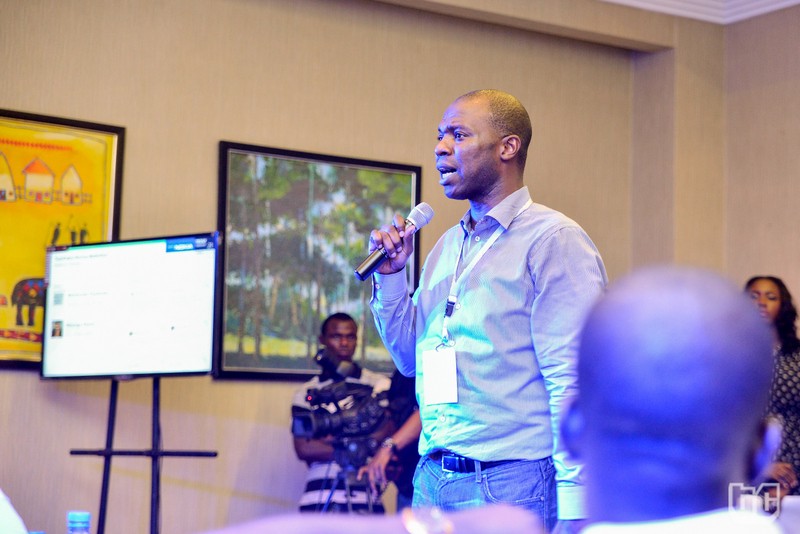
There are few names in Nigeria’s tech space that carry the weight of lived experience the way Sim Shagaya’s does. Over the course of nearly three decades, the entrepreneur born in Lagos in 1975 has built, scaled, sold, lost, and rebuilt again, a pattern that reads less like a career and more like a masterclass in resilience. With the recent launch of Myka, his insurance technology startup, the count of companies Shagaya has founded now stands at nine. Each one tells a different story about the market, the timing, and the man himself.
Shagaya’s entrepreneurial journey began long before Nigeria’s tech scene had a name for itself. As far back as 1997, he launched a pioneering wireless network in Nigeria that allowed users to send messages to pagers requesting real-time information such as stock prices and news headlines, a venture that represented an early attempt to leverage emerging mobile technology in a pre-GSM era. It did not survive, but the instinct it revealed about Shagaya would prove consistent over the decades that followed: he has always built before the market was ready, and sometimes just early enough to matter.
CHECK OUT ALSO: Tech Guru MKBHD Weighs In on Apple’s Latest Software, iOS 27 “Played It Safe”
His first Internet startup was in 2005, iNollywood.com, which sought to distribute Nigerian movies over the Internet. Though it did quite well with a few Nigerian classic titles, it failed largely because the timing was not right. Around the same period, he created Alarena.com, a dating site; Jobclan.com, a job site; and Gbogbo.com, a classified site. These projects went on to fail because they were all ahead of their time in Nigeria, where Internet penetration stood at roughly three percent in 2006. The ideas were not wrong. The infrastructure simply had not caught up.
In 2005, he founded E-Motion, a billboard advertising business in Lagos, which became the first company to actually give him the commercial footing he needed. It was through E-Motion’s board that Shagaya found backing for his next move. In March 2011, he established DealDey with support from the billboard company he owned, creating Nigeria’s version of the global daily deals wave that Groupon had popularized. DealDey grew quickly and was eventually acquired.
Then came the venture that would define him publicly. In 2011, there were just four million smartphone users in Nigeria and only 13.8% of the population had access to the Internet, but Shagaya saw the potential and began building what would become Konga. He returned to Swedish investment firm Kinnevik with a pitch in 2012 and secured $3.5 million to launch the platform. Konga became one of West Africa’s earliest major e-commerce companies, but Shagaya stepped down as CEO in 2016, and the company was sold to Zinox Technologies in 2018 following funding constraints during Nigeria’s economic downturn. The sale was painful, but it was not the end.
What followed was perhaps the most ambitious phase of his career. In 2019, he founded uLesson, an edtech platform built to deliver curriculum-aligned video lessons and interactive content to secondary school students across Africa. The platform raised a $3.1 million seed round from TLcom Capital, later closed a $7.5 million Series A, and went on to raise $22.5 million in 2021 alone, a figure that included a $15 million Series B backed by Tencent, Nielsen Ventures, Owl Ventures, and Founder Collective. It was the largest disclosed investment in an African edtech startup at the time.
In 2023, he established Miva Open University, Nigeria’s first fully licensed digital-first university. Miva’s landmark November 2025 matriculation of over 8,000 students was undeniable proof of concept, with the institution scaling to over 18,000 learners across 14 undergraduate and four postgraduate programs. The university’s model is built around bandwidth rather than buildings, and its AI learning companion MIND has become one of its most talked-about innovations.
In May 2026, Shagaya announced the launch of Myka, his newest venture in insurance technology, just weeks before announcing his transition from Group CEO to Executive Chairman of the uLesson Group. Myka operates as a licensed digital broker, aggregating products from up to 17 insurance underwriters including AIICO, Cornerstone, Coronation, Leadway, and Tangerine, allowing customers to compare policies across providers.
The startup is backed by Ventures Platform, TLcom, Paystack co-founder Shola Akinlade, LemFi founder Ridwan Olalere, and Voltron Capital’s Olumide Soyombo, in an undisclosed pre-seed round, and launches with products spanning motor, gadget, property, health, life, and travel insurance.
The thesis behind Myka follows the same logic that has driven every Shagaya venture. He has argued that the problem with insurance in Nigeria is not that Nigerians do not understand protection, but that the distribution of structured protection products has simply never reached most people.
It is the same argument he made about education with uLesson, about commerce with Konga, and about information access in 1997 with a pager network almost no one remembers.
Known in some circles as the Father of E-commerce in West Africa, Shagaya received the Entrepreneur of the Year award at the CNBC/All Africa Business Leaders Award in West Africa in 2013 and the Leadership CEO of the Year award in 2014.
In that same year, Forbes named him among the 10 Most Powerful Men in Africa. Those accolades arrived mid-career. The work has continued regardless.
What makes the Shagaya story significant for Nigeria’s tech ecosystem is not the volume of companies, but the pattern they reveal. He has never stayed inside a lane. From outdoor advertising to eCommerce, from edtech to higher education to insurance, each company was built in a market where the infrastructure was either just emerging or still missing entirely.
Some of those bets came too early and failed. Others came at exactly the right moment. With Myka, the question of timing is once again on the table, and if history is any guide, Shagaya has already thought harder about the answer than most people expect.