



WeLight, Africa’s largest solar mini-grid operator, has secured €27 million ($31 million) in fresh capital from the International Finance Corporation, the World Bank’s private-sector lending arm, signaling growing institutional confidence in distributed renewable energy as a solution to Africa’s energy poverty. The funding round also included the company’s founding shareholders: Axian Group, Sagemcom, and Norfund, the Norwegian development finance institution that co-founded WeLight in 2018.
The Paris-based company operates nearly 190 mini-grids across Madagascar and Mali, delivering electricity to more than 800,000 people in communities beyond the reach of national power grids. The new capital injection will accelerate WeLight’s geographic expansion and prepare the company for its next growth phase, with Nigeria and the Democratic Republic of Congo as primary targets. The company did not disclose a specific timeline for deploying its first mini-grids in either country, though Nigeria already has a major commitment in motion.
SEE ALSO:How M-KOPA’s Smartphone Repayment Model Is Unlocking Digital Lending in Africa
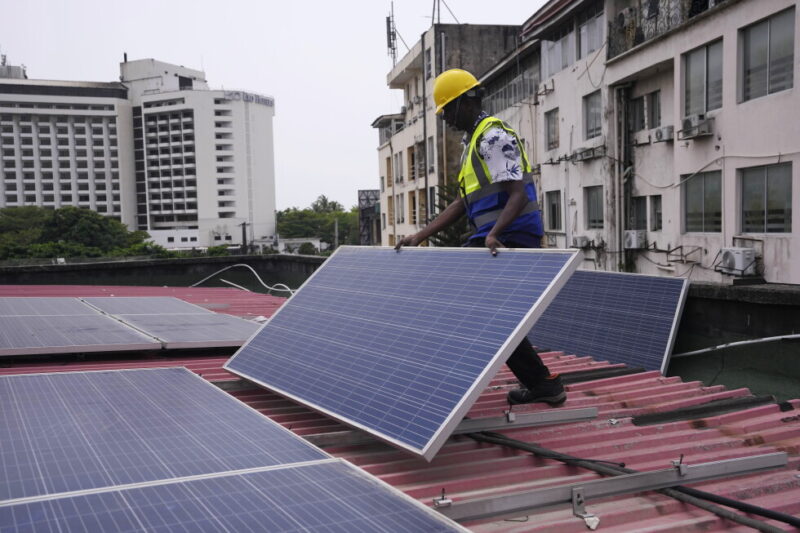
This investment underscores a broader shift in how development finance views off-grid electrification. Mini-grids, which generate and distribute electricity within a localized area independent of a national network, have emerged as a cost-effective solution for rural populations that traditional utilities have historically bypassed. Declining solar panel prices and improved battery storage technology have substantially improved the economics of the model, making it increasingly attractive to private investors who once viewed the sector as too thin on returns to warrant serious capital.
IFC’s entry into WeLight reflects a deliberate institutional strategy. The World Bank and African Development Bank jointly steer Mission 300, an ambitious program designed to mobilize tens of billions of dollars and connect 300 million Africans to electricity by the end of the decade. Distributed renewable energy, including mini-grids and household solar systems, is expected to deliver a substantial portion of that goal, positioning operators like WeLight as central to achieving this target. IFC has been systematically expanding its footprint in African energy access, pairing concessional and commercial capital to attract private investment at scale.
Nigeria remains the centerpiece of WeLight’s continental ambitions. In March 2025, the company signed a $200 million memorandum of understanding with Nigeria’s Rural Electrification Agency to deploy 400 mini-grids and 50 MetroGrids across rural and peri-urban communities by 2030. The initiative aims to deliver electricity to 1.5 to 2 million people and support Nigeria’s objective of increasing renewables’ share in its electricity mix from 22 percent to 50 percent. With the national grid generating only around 5,000 megawatts against estimated demand of 30,000 megawatts, energy poverty remains acute in rural areas where grid supply is either unreliable or completely absent.
The funding announcement positions WeLight to move beyond its existing operations in Madagascar and Mali into larger African markets. With IFC’s backing now secured, the company has both validation and financial firepower to pursue the ambitious Nigeria deployment while simultaneously entering the Democratic Republic of Congo, further consolidating its position as a pan-African energy leader. For Nigeria specifically, the partnership addresses a critical infrastructure gap while aligning with international development objectives centered on universal energy access.