


For nearly a decade, one South African executive quietly pocketed an average of R26,000 every single day, including weekends, public holidays and school terms, while running the company responsible for expanding one of the country’s most ambitious pushes to make private education more accessible.
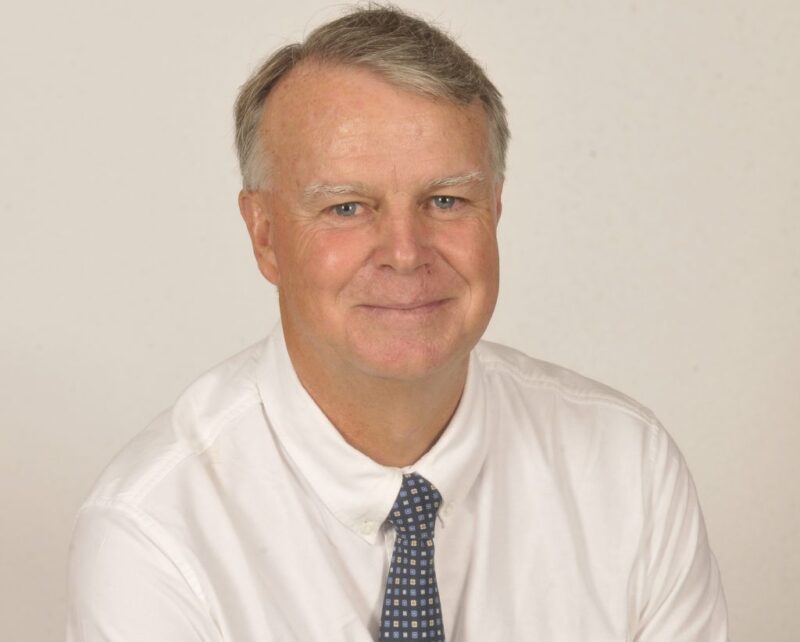
Roy Douglas, the former group chief executive of JSE listed ADvTECH, walked away from the role in early 2024 having earned a combined R86.5 million over his nine years at the helm. Spread across 365 days a year, that works out to roughly R26,300 a day, or close to R184,000 a week, for leading Africa’s largest private education group through a period of rapid expansion, a global pandemic, and an aggressive rollout of lower fee schooling options aimed at middle income families who had long been priced out of independent education.
Douglas didn’t start at the top. He joined ADvTECH in 2012 as chief operating officer of the group’s tertiary education division, working his way up before being appointed group CEO with effect from 27 November 2015. He officially stepped down at the end of February 2024, handing the reins to Geoff Whyte, a seasoned commercial executive with a background at Unilever, PepsiCo and SAB Miller.
During his tenure, ADvTECH grew from a mid sized education player into a continental force. The group now owns household name school brands such as Crawford International, Trinityhouse and Abbotts College, alongside its tertiary institutions Varsity College, Vega and Rosebank College, since consolidated under the new Emeris brand. But arguably Douglas’s most consequential legacy for ordinary South African families was the group’s deliberate pivot toward affordability. Under his leadership, ADvTECH expanded its Pinnacle Colleges network, a mid fee model designed to bridge the gap between expensive elite private schools and overcrowded, under resourced public schools, giving thousands of families a private education option without the six figure annual price tag charged by the country’s top boarding schools.
That strategy paid off. In ADvTECH’s final results under Douglas for the 2023 financial year, group revenue climbed 13% to R7.86 billion, while operating profit jumped 18% to R1.58 billion. The schools division alone grew revenue by 13% to R2.81 billion, with margins improving as enrolment surged. Students also delivered strong academic outcomes, posting a 99.7% pass rate in the Independent Examinations Board exams that year, with the majority qualifying for bachelor’s degree study.
Douglas’s tenure wasn’t without turbulence. He steered the company through the Covid 19 pandemic, during which more than 70,000 students had to be shifted almost overnight into online learning, a transition the board later credited him with managing smoothly. He also expanded ADvTECH’s footprint into Kenya and Botswana, markets that went on to post standout growth, with revenue in the group’s rest of Africa schools rising 14% and operating profit surging 43% in his final year alone.
ALSO SEE: South Africans Could Lose Inactive Prepaid Numbers After 90 Days
His pay, however, wasn’t static across those nine years. Early in his tenure his remuneration was far more modest, rising sharply in his final years as the group’s profitability accelerated. In his last full year as CEO, Douglas earned R22.36 million, equivalent to about R61,260 a day, making him the best paid chief executive among South Africa’s three JSE listed education groups, ahead of his counterparts at Curro and Stadio. That single year’s figure alone was more than double his career average, reflecting how heavily his later pay was weighted toward performance linked bonuses and long term incentives tied to ADvTECH’s share price and earnings growth.
The scale of Douglas’s earnings inevitably raises the familiar debate around executive pay in South Africa, a country where the gap between boardroom salaries and ordinary wages remains one of the widest in the world, and where the very families ADvTECH’s affordable schools are meant to serve are often stretched thin by the cost of living. Critics argue that even affordable private education remains out of reach for the average South African household, while supporters point to the tangible expansion in access, capacity and academic performance the group delivered under Douglas’s watch.
Either way, the numbers tell a striking story: a former teaching and recruitment executive who spent nine years building out a private education empire, expanding lower cost schooling options for South African families, and being paid, on average, more in a single day than many of those same families’ children pay in a year to attend one of his group’s schools.