

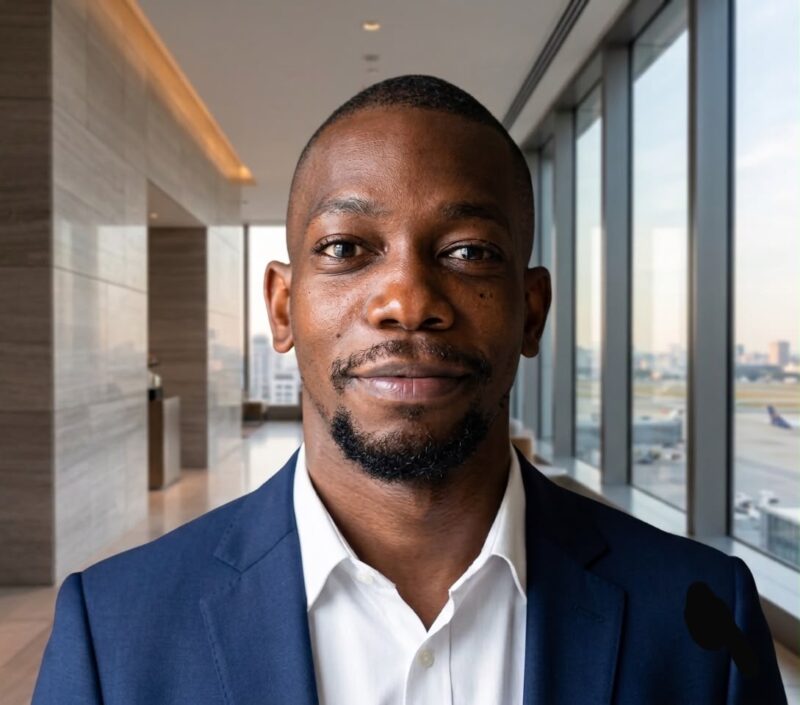
In 2013, John Robert was a 19 year old computer science undergraduate at the University of Ibadan in southwestern Nigeria, analyzing the trajectories of his country’s top corporate leaders. He noticed a defining common denominator, international exposure.
“The only way to do business in multiple countries, and have the knowledge to do so, is to actually leave my country, I thought, and to learn with people from other countries, to understand how they think,” Robert reflected.
Thirteen years after that realization, Robert is a permanent resident and citizen in Germany, working as a lead artificial intelligence engineer and educator. His journey from scraping pennies together from his student allowance to navigating Europe’s stringent immigration systems provides a contemporary blueprint for global mobility.
By his graduation in 2015, Robert’s ambition had crystallized into a specific target: a master’s degree in Data Analytics at Stiftung Universität in Hildesheim, northern Germany.
Long before Germany introduced flexible pathways like the Opportunity Card, international students faced a rigid, traditional immigration route. The most formidable barrier was the Sperrkonto (blocked account) a mandatory financial deposit proving a student could support themselves. In 2018, German authorities required roughly €8,000 ($9,400). Today, that requirement has risen to €11,904 ($13,600).
To clear this hurdle, Robert systemically managed his finances during his compulsory National Youth Service Corps (NYSC) year. Earning just ₦150,000 ($349) monthly at his software engineering job, he cohabited with a cousin to slash expenses, took on freelance projects, and secured parental backing.
“I’ve had this idea since my 200-level,” Robert said. “So it’s not something that I just woke up and said, ‘I want to study abroad.’ Every time I got money, anytime I had a gig, I was already saving for a long time.”
Simultaneously, he spent months cold-emailing faculty. “I wrote to a lot of professors and a lot of schools about scholarships, about their research, and about their courses,” he noted. The persistence paid off with an admission offer and funded account.
Landing in Germany in 2018 meant trading the familiar landscape of Nigeria for orderly streets and a language barrier. However, integration was swift. Within months, Robert secured a scholarship and a data science internship at Mercedes Benz.
His initial corporate salary of €1,600 ($1,888) instantly quadrupled his entry level earnings in Nigeria. Coupled with student tax exemptions and a scholarship, he was saving nearly €1,000 monthly. Yet, the real dividend was ecosystem access.
“In 2018, I was already curious about artificial intelligence,” Robert stated. “Everybody talks about AI now, but back then, I knew it was going to be big. I used to read a lot about it and pray. Now, things have changed.”
Robert’s Professional & Mobility Timeline:
[2013] Identifies the global mobility pattern as a student in Nigeria.
[2018] Relocates to Germany; secures Mercedes-Benz internship.
[2022] Achieves B1 German proficiency; obtains Permanent Residency.
[2024] Attains B2 proficiency; granted full German Citizenship.
Today, Robert is the Lead AI Engineer at Sunnic Lighthouse, a German digital trading platform for renewable energy. Armed with a German passport granting visa free travel to 186 countries he has visited nearly 50 nations as a tech speaker and researcher.
“I can imagine how difficult it is for founders without the same opportunities to apply for visas every time,” Robert said. “Today, I can go to those conferences. I can apply for opportunities.”
Language acquisition was vital to his long term integration. Robert systematically advanced to B1 level German, enabling him to transition from a student visa to a Settlement Permit Niederlassungserlaubnis in 2022. By 2024, after reaching B2 proficiency, he qualified for full citizenship under Germany’s naturalization laws. Despite the structural predictability, European integration brought nuanced social friction. “You are still seen as a second class person,” Robert observed. “It’s much more difficult to do business.”
“Now I have a house here. I’ve travelled to about 50 countries. I’m now a citizen. Quite a number of things I used to worry about before, I don’t worry about them anymore,” Robert reflected. “[In June], I was in Prague. If I wanted to do that before, it would have taken visa applications and planning. Now, I can decide to travel, attend a conference, or visit another country much more easily. Those are opportunities I didn’t have before.”
For current African professionals, the financial realities have grown steeper due to inflationary adjustments to blocked accounts and local currency devaluations. Nonetheless, Robert maintains that preparing “hard and long term” remains a viable bet.
As his ambitions shift toward building independent AI ventures, Robert is already eyeing his next move: the United States, via an employment based Green Card pathway continuing the borderless corporate trajectory he mapped out as a teenager.