




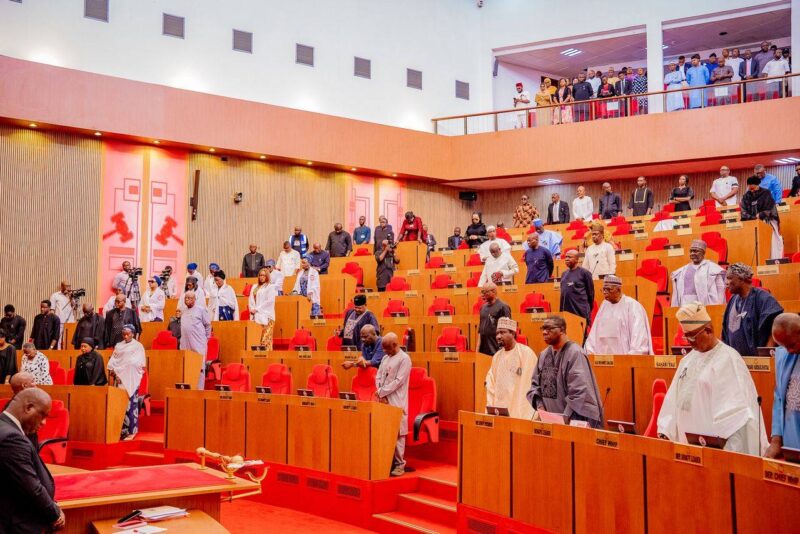
The Nigerian Senate has turned down a proposal that would have seen South African-owned companies operating in Nigeria, including telecom giant MTN and pay-TV service DStv, taken over by the government in response to the ongoing wave of xenophobic violence against Nigerians in South Africa. The rejection came during Tuesday’s plenary session, where lawmakers debated a motion addressing the persistent attacks, killings and destruction of property targeting Nigerians and other African nationals in South Africa.
The idea was pushed by Lagos Central Senator Wasiu Eshinlokun, who argued that South African businesses thriving in Nigeria should face consequences given what Nigerians have endured abroad. He proposed that the federal government nationalise these firms and channel the proceeds toward compensating victims of the attacks, many of whom have lost loved ones, homes and livelihoods. Eshinlokun didn’t hold back in his remarks, pointing out that South Africa had moved against Nigerians with no warning, no due process and no accountability, so it was only fair that South African businesses in Nigeria understand they could face similar treatment.
Edo North Senator Adams Oshiomhole backed the call, going a step further to propose that if the South African government continued to refuse compensating affected Nigerians, then Nigeria should seize the profits made by South African firms operating locally, including banks, and use that money to make victims whole. Oshiomhole referenced comments attributed to a South African minister suggesting compensation wouldn’t be paid, calling it unacceptable that Nigerian taxpayers might end up footing the bill while South African companies keep raking in profits here. Bauchi Central Senator Abdul Ningi also weighed in, pushing for Nigeria to take a firmer diplomatic stance, including possibly severing ties with South Africa altogether.
Despite the passionate arguments, the Senate wasn’t persuaded. Deputy Senate President Barau Jibrin, who presided over the session, pushed back on the nationalisation idea, insisting that the circumstances surrounding the attacks needed proper investigation before Nigeria took any drastic economic action. He urged the senators behind the proposal to step back and allow the Senate Committee on Foreign Affairs to look into the matter and report its findings within two weeks. Jibrin acknowledged the pain and anger driving the calls for retaliation but cautioned that Nigeria, as a leading voice on the continent, needed to act carefully rather than react emotionally.
The motion that triggered the debate was sponsored by Cross River South Senator Asuquo Ekpenyong, who condemned the attacks and called on the Ministry of Foreign Affairs to secure written guarantees from the South African government on the safety of Nigerians living there. He also pushed for the arrest and prosecution of those behind the violence, looting and unlawful immigration enforcement targeting foreigners. Beyond that, Ekpenyong wants the Nigerians in Diaspora Commission and the Nigerian High Commission in South Africa to ramp up emergency consular support and build a verified register of Nigerians who’ve suffered death, injury, displacement or loss of property, to make future compensation claims and legal redress easier to pursue.
This isn’t the first time the National Assembly has floated the idea of punishing South African businesses over the treatment of Nigerians abroad. Back in May, lawmakers had already resolved to send a joint delegation, led by Senate President Godswill Akpabio, to engage directly with South African authorities. That trip was meant to press South Africa’s government and parliament for a lasting resolution, but senators noted this week that little concrete progress has followed since. The renewed frustration in the chamber reflects a growing sense that diplomatic engagement alone hasn’t been enough to stop the killings and destruction, even as leadership remains wary of turning to economic retaliation without more evidence and a clearer strategy.
For now, the Senate’s position is that dialogue and formal investigation take priority over seizing South African assets, though the debate signals that patience among some lawmakers is wearing thin.