




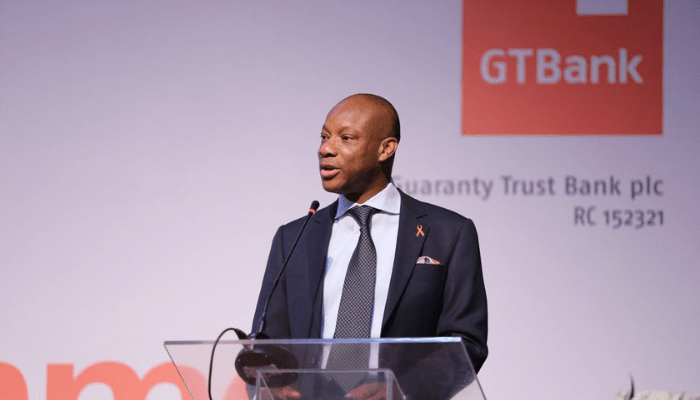
A viral video clip of GTCO Group CEO Segun Agbaje challenging Nigeria’s fintech companies to publish their financial results has resurfaced online, reigniting a conversation about transparency in the country’s digital payments sector, according to a report by TechNext24.
The remarks, first made in 2024, drew a sharp contrast between GTCO’s quarterly public disclosures as a listed company and the closed books kept by privately held fintechs that dominate Nigeria’s digital payments space without revealing whether they turn a profit.
Firms like OPay, now valued at four billion dollars ahead of a planned listing in the United States, and Moniepoint have pulled in billions of dollars in venture funding and built massive user bases, yet neither releases quarterly financial statements to the public. Their margins, profitability, and unit economics remain known only to their investors.
Part of why the clip keeps circulating is that GTCO’s fintech arm, HabariPay, has quietly backed up Agbaje’s confidence with numbers of its own. In the first half of 2025, the most recent period with publicly available figures, HabariPay posted a profit before tax of 4.02 billion naira, almost double the 2.07 billion naira it recorded over the same period in 2024, a growth rate of 95 percent year on year.
SEE ALSO: CBN Local Hosting Mandate Puts Nigeria’s Data Centres to the Ultimate Test
That momentum has carried into the rest of the year. HabariPay closed 2025 with a full year profit after tax of 9.7 billion naira, up 155 percent from the 3.8 billion naira it made in 2024, according to figures Agbaje shared separately at GTCO’s Annual General Meeting. Operating income more than doubled to 12.9 billion naira over the same period. Agbaje has credited that performance for what he describes as GTCO no longer being anxious about fintech competition, telling Nairametrics that the group built HabariPay as its own answer to the disruption fintechs once represented.
GTCO’s wider strategy has been deliberately narrow rather than expansive. Instead of chasing scale across dozens of markets the way many venture backed fintechs do, the group has chosen to concentrate on markets where it can generate sustainable returns, a philosophy Agbaje has repeatedly set against what he calls the growth at all costs model common among Nigeria’s fintech unicorns.
Still, the challenge Agbaje first issued in 2024 remains unanswered.
Neither OPay nor Moniepoint has moved to publish quarterly results, and both continue to operate with the same level of opacity that first drew his criticism.
The debate the resurfaced video has reopened, over what genuine profitability in Nigerian fintech looks like and which companies are actually willing to prove it, is far from settled.
HabariPay’s growing numbers arrive as GTCO pushes further into merchant payments, with plans to deploy 200,000 point of sale terminals nationwide in 2026 as banks race to claim a bigger share of a market fintechs built.
Whether that expansion forces more of Nigeria’s fintech giants to open their books remains to be seen, but for now, GTCO appears content to let its balance sheet do the talking.