



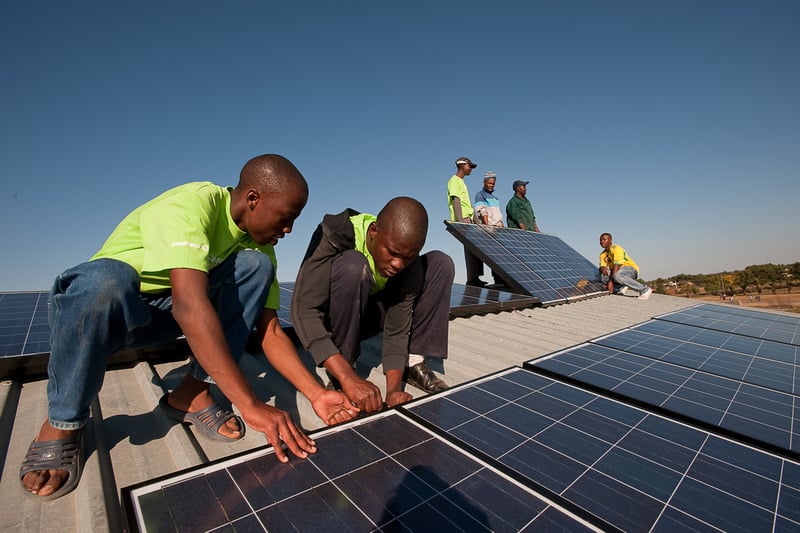
Solar energy now accounts for 20 percent of Nigeria’s total electricity generation capacity, and the figure could climb to 50 percent within the next two to three years if current momentum holds, according to the Rural Electrification Agency (REA).
REA Managing Director Abba Abubakar Aliyu disclosed this during a panel session at the 25th Nigerian Oil and Gas (NOG) Energy Week in Abuja. Speaking on a session titled “Re-Engineering Africa’s Power Market, Driving Reliable Energy Systems,” Aliyu said solar’s share of the national power mix has grown rapidly on the back of increased deployment and deeper collaboration with private investors. He noted that the pace of installation across the country is closing the gap toward the 50 percent mark faster than earlier projected.
Beyond domestic consumption, Aliyu said Nigeria is repositioning itself from a net importer of clean energy equipment to a regional exporter of renewable technology. He pointed to the Lagos to Sagamu industrial corridor, where local manufacturers are already producing solar photovoltaic panels for export to neighboring West African countries. According to him, about 3.7 gigawatts of PV manufacturing capacity is currently in the pipeline to support this expansion, with new factories springing up along the corridor.
CHECK OUT: Why a Miami-Based Startup Is Betting Big on Uganda’s Tech Ecosystem
Despite the optimism around solar, industry voices at the event cautioned that gas fired thermal plants will remain essential to grid stability for the foreseeable future. Vincent Ozoude, managing director and CEO of Transafam Power Limited, said gas is still needed to manage the intermittency that comes with renewable sources and to keep the national grid steady as more solar capacity comes online.
Panelists also called for the rollout of digitalised smart grid systems that allow real time power dispatch, along with the construction of additional high voltage transmission lines. Without stronger transmission infrastructure, they warned, newly generated electricity risks becoming stranded rather than reaching households and businesses that need it most.
The push comes against the backdrop of Nigeria’s long running power crisis, where the national grid has repeatedly collapsed and millions of households still lack reliable access to electricity. Combining expanded solar capacity with sustained gas support and improved transmission, panelists said, will be critical to converting rising generation figures into consistent supply for consumers across the country.
Nigeria has increasingly leaned on renewable energy as a pathway to closing its electricity access gap, with government backed programmes and private sector investment both playing a role in recent years. The latest projection from the REA suggests that solar could soon become one of the dominant pillars of the country’s energy mix rather than a supplementary source, marking a significant shift in how the country plans to power homes, businesses and industry in the years ahead.