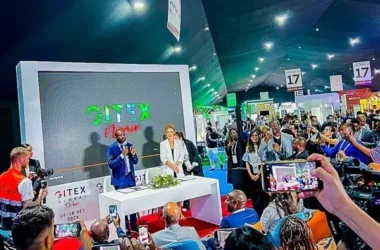




Emmanuel Lubanzadio, OpenAI’s Africa lead, said something that stopped many people in their tracks: “AI cannot benefit all of humanity if Africa is not included.” It sounds simple. But those words carry a truth that the global tech world has been slow to face.
Artificial intelligence is changing everything right now. How we work, learn, access healthcare, and grow businesses is being shaped by AI. Billions of dollars are flowing into this technology every year. But when you look at who is building these tools and who they are built for, Africa is largely left out. That is not a minor oversight. It is a serious problem.
Africa has over 1.4 billion people. It is the youngest continent on earth, with a median age of just 19 years. By 2050, one in four people on the planet will be African. That is not a small group to ignore. When AI tools are trained mostly on Western data and built for Western users, they do not just fail African people,they can actually hurt them.
A medical AI trained without African patient data will miss diseases common on the continent. A financial tool that does not understand mobile money like M-Pesa is useless to millions. A language model that barely recognizes Swahili, Yoruba, or Amharic is telling over a billion people that their voices do not matter. These are not small technical gaps. They are signs that Africa has been treated as an afterthought.
But Africa is not sitting around waiting. Across the continent, brilliant developers, researchers, and entrepreneurs are building real solutions to real problems. Tech hubs in Lagos, Nairobi, Accra, and Kigali are growing fast. The talent is there. The drive is there. What has been missing is proper investment and a genuine seat at the global table.
READ ALSO AI Agents: The Rise of AI Agents and the Shift Away From just chatbots
Closing this gap is not complicated. It starts with training AI on African data, supporting African researchers, building affordable internet infrastructure, and developing AI tools in African languages. Most importantly, it means working with African communities not just building for them from the outside.
AI is going to define the next hundred years. If it is built by a small slice of humanity, it will only serve that small slice ,and deepen the inequalities that already exist. But if Africa is truly included, the results could be extraordinary for everyone.
Lubanzadio said it best. You cannot call something a tool for all of humanity while leaving out one of its biggest, youngest, and most energetic parts. It is time to stop treating African inclusion as optional. It is the whole point.