




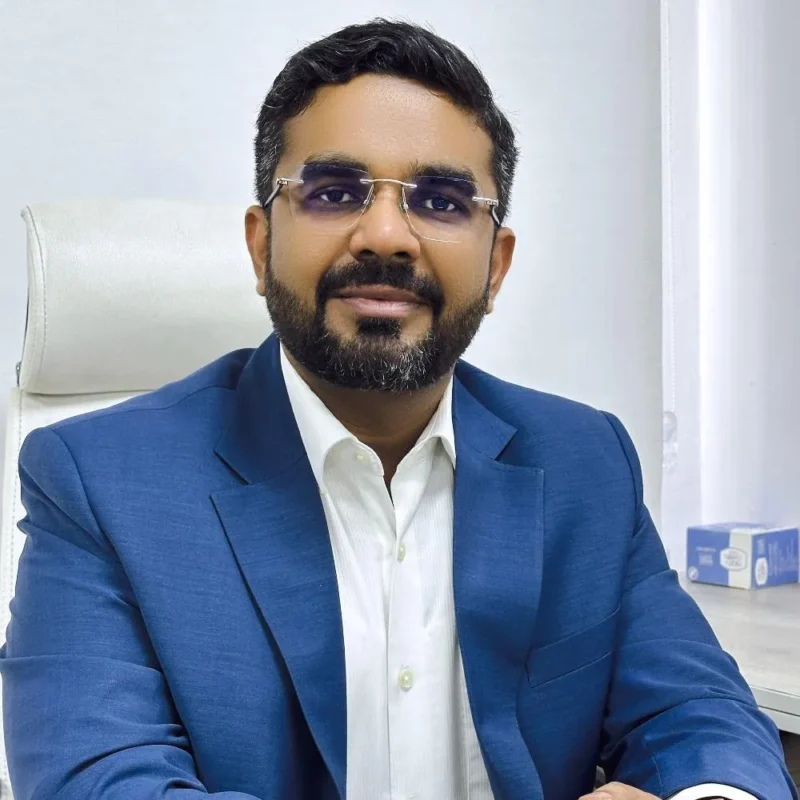
When Deepankar Rustagi started OmniRetail in 2019 with just $50,000, few would have imagined the company would reach a $120 million valuation within four years. Yet here’s the remarkable part: this isn’t a Silicon Valley fairy tale powered by hype and venture capital alone. This is a story of resilience, deep market understanding, and solving a problem that affects millions of informal retailers across Africa.
Rustagi’s journey to building Africa’s fastest-growing company (according to Financial Times in 2024) tells us something important about entrepreneurship in emerging markets. He didn’t come to Africa with a preconceived solution looking for a problem. Instead, he spent over two decades in Nigeria understanding how informal retail actually works before launching OmniRetail. His earlier venture, VConnect, which he started in 2011 as a local services marketplace, gave him invaluable insights into the African business landscape, insights that would prove crucial for his next venture.
The problem Rustagi identified was deceptively simple yet profoundly impactful: Africa’s 150,000-plus informal retailers, small shop owners, kiosk operators, and market traders were disconnected from efficient supply chains. They had no direct access to manufacturers, faced inconsistent inventory challenges, struggled with working capital, and had zero visibility into their own business metrics. Traditional distributors acted as expensive middlemen, inflating costs and reducing retailer margins. Meanwhile, manufacturers had no idea who actually bought their products once goods left the warehouse.
OmniRetail’s solution was elegantly straightforward. The platform digitizes the entire supply chain by connecting manufacturers directly to retailers through a mobile app, WhatsApp channel, and phone ordering system. What makes this approach genius is that it doesn’t try to remove distributors instead, it empowers them with better technology through its Mplify product, a distribution management solution. This philosophy reflects Rustagi’s understanding that sustainable solutions in Africa work with existing economic structures rather than against them.
The numbers tell the story. Between 2020 and 2023, OmniRetail’s revenue skyrocketed by over 71,000 percent, climbing from $280,000 to more than $120 million. By 2023, the company had processed over $810 million in transactions, serving 150,000 retailers connected to 5,800 distributors and 145 manufacturers across Nigeria, Ghana, and Ivory Coast. Just as impressive, OmniRetail reached profitability,a rare achievement in B2B e-commerce, becoming EBITDA positive in 2023 and achieving net profitability in 2024.
What sets OmniRetail apart from other African supply chain startups that have struggled or failed is its sustainable, profitable business model. The company uses an asset-light strategy, focusing on software and fintech solutions rather than owning warehouses or trucks. OmniPay, its embedded finance arm, integrates with 13 financial service providers to unlock credit access for underserved retailers,a game-changer in markets where formal banking remains inaccessible to informal traders.
Rustagi’s success offers lessons beyond Africa. It demonstrates that real entrepreneurial impact requires patience, local expertise, and the willingness to deeply understand your customers’ actual needs rather than imposing external solutions. His $50,000 bet didn’t just create shareholder value; it’s improving livelihoods for millions across West Africa by ensuring fair pricing, consistent access to goods, and faster inventory turnover for retailers.
In transforming Africa’s informal economy through technology, Deepankar Rustagi has become a model for how ambitious entrepreneurs can build billion-dollar companies while solving genuine problems in underserved markets.