




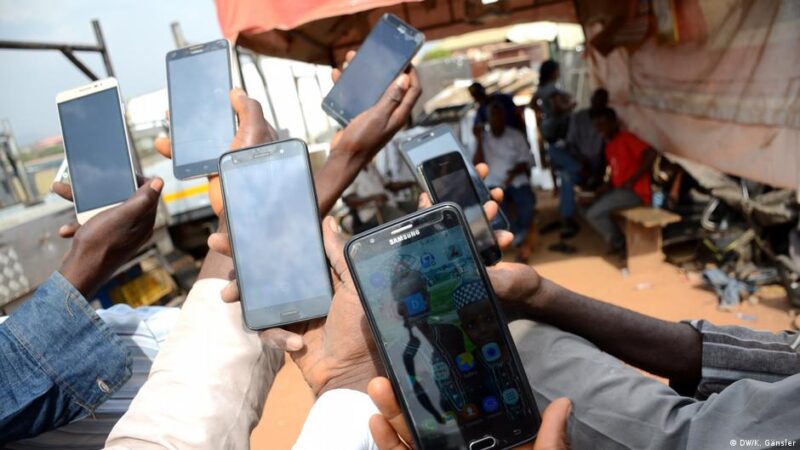
The numbers are in, and they’re telling a compelling story. While much of Africa’s tech market wrestled with challenging conditions during the opening quarter of 2026, Nigeria’s smartphone industry delivered a solid 8 percent year-over-year growth. For a market often scrutinized for its sensitivity to economic fluctuations, this performance stands out as a genuine achievement that speaks to deeper shifts in how Africans access digital connectivity.
What makes Nigeria’s trajectory particularly interesting isn’t just the growth itself, it’s what’s driving it. Throughout the first quarter, the real action happened in the sweet spot between $200 and $299. This price band emerged as the goldmine for smartphone vendors operating across the country, capturing outsized demand despite the economic pressures that continue to weigh on Nigerian households. The story here reveals something fundamental about the market: consumers aren’t simply buying phones anymore. They’re investing in their digital lives, prioritizing connectivity and capability even as inflation bites hard and data costs climb steadily.
The shift toward 4G and 5G adoption represents a watershed moment for Nigeria’s technology infrastructure. These aren’t luxury purchases in the traditional sense. Rather, they’re pragmatic decisions made by people who recognize that reliable internet connectivity has become essential. Whether it’s accessing financial services, running small businesses, staying informed, or simply maintaining relationships across distance, the infrastructure that enables these activities matters more than ever. The push into 4G is reaching saturation in many urban centers, but the real excitement lies in the emerging appetite for 5G capabilities,a technology that’s still finding its footing in Africa’s most populous nation.
ALSO READ:African Fintech Giant Moniepoint Announces ₦3 Billion University Innovation Hub Initiative
The vendor landscape tells its own story of competition and strategic positioning. TRANSSION, the parent company behind beloved budget brands like Tecno, Infinix, and itel, has maintained an iron grip on the market with a commanding 47 percent share. More impressively, the company managed 4 percent growth despite these already-dominant market positions, a feat that speaks to disciplined inventory management and an almost surgical understanding of what Nigerian consumers actually want to buy. The company’s flagship entry-level models,the Tecno Pop 10 and Spark 40C 4G, continue to resonate strongly, proving that sometimes the best-selling phones aren’t the ones with the flashiest marketing campaigns but rather the ones that consistently deliver value.
Samsung, meanwhile, reported a marginal 1 percent decline in the same period, though this modest slip masks a much more interesting dynamic at play. The Galaxy A-series has become the South Korean giant’s primary weapon in the contest for the $150 to $299 segment, a category that’s proving to be battleground territory across the continent. Rather than viewing this slight contraction as a setback, industry observers see Samsung’s continued investment in localized distribution as a long-term play, particularly crucial in markets like Egypt where manufacturing partnerships provide unexpected advantages.
The economic context surrounding this growth deserves serious consideration. Nigeria’s macroeconomic situation remains complex. The naira has experienced stabilization over the past months, but inflation persists, and data costs,already among the highest in Africa relative to average incomes, continue their upward march. That consumers are choosing to spend on smartphones and connectivity despite these headwinds suggests something beyond mere consumption impulse. It points to a structural transformation in how people in Nigeria see their relationship to technology. The smartphone isn’t becoming optional; it’s becoming foundational.
This market dynamic reveals why the $200-to-$299 segment has become so critical. It’s not just a price point; it’s a sweet spot where technology reaches a broader swath of people. Below this range, you start bumping against the absolute budget ceiling for many consumers. Above it, you’re entering mid-premium territory that even affluent Nigerians approach thoughtfully. The devices in this band, the ones with solid 4G connectivity, dependable cameras, reasonable battery life, and room for a growing app ecosystem, have become the gateway to more meaningful digital engagement. They’re phones for people who want to do more than make calls, but who also need to manage their spending carefully.
The regional context adds another layer to this story. Nigeria accounts for a substantial portion of Africa’s smartphone sales, making its trajectory a bellwether for the broader continent. While South Africa experienced stronger growth at 17 percent and Egypt contracted by 10 percent, Nigeria’s steady 8 percent climb suggests a market finding equilibrium. It’s not explosive growth, but it’s genuine growth, rooted in something real: demand.
Looking at vendor strategies across the first quarter, it’s clear that everyone is playing chess while the board itself is shifting. The success of companies offering strong financing ecosystems has become increasingly apparent. When people worry about spending power, the ability to break that $200-to-$299 purchase into smaller monthly payments changes the equation entirely. This trend has accelerated across Nigeria’s telecoms ecosystem, where major carriers have recognized that facilitating smartphone access is actually in their interest, more devices mean more data subscribers, more users engaging with digital services, and ultimately, more revenue opportunities.
The trajectory also suggests something about supply chain realities. While global semiconductor constraints continue to dominate headlines, companies with exposure to supply chain disruptions have faced headwinds. This has played out differently across vendors: some have struggled to maintain their entry-level ambitions, while others have proven nimble enough to adapt. Inventory discipline,the ability to stock what sells rather than what theoretical models suggest should sell,has become a competitive advantage.
What’s noteworthy is the resilience this growth demonstrates. Yes, eight percent might seem modest compared to the 25 percent explosions seen in late 2025, but context matters. The entire African market grew just 3 percent in Q1 2026, making Nigeria’s performance notably stronger than the regional average. This relative outperformance isn’t accidental. It reflects market maturation, improved logistics, deeper operator partnerships, and a consumer base that’s increasingly sophisticated about technology spending.
Industry analysts are watching what happens next with genuine interest. The full-year outlook for Nigeria’s market involves various scenarios, but the Q1 performance provides a solid foundation. Whether this momentum can be sustained will depend on several factors: currency stability, the pace of infrastructure rollout for 5G networks, and whether smartphone prices can hold relatively steady despite ongoing component cost pressures globally.
For businesses operating in the Nigerian tech space, whether hardware manufacturers, software developers, or service providers,the Q1 data carries a clear message: the market is engaged, consumers are spending thoughtfully but spending nonetheless, and the hunger for better connectivity shows no signs of abating.
The age of mass smartphone adoption in Nigeria isn’t some distant future; it’s happening now, one purchase at a time, in the $200-to-$299 range, and it’s reshaping the digital landscape in Africa’s largest economy.
The story of Nigeria’s smartphone market is ultimately a story about ambition meeting pragmatism. Consumers want the tools to participate more fully in the digital economy, and they’re making sacrifices to access them. That’s the real narrative driving the 8 percent growth. That’s what keeps analysts watching this market intently as 2026 unfolds. And that’s why, despite all the economic challenges, Nigeria’s smartphone story remains one of the continent’s most compelling technology narratives.