



For years, some of the world’s most valuable technology companies have remained out of reach for everyday investors, choosing to grow behind the scenes with support from private capital away from the public.
That may finally be changing.
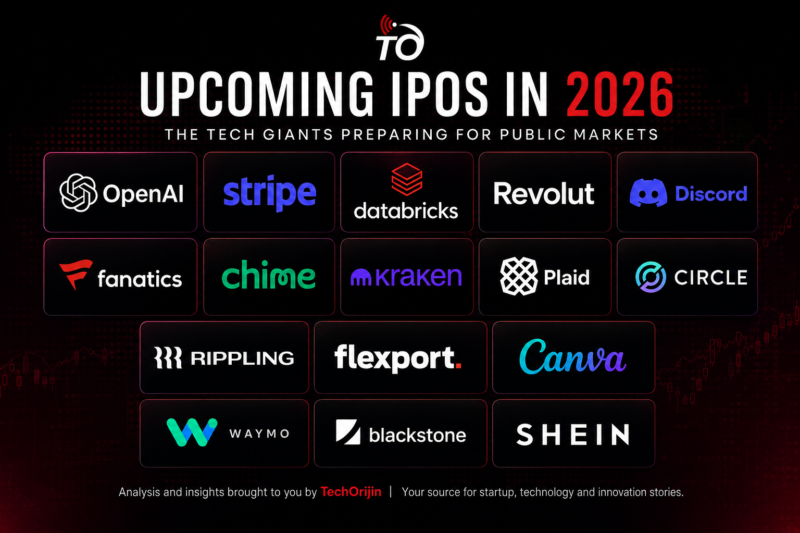
From artificial intelligence leaders OpenAI and Anthropic to aerospace giant SpaceX and fintech powerhouses Stripe and Revolut, 2026 is shaping up to be one of the most important years for technology IPOs in recent memory.
These companies are not just looking to raise money. Their public listings could shape how investors view artificial intelligence, space technology, and digital finance for years to come.
Although they operate in different industries, these companies share one thing in common: each is helping shape technologies that could define the next decade.
More importantly, they mark a new chapter for industries that have spent years growing behind the scenes with support from private investors.
OpenAI and Anthropic Bring the AI Race to Wall Street
The biggest story in this year’s IPO pipeline is the growing rivalry between OpenAI and Anthropic.
Anthropic, the company behind the Claude family of AI models, was first to make its move by confidentially filing paperwork for a public offering. Just one week later, OpenAI followed with its own confidential filing.
The timing is hard to ignore.
For the past few years, both companies have been at the center of the artificial intelligence boom. Their tools are being used by businesses, developers, and millions of everyday users around the world. At the same time, they have attracted enormous investments from some of the largest technology companies and financial institutions.
Going public offers a new source of capital as the cost of building advanced AI systems continues to rise. Training models, running large-scale computing infrastructure, and expanding global services require billions of dollars.
But there is another reason these listings matter.
Once public, both companies will face a new level of scrutiny. Investors will want to see not only innovation, but also sustainable revenue growth, customer retention, and a clear path toward profitability.
In many ways, the AI race is entering a new phase. The conversation is no longer just about which company has the best technology. It is also about which company can build the strongest business around it.
SpaceX Could Be the IPO Everyone Watches
While OpenAI and Anthropic are attracting attention in the AI world, SpaceX may end up becoming the most closely watched IPO of them all.
Founded by Elon Musk, SpaceX has transformed the space industry over the past decade. The company has reduced launch costs, secured major government contracts, and built Starlink into one of the world’s fastest-growing satellite internet networks.
Unlike many technology companies preparing for an IPO, SpaceX is entering public markets with multiple established businesses already operating at scale.
Its listing is expected to be one of the largest in history, and its performance could influence investor sentiment across the broader technology sector.
For many investors, SpaceX represents something bigger than a traditional technology company. It sits at the intersection of aerospace, communications, infrastructure, and innovation.
If its public debut is successful, it could strengthen confidence in other high-profile technology listings that follow.
Stripe and Databricks Represent the Infrastructure Behind Innovation
Not every company preparing for a public debut is building consumer products.
Some of the most valuable firms in the IPO pipeline provide the infrastructure that powers the modern digital economy.
Stripe is one of them.
The payments giant handles transactions for businesses around the world and processes trillions of dollars in annual payment volume. While consumers may not interact directly with Stripe, many of the online services they use every day rely on its technology.
Databricks occupies a similar position in the data and AI ecosystem.
The company helps businesses manage and analyze massive amounts of information, making it easier to build data-driven products and artificial intelligence applications.
While companies like OpenAI often dominate headlines, firms such as Stripe and Databricks provide the tools that make much of the digital economy possible.
That makes them attractive to investors looking for exposure to long-term technology trends without taking on the same level of risk associated with frontier AI development.
Revolut Is Taking a Different Approach
Among the major names being discussed for future listings, Revolut stands out for its patience.
The fintech company has grown rapidly across Europe and expanded its services beyond payments into banking, investing, and financial management.
Rather than rushing toward a public offering, Revolut appears focused on strengthening its global position before making its market debut.
The company has signaled that it is willing to wait several more years if it believes doing so will create greater long-term value.
That strategy reflects a broader trend among private technology companies. Going public is no longer viewed as the only path to growth. Companies now have more flexibility to choose the timing that best supports their business goals.
IPO Watchlist 2026: Key Tech Companies Preparing for Public Markets
| Company | Est. Valuation | IPO Status (2026) | Key Focus for Investors |
|---|---|---|---|
| SpaceX | ~$1.75T | Expected 2026 debut | Market demand for one of the largest IPOs in history |
| Anthropic | ~$965B | Confidential S-1 filed | Enterprise AI growth + infrastructure cost efficiency |
| OpenAI | $852B – $1T | Confidential S-1 filed | ChatGPT growth, enterprise adoption, profitability path |
| Stripe | ~$140B | Likely 2026–2027 window | Global payments volume + consumer spending trends |
| Databricks | ~$134B | IPO candidate | Enterprise AI + data infrastructure demand |
| Revolut | ~$75B | Targeting ~2028 | Global banking expansion + international scaling |
What These IPOs Mean for the Future
Taken together, these upcoming IPOs tell a larger story about where technology is heading.
Artificial intelligence companies are looking for the resources needed to build more powerful systems. SpaceX is expanding the role of private companies in space and global communications. Fintech firms continue to reshape how people move, save, and manage money.
For years, many of these companies were accessible only to private investors.
Public listings change that.
They open the door for a broader group of investors to participate in some of the technologies shaping the future economy.
At the same time, they bring new expectations.
Public markets reward growth, but they also demand accountability. Investors will want proof that these companies can turn ambitious visions into durable businesses.
That is what makes 2026 such an important year.
These IPOs are more than financial milestones. They mark the moment some of the world’s most influential technology companies step into the public spotlight, where their ideas, business models, and long-term ambitions will be tested by the market.
Whether they succeed or fall short, the IPO class of 2026 could help shape the future of technology for years to come.