




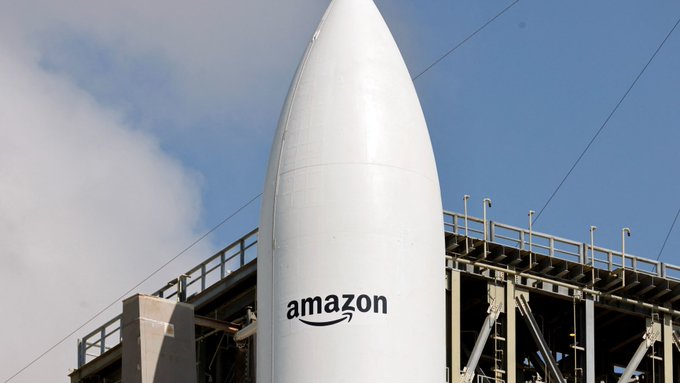
Amazon is preparing to launch its satellite internet service later this year, marking a major milestone in its effort to compete with SpaceX’s Starlink. The company’s Project Kuiper network now has enough satellites in orbit to begin offering initial broadband service, bringing Amazon one step closer to entering the fast-growing satellite internet market.
The latest milestone follows several successful launches since April 2025. Amazon now has 394 satellites in orbit out of 398 launched, according to spaceflight analyst and Harvard astronomer Jonathan McDowell.
Chris Weber, Amazon’s vice president for Project Kuiper, said the company still has work to do before the network reaches full capacity. However, he noted that Amazon has completed enough launches to begin initial service this year, while future missions will continue to expand coverage and network capacity.
Although Amazon has not announced its first service markets, the company is expected to begin coverage near the Earth’s north and south poles. As more satellites enter orbit, the service will gradually expand toward the equator.
Project Kuiper Nears Commercial Service
Project Kuiper is Amazon’s low Earth orbit satellite network designed to deliver high-speed internet to homes, businesses, and communities with limited broadband access. The service will compete directly with Starlink, which has led the satellite internet market by deploying thousands of satellites worldwide.
To support the project, Amazon has booked around 100 rocket launches to deploy its satellite constellation. The missions involve several launch providers, including United Launch Alliance (ULA), Arianespace’s Ariane 6, Blue Origin, and even SpaceX’s Falcon 9 rocket.
The use of SpaceX rockets highlights the competitive yet interconnected nature of today’s commercial space industry. While Starlink remains Amazon’s biggest rival in satellite internet, SpaceX also serves as one of Project Kuiper’s launch providers.
Meanwhile, some future launches could face delays as engineers continue investigating an issue involving Blue Origin’s BE-4 engines, which power ULA’s Vulcan rocket. ULA said it is working closely with Blue Origin to identify the root cause and resolve any issues that could affect upcoming missions.
Despite that challenge, Amazon remains on track to begin its initial satellite internet service later this year. Future launches will focus on increasing coverage, improving network capacity, and expanding availability to more regions around the world.
Demand for satellite internet continues to grow as governments, businesses, airlines, and remote communities seek reliable broadband beyond the reach of traditional networks. With Project Kuiper nearing commercial service, Amazon is preparing to challenge Starlink in one of the technology industry’s most important emerging markets.