




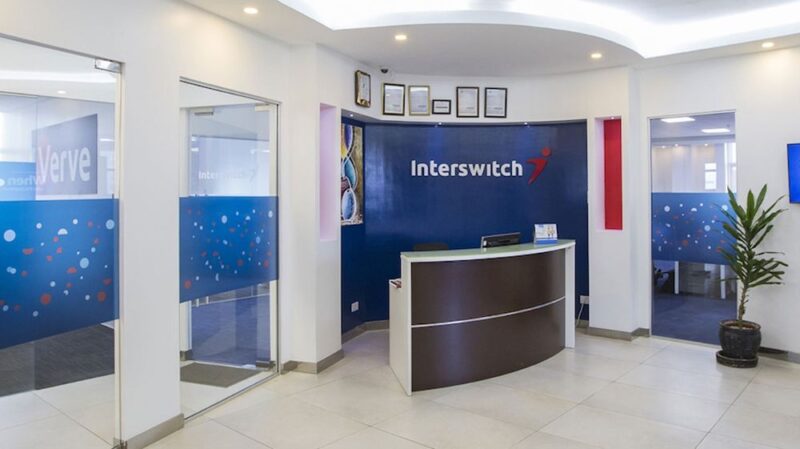
Interswitch has swung back into profitability, posting a pre-tax profit of ₦23 billion for the financial year ended March 2025, a sharp turnaround from the ₦1.7 billion loss the payments company recorded the previous year. The results, drawn from Interswitch’s regulatory filing with the UK’s Companies House, show a business that has stabilised after a rough stretch shaped by naira volatility and chargeback fraud.
The company’s total revenue climbed 50 percent to ₦137.5 billion, and once tax obligations were settled, profit after tax stood at ₦14.7 billion. Gross profit came in at ₦125.8 billion, underlining just how much of that top line growth translated into real earnings rather than simply higher costs passed through the business.
Nigeria remains the engine room of Interswitch’s operations. The country accounted for 90 percent of group revenue in the period, only a slight dip from 94 percent the year before. The remaining share came from the company’s footprint in Mauritius, the United Kingdom, and East Africa, where it runs operations in Kenya and Uganda. That heavy reliance on a single market says something about both the depth of Interswitch’s roots in Nigeria’s payments infrastructure and the work still ahead if it wants a more balanced regional spread.
Verve, the company’s card scheme, played a central role in the recovery. Transaction revenue, which covers Verve, core payments, and telecoms services like airtime and bulk SMS, made up 75 percent of total revenue. Within that, Verve grew 39 percent and contributed 32 percent of group revenue, while core transaction income rose 43 percent and accounted for 39 percent of the total. Those numbers point to a card and payments business that has found real traction well beyond Nigeria’s fintech noise.
Interswitch also used the year to reshape parts of its portfolio. In October 2024, it sold its 20 percent stake in Gamswitch for ₦1 billion, and its East African arm exited its position in Pesatransact, a merchant focused digital platform. Both moves suggest a company narrowing its focus rather than chasing every opportunity on the table.
Regulation shaped much of the year too. In May 2025, Interswitch secured final approval from the Central Bank of Nigeria for a mobile money operator licence for its subsidiary M-Kudi, opening a new front in a market already crowded with mobile money players. The company also kicked off a restructuring process required under CBN rules, which will eventually separate its core infrastructure business from its consumer facing financial services arm through a dedicated Payment Service Holding Company structure.
Taken together, the results mark one of Interswitch’s strongest financial years in recent memory. After a period where currency pressure and fraud losses ate into earnings, the company has returned to profit with a business mix that leans more heavily on Verve and payments processing than before. Whether it can keep growing outside Nigeria while still leaning so heavily on the domestic market is the question that will shape its next set of results.