



For many South Africans, accessing government services can still involve long queues, paperwork, repeated verification processes, and delays that sometimes stretch for weeks. Whether it is applying for official documents, updating records, or verifying identity for financial services, the process often remains heavily dependent on physical systems. However, let’s see how South Africa’s Digital ID Ambitions Could Change how Citizens Access Public Services
But that experience could gradually begin to change.
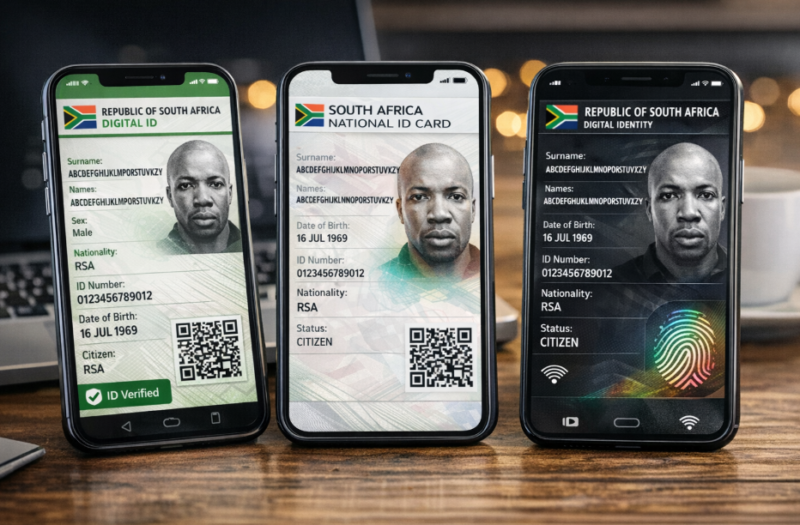
South Africa is now pushing forward with plans for a smartphone-based digital identity system that could allow citizens to securely store and verify official identity credentials directly from their mobile devices. The proposal, currently open for public consultation, represents one of the country’s biggest digital governance reforms in recent years.
At the center of the initiative is a proposed digital identity platform known as “MyMzansi,” which would enable South Africans to access digital versions of documents such as identity cards, birth certificates, and marriage certificates from their smartphones.
The broader idea is relatively simple but ambitious: making identity verification faster, more secure, and more accessible in a country where millions of interactions with banks, telecom providers, employers, and government agencies still rely heavily on physical documentation.
Rather than replacing physical Smart ID cards immediately, the proposed system would operate alongside them, giving citizens the option to adopt digital credentials at their own pace.
If implemented, the platform could eventually allow users to verify their identity using QR codes, facial recognition, Bluetooth, and near-field communication (NFC) technologies. Authorities say the system is being designed with biometric security measures such as fingerprint verification, liveness detection, and facial authentication to reduce fraud and improve trust in digital transactions.
For government agencies, the proposed rollout is about more than convenience. It is also part of a wider attempt to modernize public infrastructure and reduce the inefficiencies that have long affected service delivery.
In recent years, South Africa’s Department of Home Affairs has increasingly accelerated its digital transformation efforts. Earlier reports showed that the country significantly reduced passport and Smart ID processing times after introducing upgrades to facial recognition and digital verification systems.
The digital identity proposal appears to build on that momentum.
Under the draft framework, citizens aged 16 and above would be eligible to enroll through designated registration points, including Home Affairs offices, embassies, ports of entry, mobile enrollment centers, and potentially approved bank branches. Once issued, the digital credential would reportedly remain valid for five years before renewal.
Banks and telecom operators are also expected to play a key role in the system’s long-term adoption. Reports suggest accredited institutions could eventually integrate directly with national identity databases, helping speed up customer verification and reducing repetitive onboarding procedures.
Supporters of the initiative believe the system could help reduce identity fraud, simplify access to services, and improve digital inclusion as more sectors move online.
At the same time, conversations around privacy and biometric data protection are already beginning to emerge. As with many digital identity systems globally, concerns around cybersecurity, surveillance, and misuse of personal data are likely to remain central to public discussions as the proposal evolves.
South African authorities say the draft regulations include privacy safeguards and compliance measures aligned with existing data protection laws, including the Protection of Personal Information Act (POPIA).
Across Africa, governments are increasingly investing in digital identity systems as part of broader efforts to modernize public services, improve financial inclusion, and strengthen digital economies. But South Africa’s proposal stands out because of its scale and its ambition to integrate identity verification into everyday digital life.
If fully implemented, the initiative could eventually reshape how millions of South Africans interact with banks, telecom providers, businesses, and government institutions, replacing some of the country’s traditional paperwork culture with a more connected digital identity ecosystem.