



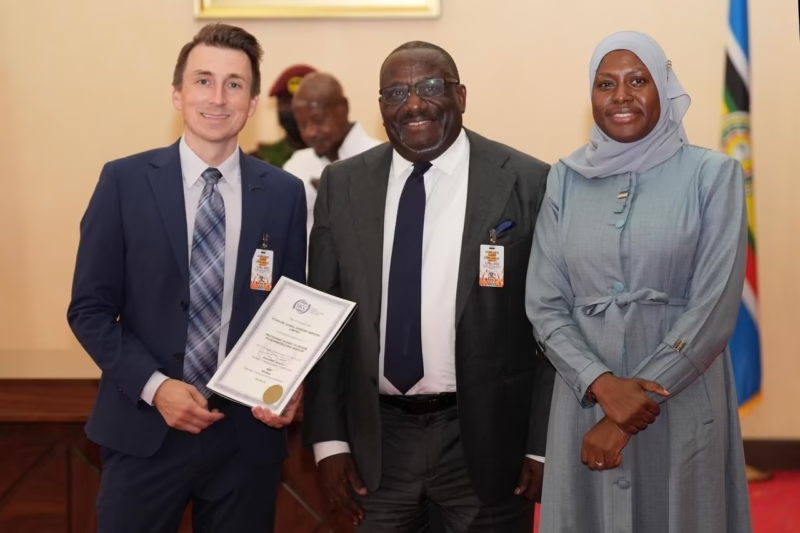
After months of uncertainty, bans, and behind the scenes negotiations, Starlink has finally secured an official licence to operate in Uganda. The announcement came on May 15, 2026, when President Yoweri Museveni personally witnessed the signing of a Memorandum of Understanding and operational licence agreement between the Uganda Communications Commission (UCC) and Starlink, the satellite internet company owned by Elon Musk’s SpaceX.
For a country where millions of people especially in rural areas still lack reliable internet access, this is genuinely big news.
The road to this agreement was anything but smooth. Back in December 2025, Uganda’s Revenue Authority restricted the importation of all Starlink equipment, requiring military clearance from the Chief of Defence Forces before any gadgets or components could enter the country. The timing raised eyebrows. Uganda was heading into its January 2026 elections, and the country had previously shut down the internet during earlier elections, citing concerns about misinformation and public unrest. Many people saw the Starlink ban as part of the same pattern,controlling information flow during a politically sensitive period.
One of the key sticking points in Starlink’s long quest for a licence was Uganda’s Regulation of Interception of Communications Act, which requires telecom providers to allow government access to communications for security purposes. Because Starlink operates through low-Earth orbit satellites rather than local infrastructure, meeting that requirement was complicated. It essentially meant that Starlink’s ability to bypass traditional networks one of the things that made it so attractive to users was the very thing that made authorities nervous.
President Museveni said he was pleased that Starlink had agreed to comply with Uganda’s laws and regulatory requirements as it prepares to begin service delivery in the country. The government made clear that its priorities going forward are security, revenue assurance, and accountability.
So what does this mean for ordinary Ugandans? Quite a lot, potentially. Uganda’s internet penetration remains relatively low, with millions of people still lacking reliable access, particularly in rural and hard-to-reach areas. Traditional fibre and mobile broadband networks have struggled to expand nationwide because of high infrastructure costs and challenging terrain. Starlink’s satellite-based system sidesteps those problems entirely by delivering internet directly from space.
SEE ALSO: Lagos Unveils Cybersecurity Centre for 15 Million Citizens
For schools, health centres, farmers, and small businesses in underserved regions, this could mean faster communication, access to online markets, digital learning, and telemedicine. That kind of access can genuinely change lives in communities that have been left behind by conventional telecom infrastructure.
Uganda now joins among a growing list of African countries opening up to Starlink, which is positioning itself as a provider of satellite-based internet in markets with limited broadband infrastructure and connectivity gaps. The company already operates in more than a dozen African nations, including Kenya, Rwanda, and Somalia.
The licensing deal is a compromise on both sides. Starlink gets its foot in one of East Africa’s largest markets. Uganda gets a connectivity boost, and the regulatory oversight it was always pushing for. Whether that balance holds over time remains to be seen, but for now, the satellite dishes may finally start going up.