




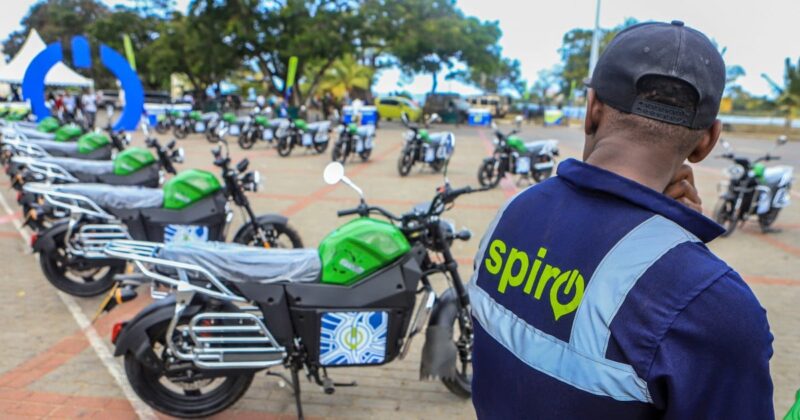
Africa’s electric mobility revolution just got a lot louder… Spiro, which is the continent’s largest electric motorcycle and battery-swapping company, has announced that they now have 95,000 electric motorcycles in active circulation across Africa, and it is not slowing down. In a move that signals serious regional ambition, the company has officially launched operations in Cameroon, making it the seventh African country where Spiro is commercially deployed, and its first foothold in the Central Africa subregion.
For anyone tracking Africa’s clean energy transition, this is a significant moment. Spiro did not arrive quietly in Cameroon. The company held a high-level launch ceremony at Hôtel SAWA in Douala, presided over by the Governor of the Littoral Region, Samuel Ivaha Diboua, and attended by government officials, diplomats, and business leaders. That kind of turnout at a motorcycle launch speaks volumes about how seriously African governments are beginning to take the electric vehicle conversation.
Spiro’s expansion into Cameroon is part of a broader, very deliberate growth strategy. Already operational in Benin, Kenya, Nigeria, Rwanda, Togo, and Uganda,with a pilot programme also running in Tanzania, the company is methodically threading itself through the continent’s most motorcycle-dependent economies. Cameroon fits squarely into that pattern. With a thriving motorcycle taxi culture in cities like Douala and Yaoundé, and a government that has already moved to exempt electric vehicles from a 12.5% excise tax while offering a 50% reduction on taxable value for new e-bikes, batteries, and charging stations for 24 months, the timing could not be more deliberate.
What makes Spiro’s model genuinely interesting ,and what separates it from a typical vehicle company is how it has thought through the economics for the everyday rider. The core insight is simple but powerful: the biggest barrier to electric motorcycle adoption is not desire, it is cost and convenience. Spiro addresses both by separating the battery from the bike. Riders buy or lease the motorcycle at a price roughly 40% lower than a comparable petrol model, and then pay only for the energy they consume through a battery-swap system. A depleted battery is exchanged for a fully charged one in under a minute at a swap station. No long charging wait. No battery anxiety. Just ride.
In practical terms, this translates to real money in riders’ pockets. In Kenya and Rwanda, where a typical petrol motorcycle costs between $1,300 and $1,500, Spiro’s e-bikes come in around $800, and the per-kilometre cost of swapping batteries is about 30% lower than refuelling. Riders reportedly save up to $3 per day on fuel and maintenance, a figure that adds up dramatically when you consider that motorcycle taxi drivers in Africa can spend 10 to 12 hours on the road daily, covering 150 to 200 kilometres. In Cameroon, Spiro says users will spend just CFA1,500 to cover 100 kilometres, a compelling contrast to what petrol bikes demand.
The Cameroon rollout will begin with 100 electric motorcycles in Douala and a network of battery swap stations positioned every three kilometres across the city to minimise range concerns. In a second phase, Spiro plans to build a motorcycle assembly plant in-country, consistent with the company’s stated goal of increasing local sourcing from around 30% to 70% within two years. It already assembles motorcycles in Uganda, Kenya, and Rwanda, and views local manufacturing not just as a cost strategy, but as a job creation engine. Beyond the assembly plant, each swap station is estimated to support an average of 3.5 jobs directly, between battery management, maintenance, and operations.
SEE ALSO: Uganda Grants Starlink Licence After Restrictions
Kaushik Burman, Spiro’s CEO, put the Cameroon vision in plain terms: “We urge the government to prioritize electric mobility in national policy ,through tax incentives, infrastructure support, and public-private partnerships. Together, we can position Cameroon as a regional leader in clean transport, improve air quality in our cities, and offer real cost savings to riders.” Rahul Gaur, Managing Director for Spiro West Africa and Cameroon, was equally direct, calling the Cameroon launch “more than just opening a new office” and describing it as a commitment to making the country “a regional model in green mobility.”
The timing of the Cameroon launch is also notable in the context of Spiro’s broader financial momentum. The company recently closed a $100 million investment round the largest ever in Africa’s two-wheel electric mobility sector, with $75 million coming from FEDA, the development impact investment arm of Afreximbank. That capital is being deployed toward swap network expansion, manufacturing capacity, and market entries exactly like the Cameroon one. With a stated target of surpassing 100,000 deployed vehicles by the end of 2025, the 95,000 milestone announced alongside the Cameroon launch underscores the company’s near-term progress.
Numbers aside, what Spiro is really building in Cameroon, and across the continent, is an infrastructure ecosystem, not just a product line. It is a battery-swapping network, a financing platform, a logistics backbone, and an employment generator all at once. In a continent where close to 30 million motorcycles are used as taxis, and nearly 99% of them still run on internal combustion engines, the addressable market is enormous. Spiro’s expansion into the CEMAC economic zone through Cameroon signals that the company views Central Africa not as a distant frontier but as the next phase of a very deliberate continental playbook.
Africa’s electric mobility story is being written at pace, and Spiro is holding the pen.