




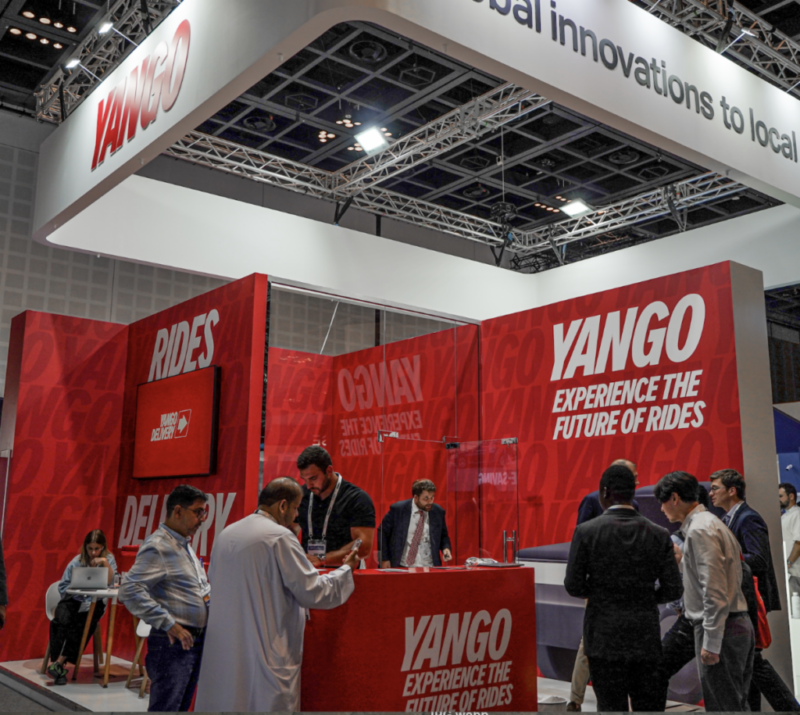
Africa’s ride-hailing market just received a serious wake-up call. Yango Group, the Dubai-based tech and mobility company, has committed a bold $150 million to expand its African operations,targeting 10 new markets before the year ends and projecting an ambitious 60% growth rate across the continent in 2026. For anyone still counting Yango as a minor player in Africa’s digital economy, that calculation needs urgent revision.
To understand why this investment matters, you have to understand who Yango is and where it came from. Originally built as a brand under Yandex Taxi, one of Russia’s largest tech conglomerates, Yango restructured into an independent entity headquartered in Dubai following sanctions linked to Russia’s invasion of Ukraine. Rather than collapsing under the weight of that disruption, the company pivoted aggressively toward emerging markets in Africa, Latin America, and the Middle East, regions where swelling urban populations, growing smartphone adoption, and chronically weak public transport infrastructure created fertile ground for a mobile-first mobility player. That pivot is now paying off. Today, Yango operates across more than 35 countries globally with a fleet of one million drivers, and Africa has quietly become the centrepiece of its next growth chapter.
What makes this $150 million move genuinely significant is not just the size of the cheque; it is the philosophy behind how that money will be spent. Most international ride-hailing companies entering Africa have followed a predictable playbook: flood the “Big Four” markets of Nigeria, Kenya, South Africa, and Egypt with capital, offer deep subsidies to win drivers and passengers, and race to capture market share before burning through reserves. The result, as Yango Africa CEO Adeniyi Adebayo bluntly describes it, has been “a race to the bottom”, too much capital chasing too few differentiated opportunities in the same saturated cities. Yango is deliberately doing the opposite.
Instead of fighting Uber, Bolt, and InDrive for the same Lagos or Nairobi customers, Yango is targeting the overlooked secondary cities of Francophone West and Central Africa, as well as smaller Southern African markets including Namibia, Botswana, and Mozambique. These are markets where digitised transport is still in its infancy, where the first platform to plant a flag and build genuine local infrastructure has the potential to own the category outright. Adebayo put it plainly: “If you look at the top 50 cities across West Africa and look at how many of those cities we’ve covered, we’ve barely started.” That is not a concession of limited progress, it is a statement of enormous untapped opportunity.
The operating model Yango is deploying across Africa is also notably different from what traditional ride-hailing expansion looks like. Rather than recruiting individual drivers and bearing the full cost of onboarding, managing, and retaining them, Yango works with established local transport operators and fleet owners as B2B partners. This approach sidesteps the steep customer acquisition costs that have historically bled capital from gig economy platforms at scale. By embedding itself into existing transport networks ,securing local licences, partnering with transport syndicates, and integrating with the informal systems that already move people Yango gains reach and trust far faster than any newcomer dropping a fresh app into a new city ever could.
Beyond rides, Yango has been steadily building what looks increasingly like a full super-app ecosystem across Africa. The company has expanded into food delivery, parcel logistics, mapping, payments, vehicle financing, entertainment, and fintech tools designed specifically for drivers and small businesses. Driver-focused financial products, including in-app lending and asset-backed vehicle financing, are particularly significant in markets where access to formal credit is limited and owning a vehicle outright is out of reach for most people. These are not optional extras , they are the kind of structural value that creates loyalty, reduces churn, and builds a platform that is genuinely hard to displace.
In a further sign that Yango is thinking in ecosystem terms rather than just market share, the company launched a separate $20 million venture arm earlier in 2025 ,Yango Ventures, to invest directly in African startups working across logistics, fintech, and online-to-offline infrastructure. Early portfolio bets include Gigmile, a gig-worker vehicle financing platform that has financed over 10,000 vehicles and raised roughly $21 million in combined funding, and BuuPass, a Kenyan transport digitisation platform that has processed over 20 million tickets across East and Southern Africa. These investments are not passive bets. They are strategic moves to build and finance the very infrastructure that Yango’s own operations will eventually depend on , a masterstroke of vertical integration that most pure-play ride-hailing companies have never attempted at this stage of growth.
There are real challenges, of course. Yango is not expanding into a frictionless environment. A recent KPMG Advisory report flags surging fuel costs as one of the most punishing headwinds facing African mobility platforms right now, with petrol expenses eating up to 25% of total ride fares in several markets ,a pressure amplified by ongoing geopolitical tensions affecting global oil supply. Currency volatility, complex regulatory environments, and the ever-present risk of operating without proper authorisation in certain markets, Benin briefly suspended Yango’s ride service in late 2024 over licensing concerns ,remain very real operational risks. Data privacy controversies linked to the company’s Russian-era history continue to shadow its expansion into new territories as well.
SEE ALSO: GITEX Kenya to Host East Africa’s Largest Launch Event for AI, Startups and Capital
To address the fuel cost crisis head-on, Yango is accelerating an electric vehicle strategy with real ambition behind it. The company plans to deploy 1,000 electric vehicles in Abidjan, Côte d’Ivoire alone this year, using fleet electrification as a way to insulate drivers and the platform from the volatility of fossil fuel prices. If that deployment succeeds at scale, it could rewrite the standard cost model for African ride-hailing and give Yango a structural edge that purely combustion-powered competitors will find difficult to match over time.
Stepping back, what Yango is building in Africa is something more consequential than just another ride-hailing expansion story. This is a deliberate, long-range bet that the next wave of African digital infrastructure will be won not in Lagos or Nairobi, but in the dozens of fast-growing secondary cities that most global tech companies have never bothered to name. By arriving early, building with local partners rather than against them, layering fintech and logistics services on top of mobility, and now funding the very startups that will strengthen its ecosystem, Yango is constructing a position that will be very difficult to dislodge once cemented.
The $150 million is not just a funding round. It is a statement of intent ,and if the strategy executes as planned, the competitive map of African ride-hailing will look meaningfully different by the time the year is out.