



If you have ever tried to load a webpage in a rural Nigerian community and watched that spinning circle go nowhere for minutes, you already understand what this story is really about. Millions of people across West Africa wake up every day in communities where mobile internet is either painfully slow, completely unreliable, or simply nonexistent. That reality is now at the center of a landmark move by the United States government that could change the digital landscape of the region in a significant way.
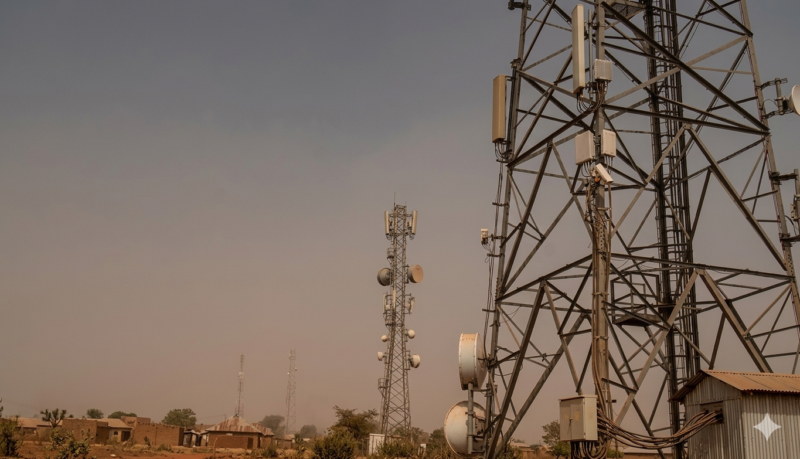
The U.S. Trade and Development Agency (USTDA) has announced plans to support the deployment of approximately 1,500 American-made wireless communications base stations across Nigeria, Ghana, Benin, and Côte d’Ivoire. The initiative, which targets underserved rural communities across these four West African nations, is designed to close the widening gap between urban and rural internet access while accelerating digital inclusion for millions of people who have been left behind by the region’s rapid tech growth.
At the heart of this project is a Massachusetts-based company called Vanu Inc., whose CEO Andrew Beard has described the ambition behind the rollout with rare confidence. Beard stated that the company’s systems were specifically designed to help mobile operators serve economically challenging markets while maintaining profitability and sustainability. He added that the company’s FCC-certified software radio and open-architecture ecosystem could make connectivity in these markets profitable, sustainable, and scalable words that carry a lot of weight in regions where telecom operators have long cited high deployment costs as a reason for avoiding rural expansion.
READ ALS: Uganda Grants Starlink Licence After Restrictions
To understand why this announcement matters so deeply, you need to appreciate the scale of the problem it is trying to solve. Nearly half of rural communities across Africa still lack mobile broadband coverage entirely. Many communities in Nigeria, Ghana, Benin, and Côte d’Ivoire continue to rely on weak and outdated 2G and 3G networks, with some areas having no coverage at all. This is not a minor inconvenience. Poor connectivity in rural communities means limited access to banking and financial services, reduced educational opportunities for children and young adults, constrained healthcare delivery, and fewer pathways for small businesses to participate in the digital economy that is powering growth across Africa’s cities.
The USTDA has funded a feasibility study to be carried out through Vanu Côte d’Ivoire, which has selected Georgia-based Vernonburg Group LLC to provide the technical expertise needed to assess the commercial viability of deploying this wireless infrastructure at scale. The study will examine existing telecom infrastructure across the four countries, evaluate market conditions, review legal and regulatory environments, and develop financing strategies for full implementation. This is not simply a press release moment. The groundwork is being laid carefully, with real technical and commercial analysis guiding the path forward.
Thomas R. Hardy, Deputy Director of the USTDA, articulated the broader vision behind the project when he explained that the initiative would unlock affordable and reliable internet access for communities that have remained disconnected from modern digital services. He also noted that the program would create fresh export opportunities for American technology companies competing in critical international markets, and that the deployment was expected to stimulate economic growth in remote areas where weak connectivity has continued to limit business expansion, education, and access to digital services.
Vanu Inc. is not a newcomer to this region. The company already has an established presence in West Africa, having previously deployed off-grid wireless solutions in Nigeria’s Edo and Delta states, as well as in Benin, Ghana, and Côte d’Ivoire. Andrew Beard has previously described Nigeria as a genuinely exciting place to operate, pointing to the country’s population as being right in the sweet spot for adoption of mobile connectivity. That history gives Vanu a meaningful advantage in understanding the terrain, the operational challenges, and the communities it will be serving.
The initiative also carries a geopolitical dimension that cannot be ignored. Chinese telecom firms, most notably Huawei and ZTE, currently play a dominant role in wireless network infrastructure across much of Africa, and the United States has repeatedly raised concerns over the security risks associated with their technology. Washington has in recent years pushed aggressively for allies and developing nations to adopt what it frames as trusted and secure alternatives. This project is a direct expression of that broader strategy, positioning the United States as an active partner in Africa’s digital future rather than a distant observer watching China expand its influence on the continent.
For Nigeria specifically, the stakes are enormous. As Africa’s largest economy and most populous country, Nigeria commands the biggest telecom market on the continent. Yet despite that scale, millions of Nigerians in rural communities still struggle with unstable internet access and unreliable coverage. The investment of this kind of infrastructure in those underserved areas could reshape economic participation for businesses, students, healthcare workers, and entrepreneurs who operate far from Lagos or Abuja.
The broader impact of improved rural broadband penetration across these four countries could be transformative in ways that go beyond basic connectivity. Industry analysts have consistently pointed out that stronger broadband infrastructure in rural communities tends to accelerate financial technology adoption, improve the reach of e-commerce platforms, strengthen digital learning, and open doors for artificial intelligence-driven services to reach populations that have never had access to them before.
What makes this particular project notable is not just the scale of the deployment but the model behind it. Vanu’s approach relies on software-driven radio systems and open architecture, which lowers the cost of building and operating base stations in environments where electricity is unreliable, infrastructure is sparse, and economic margins are tight. The feasibility study will assess how governments and private investors can scale this model sustainably across communities that conventional telecom business cases have typically overlooked.
The USTDA’s backing of this initiative is also expected to catalyze new investment from other sources. As the study demonstrates commercial viability and governments in the region clarify the regulatory pathways for implementation, additional private capital is likely to follow. That multiplier effect is one of the reasons development finance agencies like the USTDA tend to prioritize feasibility work of this nature ,a well-structured study that proves the economics of a project can unlock significantly more funding than the study itself costs.
For the millions of people in rural communities across Nigeria, Ghana, Benin, and Côte d’Ivoire who currently watch their neighbors in cities enjoy the benefits of fast internet while they struggle with dropped calls and pages that refuse to load, this announcement represents something real. It is not a vague promise about a distant digital future. It is a structured, technically grounded, commercially assessed initiative backed by one of the world’s most powerful development finance agencies, delivered through a company with direct experience on the ground in the very countries this project targets.
The West Africa’s rural connectivity gap has persisted for years not because solutions do not exist, but because the right combination of technology, funding, and political will has been hard to align simultaneously. This initiative suggests that alignment may finally be coming together ,and when those 1,500 base stations eventually go up, the people they serve will not need to know anything about US-China technology competition or development finance strategy. They will just need to know that their internet finally works.