




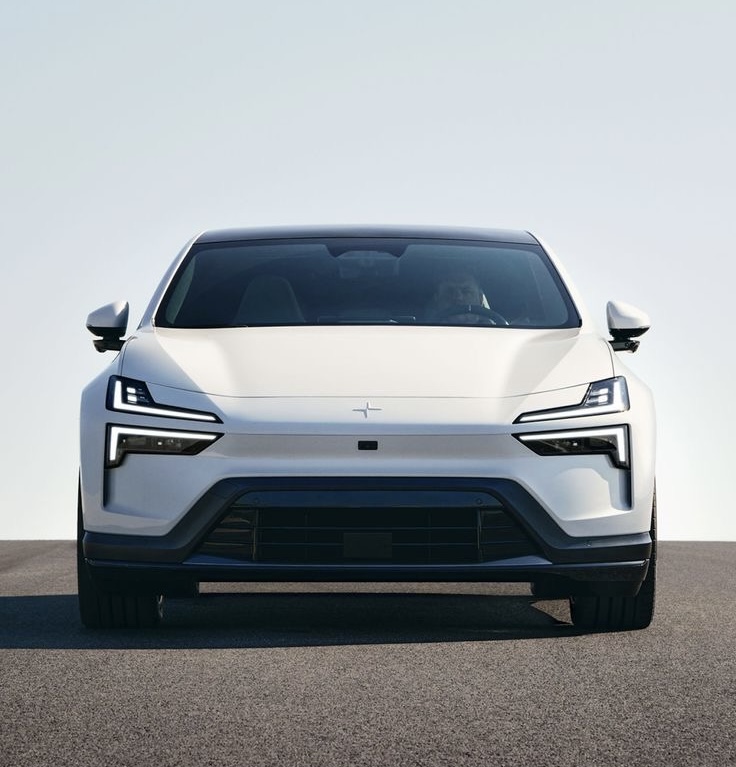
In a major escalation of the technological stand off between Washington and Beijing, the Trump administration has blocked the electric vehicle manufacturer Polestar from selling its new models in the United States.
The U.S. Department of Commerce’s Bureau of Industry and Security officially denied the automaker special authorization under the federal Connected Vehicle Rule. The stringent national security regulation prohibits the import or sale of vehicles integrated with software or hardware tied to Chinese or Russian entities. Because the restriction on software kicks in for the 2027 model year, Polestar is legally barred from offering any new vehicle models on American shores for the foreseeable future.
While Polestar is headquartered in Sweden and markets itself as a Scandinavian luxury brand, it is majority owned by the Chinese automotive conglomerate Geely Holding. This corporate ownership structure ultimately triggered the denial.
The enforcement highlights a stringent reality of modern trade policy: manufacturing location no longer guarantees market access. Polestar had heavily invested in localizing its production, assembling its flagship Polestar 3 SUV at a Volvo plant in Ridgeville, South Carolina a facility that saw over $1 billion in expansions. However, federal regulators ruled that because the underlying digital architecture, cellular connectivity, and automated driving systems remain traceable to its Chinese parent company, the vehicles pose a theoretical data privacy and cybersecurity risk.
In a stark contrast that highlights the complex nature of the rule, Volvo Cars which is also owned by Geely successfully secured a specific government authorization in May to bypass the ban, whereas Polestar was denied.
Faced with an abrupt exit from one of the world’s largest auto markets, Polestar announced it would pivot its corporate strategy away from the United States to focus heavily on Europe and Canada, where it does not face similar regulatory roadblocks.
Polestar Chief Executive Officer Michael Lohscheller addressed the sudden shift in a corporate statement:
“The automotive industry is entering a new phase, based on regional dynamics. Our strategy reflects that, with Europe being our largest growth engine, and our plan to manufacture Polestar 7 in Europe.”
For current American owners and the brand’s 32 U.S. dealerships, the company plans an orderly wind-down rather than an immediate closure. In an email statement, a Polestar spokesperson confirmed the immediate plan for their remaining American operations: “We will continue to sell current stock, just as today.”
The company elaborated that its dealerships will remain open to clear out existing inventory of the Polestar 3 and the South Korean-built Polestar 4, while fully maintaining its service network to provide parts, maintenance, and warranty support for existing customers.
The decision deals a severe financial blow to Polestar at a highly vulnerable time. The company has faced intense pressure to achieve profitability, posting a net loss of $383 million in the first quarter of the year more than double its losses from the same period last year. Stripping away its runway for American sales growth eliminates a key pillar of its original global expansion plan.
Industry analysts view the ban as a watershed moment for the global automotive sector, signaling that the “connected vehicle” tech stack has become the latest frontline in geopolitical conflict. With bipartisan support in the U.S. Senate building for an outright ban on all Chinese manufactured automotive components, the regulatory landscape is growing increasingly hostile for any automaker trying to bridge the gap between Western branding and Chinese technological infrastructure.