

Africa’s largest solar mini grid operator, WeLight, has raised 31 million dollars in fresh funding to expand rural electricity access into Nigeria and the Democratic Republic of Congo. The investment came after the International Finance Corporation, the World Bank’s private sector lending arm, acquired a stake in the company alongside contributions from WeLight’s existing shareholders.
The company, which currently runs almost 190 solar mini grids across Madagascar and Mali serving more than 800,000 people, was founded in 2018 by Axian Group, Sagemcom, and Norfund. Its mandate from the start was to deliver electricity to rural communities that national power grids have failed to reach. With this new capital injection, WeLight plans to replicate that model in two countries where tens of millions of people remain without stable power despite carrying some of the highest electricity demand on the continent.
SEE ALSO: Alaa Hamadto: Sudanese Entrepreneur Rebuilds Solar Food Startup Amid Civil War
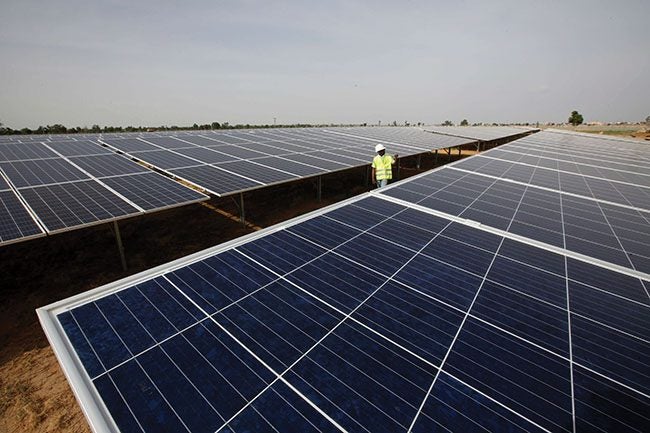
A solar mini grid works as a small, self contained power system built around solar panels, battery storage, and a local distribution network. It supplies electricity to a specific community or cluster of communities without needing a connection to the national grid. That distinction carries real weight in rural and remote regions, where building transmission lines to reach scattered, low density populations is often too costly and too slow. Mini grids skip that bottleneck entirely, reaching people directly at a fraction of the cost and in a fraction of the time.
For Nigeria, a country still grappling with unreliable grid supply and limited rural electrification, WeLight’s entry adds a serious new player to a market that is increasingly turning to distributed solar solutions rather than waiting on national grid expansion that has consistently lagged behind population growth. The Democratic Republic of Congo faces a similar reality, with vast rural populations still cut off from any centralized power source.
The IFC’s decision to take a stake in WeLight reflects a broader shift in how institutional investors view decentralized renewable energy. It signals growing confidence that distributed solar, rather than large scale grid infrastructure alone, offers a credible and faster path to closing Africa’s electricity access gap. Both Nigeria and the DRC also fall under Mission 300, a joint initiative between the World Bank Group and the African Development Bank aimed at expanding electricity access across the continent.
With fresh capital now secured, WeLight is positioning itself to scale beyond its West and Southern African footprint and take on two of the continent’s most energy constrained markets. Whether that expansion narrows Nigeria and the DRC’s electricity gap at meaningful speed will depend on how quickly the company can move from funding announcement to mini grids on the ground.