



The Nigerian Education Loan Fund has unveiled a new digital token based payment system designed to permanently end the double tuition payment crisis that has plagued thousands of student loan beneficiaries across the country. The announcement comes as NELFUND grapples with mounting pressure from students, tertiary institutions, and anti-corruption agencies over a problem that has persisted since the loan scheme launched.
The double payment issue emerged because Nigeria’s tertiary institutions do not operate on a harmonized academic calendar. In the early stages of the scheme, NELFUND prioritized speed to prevent vulnerable students from dropping out, disbursing funds quickly even when application timelines clashed with strict registration deadlines. This forced many students to pay their own tuition out of pocket, often with borrowed money, only for NELFUND to later disburse the same tuition directly to the institution once the loan was approved. The result was a duplicate payment scenario in which both the student and the federal government effectively paid for the same academic session.
While NELFUND has consistently urged affected institutions to refund students, compliance has been patchy at best. The situation grew serious enough to draw scrutiny from the Economic and Financial Crimes Commission and the Independent Corrupt Practices and Other Related Offences Commission, following a wave of petitions from frustrated students. NELFUND Managing Director Akintunde Sawyerr has confirmed that the agency is currently investigating about 34 tertiary institutions over allegations that they failed to refund students despite receiving duplicate payments.
ALSO READ:Nigeria’s Data Entry Academy Secures $10,000 UNDP Prize After Defeating 1,400+ Startups
The new digital token system aims to close this loophole for good. Rather than transferring cash directly into a university’s commercial bank account once a loan is approved, NELFUND will issue an encrypted digital token to the student’s portal or e-wallet. Sawyerr describes it as a tokenised setup where a student effectively holds the loan as a token on their phone, allowing them to walk into the bursary and authorise the payment with the push of a button. If a student has already settled their tuition independently, the unredeemed token cannot simply be absorbed by the institution. Instead, it will either route back to NELFUND automatically or trigger a prompt requiring the institution to process a refund before the token can be applied to a future session.
For the system to function properly, institutions will need to proactively upload their academic calendars and verified fee structures onto the Student Verification Portal. Students will then be able to view an itemised breakdown of their charges on their dashboard, giving them the chance to flag inflated or unauthorized fees before any token is released. This runs alongside NELFUND’s existing e-wallet framework for the N20,000 monthly upkeep stipend, keeping tuition and living allowance payments on separate, fully auditable digital rails.
Sawyerr has been clear that NELFUND deliberately avoids paying loan funds directly into student accounts, citing the risk that funds intended for education could be diverted elsewhere. He has also disclosed that the agency has refused to fund institutions that hiked tuition fees beyond acceptable levels after realizing NELFUND was footing the bill.
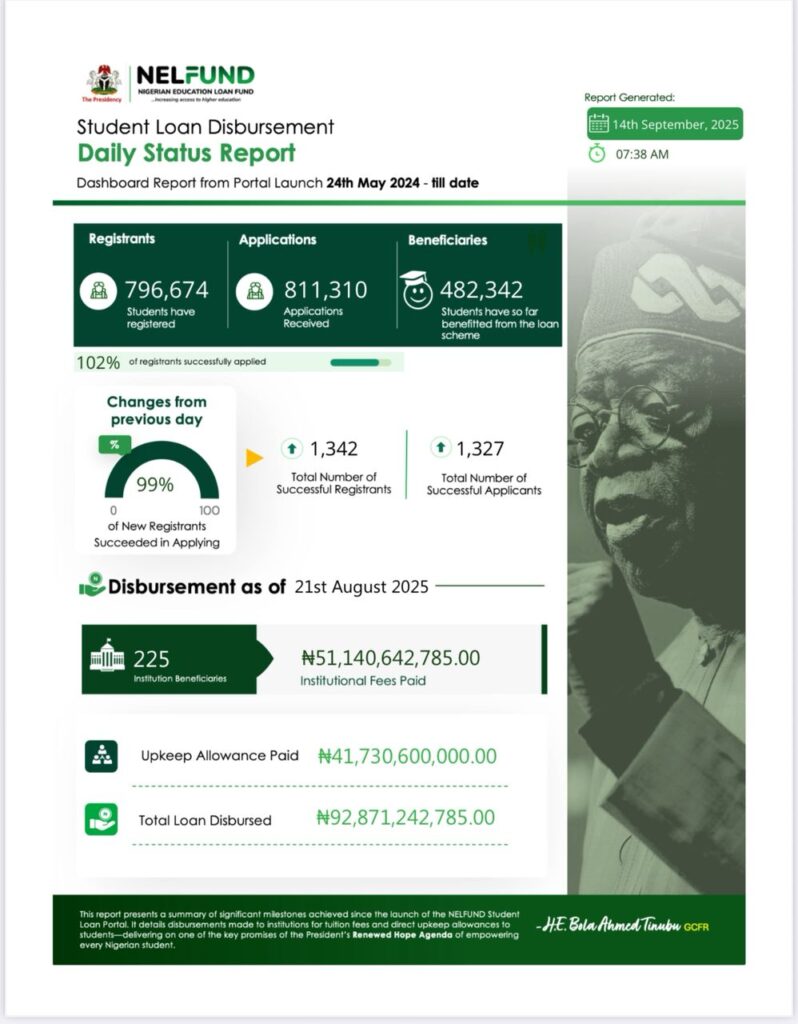
With over 1.3 million students now benefiting from the scheme and disbursements running into hundreds of billions of naira, the token system represents one of NELFUND’s most significant structural reforms yet, one that could finally give students a transparent, self-service way to control how and when their tuition gets paid.