




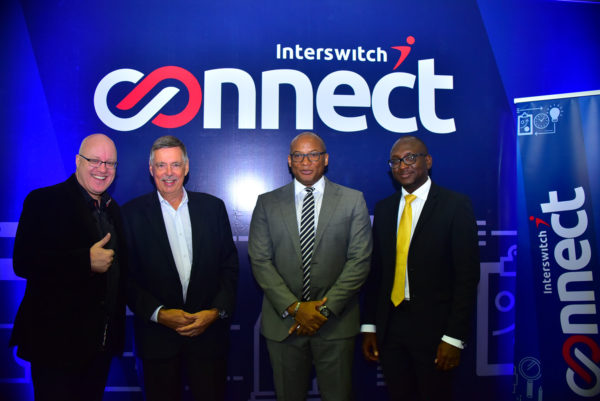
Long before Interswitch became the backbone of Nigeria’s digital payments system, Mitchell Elegbe was just an employee trying to sell a good idea to people who didn’t want to buy it.
In 2001, Elegbe led business development at Telnet, an ICT consulting firm in Lagos. He had already worked as a field engineer with Schlumberger in Scotland. That role exposed him to a level of technical discipline he rarely saw back home. Nigeria’s banking system, on the other hand, was slow and fragmented. Banks operated in isolation. A customer’s relationship with their money basically ended at the branch door. There was no shared system linking one bank’s ATM to another bank’s customer. Cash still ruled almost every transaction.
Elegbe believed the real fix wasn’t another app. It was invisible infrastructure instead, a switch that could let competing banks talk to each other without giving up control. So he pitched the idea inside Telnet first. But when that didn’t turn into the business he wanted, he refused to let it go. Instead, he brought in the global consultancy Accenture for support. Together, they built a proper business plan and governance structure, the kind serious investors would actually take seriously.
Then came the boldest part. Elegbe pitched his idea to seven competing Nigerian banks at once, alongside Telnet. He asked them to fund a shared payments switch together. Banks rarely agree on anything, let alone a plan that helps their rivals too. Somehow, Elegbe convinced them. The group raised about ₦200 million, roughly $1.2 million at the time, to get the idea off the ground.
What happened next says a lot about Elegbe’s priorities. He launched Interswitch in 2002 with zero equity in the company he built from scratch. He came in as an employee, not an owner. His focus was proving the switch could work, not negotiating a stake for himself. Only after the business delivered real results did he and his team earn equity in the company.
That choice paid off. Interswitch’s switch became the plumbing behind Nigeria’s ATMs and card terminals. It quietly processed transactions for banks that once refused to cooperate. In 2010, Helios Investment Partners, the International Finance Corporation, and Adlevo Capital bought a majority stake in the company. That was a clear signal that global investors saw more than a local vendor here. Elegbe then built Verve, Africa’s first homegrown card scheme. It gave the continent an alternative to depending entirely on Visa and Mastercard for local transactions.
By 2019, Visa came calling too. The company paid $200 million for a 20 percent stake in Interswitch. That deal pushed its valuation past $1 billion, making it one of Africa’s first fintech unicorns. Three years later, in 2022, Interswitch raised another $110 million from LeapFrog Investments and other backers. That round proved it wasn’t a one-hit startup story.
The bet on infrastructure kept paying off through 2025. Interswitch reported ₦137.5 billion in revenue for the fiscal year ending March 2025. That was up from ₦91.65 billion the year before. The company also returned to profit, posting ₦14.7 billion after tax following a rough stretch shaped by currency volatility. Verve, the card scheme Elegbe pioneered, crossed 100 million cards issued by December 2025. That made it the largest homegrown payment network on the continent. Interswitch also grew its East African footprint, partnering with Uganda’s National Social Security Fund to extend Quickteller into public sector payments.
What stands out most in Elegbe’s story isn’t a dramatic pivot or a lucky break. It’s patience. He spent years selling an idea nobody wanted to fund. He gave up ownership just to prove it worked. And he built something so deeply embedded in Nigeria’s financial system that banking without it is now hard to imagine. Long before startups and unicorn headlines became the language of African tech, Elegbe was quietly betting on plumbing nobody could see. That bet built an empire few saw coming.