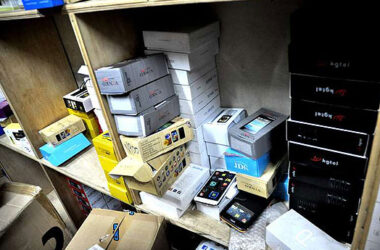




Nokia is betting big on artificial intelligence. As Africa’s telecom industry enters a new phase, the Finnish technology giant wants a leading role. It once dominated Nigeria’s mobile phone market. Now it’s positioning itself as a key player in Africa’s AI-driven network future.
For decades, Africa’s telecom story centered on basic connectivity. Towers went up. Fibre cables stretched across the continent. Operators rolled out 4G and, eventually, 5G. Today, AI is changing what these networks must deliver. Instead of simply moving data, networks now need to process it and act on it in real time.
Danial Mausoof leads Nokia’s Mobile Infrastructure division for the Middle East and Africa. In an interview on August 25, he made the company’s commitment clear. “Africa remains highly unconnected right now,” he said. “We’re invested. We’re fully committed to Africa.”
Africa’s telecom market is currently worth $66 billion. By 2030, it’s projected to reach $90.3 billion. That growth is drawing fresh investment from global tech giants like Meta, Google, and Microsoft. These companies are pouring money into subsea cables, cloud infrastructure, and AI systems. As a result, they’re gaining growing influence over the digital backbone that will power Africa’s next stage of development. For Nokia, the pressure is real. It must carve out a role in this emerging AI economy. Otherwise, it risks becoming a low-value connectivity vendor.
Nokia still leans on 4G and 5G as the foundation of its African business. The company works with major operators, including Airtel, Orange, Vodacom, Safaricom, and Maroc Telecom. It also has active 5G deployments in Angola, South Africa, and Ethiopia. But Nokia wants more than connectivity revenue. Its Artificial Intelligence Radio Access Network platform, known as AI-RAN, blends existing telecom infrastructure with GPU-based computing. This brings AI workloads directly into the network. Nokia launched the commercial version of this platform on July 15, 2026.
This shift matters a lot. Nokia has largely exited the consumer phone business. So it needs new revenue streams beyond hardware sales. That need is even more urgent as lower-cost rivals like Huawei keep expanding across the continent.
Not everyone is convinced Nokia can pull this off. Adedeji Olowe is CEO of Lendsqr, a telecom industry expert. He expressed doubt about Nokia’s chances. “I don’t think they have a chance, but then I could be wrong,” he said. “Nokia has been in the enterprise market for a while, but the market is shifting significantly, and all the other players are likely ahead of them.” Emmanuel Ezenwere, CEO of Arone Technologies, raised a similar concern. He pointed out that Nokia lacks its own AI chip. Because of this, it depends heavily on NVIDIA for critical computing hardware.
READ ALSO:Starlink Now Live in Equatorial Guinea, Marking 30th African Country
Meanwhile, economics may prove tougher than technology. AI-RAN infrastructure is expensive. GPU-accelerated processing at centralized hubs can cost tens of thousands of dollars per node. In some cases, it exceeds $100,000. Power consumption adds another layer of cost. This is especially significant in markets already burdened by high electricity, generator, and diesel expenses. As a result, analysts expect AI-RAN to first take hold in high-traffic urban areas and enterprise environments, where returns are easier to justify.
Still, practical use cases are already emerging. For example, Mausoof pointed to a Nokia deployment during the Hajj pilgrimage in Saudi Arabia. There, AI-powered automation managed between 10,000 and 15,000 network changes during peak demand. This kind of automation reduces energy use and maintenance needs. Because of that, it may offer a more realistic path forward for African markets than widespread GPU deployment.
Looking ahead, trials in Africa are expected to begin as early as the first quarter of 2027. Further announcements will likely follow at Mobile World Congress 2027. Full commercialization is targeted for 2028. Even so, Mausoof expects broader adoption across the continent to extend well beyond 2030. That’s because technology maturity and infrastructure readiness vary widely from one market to another.
Ultimately, the bigger question is whether Nokia can turn its existing network relationships into a lasting advantage. Its partnership with NVIDIA gives it access to powerful computing tools. However, it doesn’t give Nokia full control over the technology stack. On top of that, Huawei’s deeper vertical integration and the growing influence of hyperscalers like Google and Amazon add further pressure.
What happens next could determine more than Nokia’s fortunes. It may also shape who ultimately controls the next layer of Africa’s digital infrastructure.