

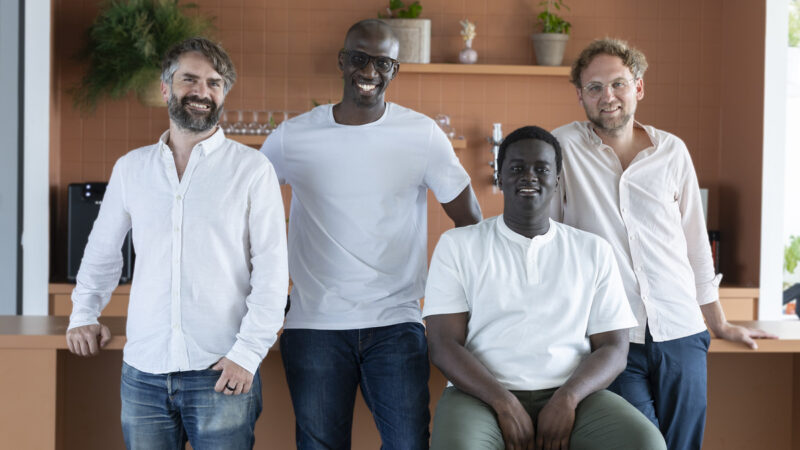
Alan, the European preventive health insurance company, has acquired Tanel. Tanel is a digital health startup based in Dakar. The deal marks Alan’s first move into Africa.
The acquisition gives Alan a foothold in one of Africa’s fastest growing health insurance markets. Alan and Tanel announced the deal on Wednesday, September 2, 2026.
The deal also delivers a major exit for Francophone Africa’s healthtech sector. Early backers of Tanel will now receive returns on their support. These include Ventures Platform, AAIC Investment, and several angel investors.
Mouhamed Ndoye and Makhtar Diop founded Tanel in 2021. They built the company to fix a common problem. Many HR departments across West Africa struggled with employee health coverage. Their old systems were fragmented, paper-heavy, and hard to navigate.
So, Tanel built digital tools to solve this. These tools give companies clearer oversight of employee health benefits. At the same time, they give workers more direct access to care.
Today, Tanel operates in Senegal and Côte d’Ivoire. It serves close to 70,000 members across more than 400 companies. It also connects users to over 1,200 pharmacies and healthcare providers.
Notably, Alan’s relationship with Tanel did not start with this acquisition. Alan first invested during Tanel’s 2024 seed round. Over the next two years, Alan worked closely with the founding team. This gave Alan a first-hand understanding of the business before it decided to buy the company outright.
Jean-Charles Samuelian-Werve is CEO and co-founder of Alan. He said healthcare systems everywhere are evolving. Still, one expectation stays the same: people want easier access to care before problems get serious. He explained that technology can deliver this at scale, but only when paired with local teams who understand their markets. He also credited Tanel for building strong relationships across Senegal and Côte d’Ivoire. These span users, companies, healthcare providers, and regulators.
Looking ahead, Alan and Tanel have set a bold joint target. Together, they want to reach more than one million members across Africa by 2030.
In the near term, both companies plan to deepen their presence in Senegal and Côte d’Ivoire. This combined market is worth nearly €600 million. It is also growing at roughly 10 percent each year. After that, the plan is to expand into Anglophone markets across West and East Africa.
Meanwhile, Tanel’s existing users and partners will keep working with the same team they already know. However, they will also gain access to new services. These include telehealth and preventive health support.
DON’T MISS:Verascient Raises $1.2m to Help Firms Build AI Teams
For Alan, this deal is a real test. Alan already serves over 1.2 million members across France, Spain, Belgium, and Canada. Now, it wants to know if its prevention-focused model can succeed outside those markets.
Importantly, Ndoye and Diop are staying on. They will continue to lead Tanel’s operations. They will also support Alan’s broader push across the continent. Their full team remains in place too. This was a deliberate choice. It helps protect the relationships and regulatory knowledge built over the years.
Speaking for Tanel’s founders, Ndoye and Diop shared their journey. When they started Tanel, much of the healthcare infrastructure they needed simply did not exist. Building Tanel, they said, felt like building cars before the roads were ready. So, they decided to build the infrastructure themselves. They added that Alan’s backing since 2024 shows real understanding of both the problem and the opportunity. Joining forces now gives them more resources to move faster.
For Ventures Platform, one of Tanel’s earliest investors, this deal means more than a single financial return. Managing Partner Dotun Olowoporoku called it an important milestone. He noted that the continent still records too few exits, especially within Francophone Africa. According to him, the acquisition proves the vision behind Tanel. It also shows what locally built African companies can achieve. Finally, he expressed hope that the deal will encourage more investors to back founders solving essential problems across Africa.