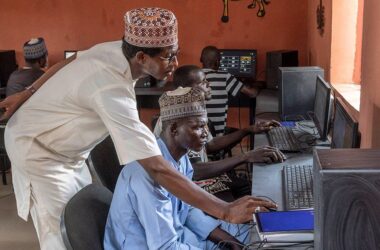




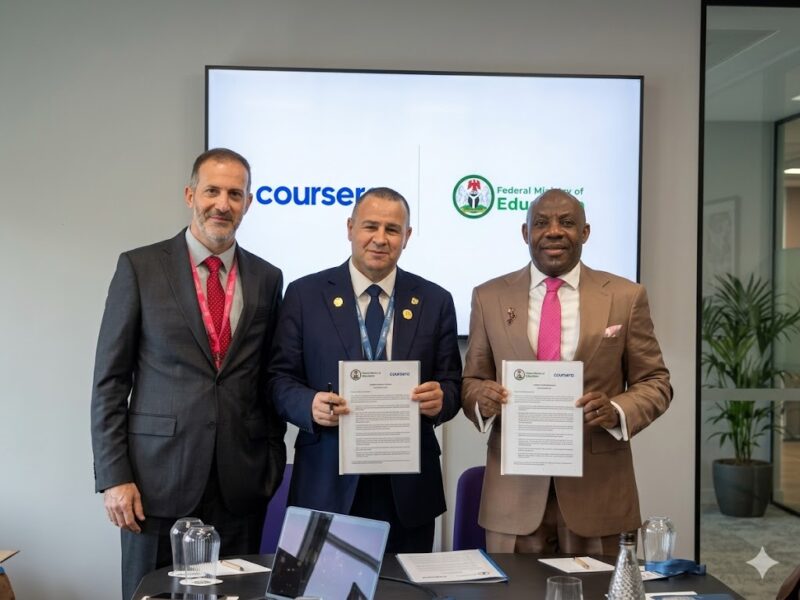
In a groundbreaking move that underscores Nigeria’s commitment to digital transformation and youth empowerment, the country has partnered with Coursera to deliver free artificial intelligence training to 36,000 young people across the nation. This initiative marks a significant stride toward bridging the digital skills gap that has long challenged African economies and represents a pivotal moment for Nigeria’s position in the global AI revolution.
The partnership comes at a time when artificial intelligence is rapidly reshaping industries worldwide, creating unprecedented demand for skilled professionals. Nigeria, with its massive youth population and vibrant tech ecosystem, stands to benefit enormously from this strategic collaboration. Young Nigerians will gain access to world-class AI education without financial barriers, democratizing learning opportunities that were previously accessible only to those with substantial resources. This is not just about training individuals; it’s about building a foundation for sustainable technological innovation and economic growth that will ripple across the entire nation.
What makes this initiative particularly remarkable is its scale and inclusivity. Thirty-six thousand participants represent a substantial cohort of young Africans who will receive formal training in one of the most sought-after skill sets of our time. These youths will learn the fundamentals of artificial intelligence, machine learning, and data science,disciplines that are increasingly critical for career advancement across virtually every industry sector. From healthcare and finance to agriculture and e-commerce, AI competency has become a non-negotiable asset for professionals seeking competitive advantage in the job market.
CHECK OUT: What Employees Gained from Africa’s Top 5 Acquisitions
Coursera’s involvement brings considerable prestige and pedagogical excellence to the program. The platform, which has built its reputation by delivering university-level courses from top institutions globally, ensures that participants receive education aligned with international standards. This credibility is crucial because it means Nigerian youths will not only gain knowledge but will also earn recognized certifications that hold weight in both local and international job markets. In an era when remote work and global employment opportunities have become mainstream, this credential recognition transforms the initiative from a domestic program into a gateway for worldwide career prospects.
The timing of this partnership reflects a broader awakening across African nations regarding the transformative potential of AI. While developed economies have been investing heavily in AI infrastructure and talent development for years, African countries are increasingly recognizing that falling behind in this domain could perpetuate existing economic inequalities. Nigeria, as Africa’s most populous country and largest economy, has a unique responsibility and opportunity to lead this charge. By equipping a significant portion of its youth with AI skills today, Nigeria is laying groundwork for tomorrow’s tech leaders, entrepreneurs, and innovators.
Economic implications of this training initiative extend far beyond individual career advancement. When thousands of talented young Nigerians master AI technologies, they create competitive advantages for local businesses and startups. Nigerian entrepreneurs can build AI-powered solutions tailored to African markets; fintech platforms, agricultural technologies, healthcare applications,with sophisticated technical talent available locally. This reduces brain drain, encourages local innovation ecosystems, and positions Nigeria as a destination for tech investment rather than solely a source of talent exported elsewhere.
The initiative also addresses a critical gender dimension in tech education. Historically, women have been underrepresented in technology fields, particularly in emerging areas like artificial intelligence. By ensuring that this program reaches female participants alongside male counterparts, Nigeria is taking deliberate steps toward greater gender equity in the tech sector. Young women who complete this training will join a growing movement of female AI practitioners, helping shift the demographic composition of tech workforces and bringing diverse perspectives to problem-solving in technology.
For young Nigerians specifically, the stakes of acquiring AI skills cannot be overstated. The global job market increasingly demands technical competency, and AI proficiency represents a clear differentiator. Graduates of this Coursera program will be prepared for roles ranging from junior AI engineers and data analysts to machine learning specialists and AI consultants. These positions typically command premium salaries, offering pathways out of poverty and into professional stability that can transform lives and communities. Moreover, as these trained individuals advance in their careers, they become mentors and knowledge-sharers for subsequent generations, creating multiplicative effects on Nigeria’s overall tech talent pool.
Infrastructure and internet accessibility remain important considerations, though this partnership demonstrates faith in Nigeria’s expanding digital infrastructure. More Nigerians than ever before have access to smartphones and internet connectivity, particularly in urban centers. Coursera’s platform is designed to work across various connection speeds and devices, making it feasible for participants across the country, from Lagos to Kano, from Port Harcourt to Abuja, to engage with course materials regardless of their local broadband capacity. Where internet challenges persist, creative solutions such as offline-enabled content and community learning centers can supplement the program.
The collaboration also signals something deeper: Nigeria’s recognition that AI is not a luxury skill for the distant future but an urgent necessity for the present. Industries are already undergoing AI-driven transformation. Agricultural practices are being revolutionized by AI-powered crop monitoring and predictive analytics. Financial institutions are deploying machine learning for fraud detection and credit assessment. Healthcare providers are exploring AI diagnostics. In this context, waiting to develop AI talent represents a strategic gamble. By training 36,000 young people now, Nigeria ensures it has human capital ready to harness these opportunities as they emerge.
From a policy perspective, this partnership reflects enlightened leadership that prioritizes human capital development. Rather than passive technology consumption, the program emphasizes active skills development. This approach fosters not just employment but entrepreneurship. Trained graduates might start their own AI ventures, develop innovative applications, or establish tech consultancies. They might create solutions to distinctly African challenges—from improving supply chain efficiency for small farmers to developing AI systems that understand Nigerian languages and cultural contexts. The ripple effects of this single initiative could reshape Nigeria’s technological landscape for decades.
Skeptics might question whether free training alone can create job-ready AI professionals. The reality is nuanced. While Coursera courses provide essential knowledge, true mastery of AI typically requires supplementary hands-on experience, portfolio building, and continued learning. However, this program serves as a crucial starting point, lowering barriers to entry and providing the foundational knowledge necessary for further specialization. Participants who excel can then pursue advanced certifications, degree programs, or apprenticeships in AI-focused companies. The program effectively opens doors that would otherwise remain closed.
The success of this initiative will likely depend on several factors beyond the course content itself. Community mobilization will be essential to ensure that qualified young people know about and enroll in the program. Mentorship and peer support networks should be established to help participants navigate challenges and maintain momentum throughout their courses. Post-course placement support,connecting graduates with employers or entrepreneurship resources,would maximize the program’s impact. If executed comprehensively, these complementary efforts can transform the initiative from simply distributing education into genuinely enabling economic mobility.
Looking ahead, this partnership may serve as a template for other African nations pursuing similar goals. If Nigeria’s program demonstrates measurable success,graduates finding employment, startups launching, innovation accelerating, other countries will likely pursue comparable arrangements with Coursera and other learning platforms. This could catalyze a continent-wide movement toward democratized AI education, fundamentally shifting Africa’s position in the global digital economy. What starts as a single partnership involving 36,000 Nigerian youths could become a regional transformation with implications far beyond Nigeria’s borders.
For the young Nigerians who will participate in this program, the opportunity represents more than job training. It’s an invitation to shape the future. Those who commit to mastering artificial intelligence will join global communities of practice, contribute to solving some of humanity’s most pressing challenges, and potentially build wealth and influence on the back of their technical expertise. They will inherit a world where AI is ubiquitous and be equipped to lead in that world rather than merely inhabit it.
The Nigeria-Coursera partnership to train 36,000 youths in artificial intelligence is ultimately a statement of ambition. It declares that Nigeria and its young people deserve access to the skills and knowledge shaping tomorrow. It asserts that African talent deserves development and investment. And it recognizes that the future belongs to nations and individuals equipped with the technical competencies to create, implement, and benefit from artificial intelligence. In pursuing this partnership, Nigeria is not simply offering free courses’ it’s investing in its future and the futures of millions of young Africans who will follow in the footsteps of these 36,000 pioneers.