



There’s a moment in every growing business when you realize payment processing alone isn’t enough. You need visibility into what’s actually happening in your operation. You need to know which products are walking out the door without being paid for, why your cash flow always feels tighter than it should, and whether you’re even making the decisions your business needs to survive.
For the past decade, that moment has been a wake-up call most South African small business owners never get to experience. They’ve been left with spreadsheets, handwritten notes, and gut instinct while larger enterprises deploy sophisticated software that costs more than their annual payroll. That gap between what small business owners can actually afford and what they desperately need to run efficiently, is exactly what Yoco’s acquisition of Dyner.ai, an AI-native operating system built to help SMEs, particularly restaurants, streamline operations, is designed to finally close.
What makes this acquisition significant isn’t just that a payments company bought software. It’s that Yoco is signaling a fundamental shift in how it sees its role in the SME ecosystem. For over a decade, Yoco built its reputation as the card machine company, the payment infrastructure that finally gave small businesses the ability to accept digital payments at a cost they could manage. But as co-founder Carl Wazen recently explained, that’s just the beginning. The company is evolving into a broader commerce platform combining payments, software, financial services and AI-powered operational tools for more than 200,000 merchants across South Africa.
SEE ALSO:Meta launches a new app called Forum
The timing isn’t accidental. SMEs contribute an estimated 35 to 40% of South Africa’s economy and support roughly 60% of employment, yet many still struggle with stock losses, fraud, poor cash-flow visibility, and inefficient operations. These aren’t minor operational headaches. For a restaurant owner managing thin margins on thousands of daily transactions, the difference between knowing exactly what walked out the door and guessing can be tens of thousands of rands annually.
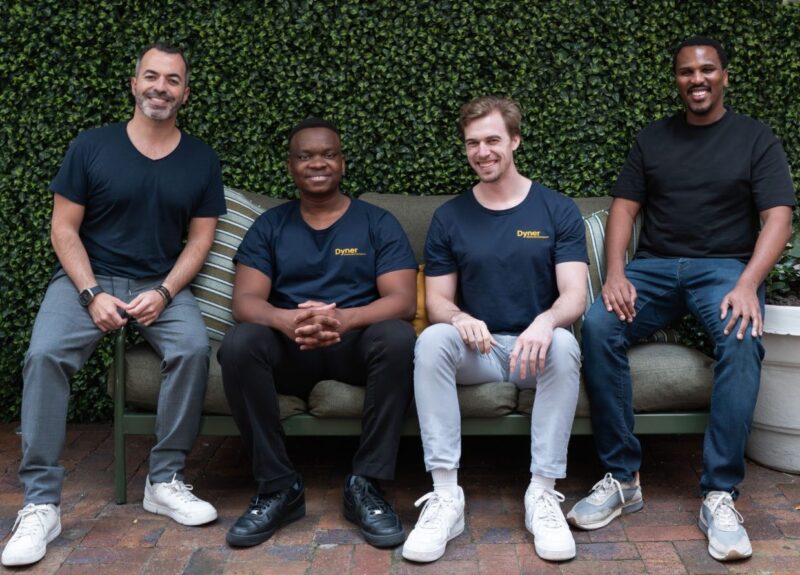
Dyner.ai, founded by Thalentha Ngobeni and Chris du Plessis, both former employees of Discovery, was built precisely for this reality. The platform automates the tasks that eat up hours of a business owner’s week—inventory tracking, supplier management, daily operation reporting. But what separates it from generic accounting software is that it uses AI to actually understand what’s happening beneath the surface. It identifies anomalies in your stock counts. It surfaces patterns in your supply chain costs. It flags inefficiencies you wouldn’t see until they’ve already cost you money.
What’s fascinating about watching this acquisition unfold is how perfectly it reveals where African fintech is headed. Western observers often assume that African payments companies will follow the path of global counterparts, PayPal, Stripe, Square,by staying in payments and building adjacent tools slowly over years. But Yoco’s move suggests something different. When you sit across from hundreds of thousands of business owners daily, you see their actual problems in real time. You see that they don’t need another app; they need a fundamentally better way to run their business.
The Dyner.ai team clearly spent significant time observing what restaurant operators and small merchants actually face. Rather than building software based on what enterprise customers use, they built something purpose-designed for the chaos of running a small business in South Africa. That distinction matters enormously. Many successful software products for SMEs fail because they try to be a simplified version of enterprise tools. Dyner was built from first principles around the specific constraints and opportunities of independent businesses.
For Yoco merchants, this means something quite concrete. Instead of paying Yoco for payments, then paying another vendor for stock tracking, then paying someone else to make sense of financial data scattered across multiple systems, they’ll have an integrated platform. All the transaction data Yoco already collects becomes operational intelligence. The supplier relationships Dyner tracks inform better payment decisions. The AI insights help owners understand which decisions actually drive profitability.
There’s also a strategic element worth considering. Yoco now possesses something competitors can’t easily replicate: direct, granular understanding of how independent businesses actually operate. Every transaction, every inventory adjustment, every workflow pattern becomes data that informs how the platform evolves. That’s a form of competitive moat that’s difficult to copy through acquisition alone. You can buy technology. You can’t easily buy the deep merchant understanding that comes from deeply embedding with thousands of business owners for years.
The broader context here is worth noting too. This acquisition represents a maturing moment in the African startup ecosystem. It represents a maturing local tech ecosystem, with two South African startups joining forces to build enterprise-grade AI-powered tools for SMEs. Both Yoco and Dyner were built independently by South African teams solving South African problems. Neither is an imported solution adapted for local markets. That authenticityunderstanding what actually happens when a restaurant operator in Johannesburg runs out of cash two weeks before month-end, or how a township spaza shop owner really manages inventory,translates into products that actually solve real problems.
Over the coming years, we’re likely to see more of this pattern. AI adoption among SMEs will accelerate not because fintech companies suddenly decide to be generous, but because the competitive pressure will demand it. Businesses that offer sophisticated operational intelligence at SME-friendly prices will pull market share from those that don’t. Once that flywheel starts spinning, it moves fast.
For the broader South African economy, this shift is meaningful. That 35 to 40% of economic output generated by SMEs is constrained by inefficiency in ways that are difficult to quantify but easy to recognize if you spend time with business owners. A restaurant that could reduce waste by even 5% through better inventory tracking suddenly has margin to hire another employee or reinvest in the business. A spaza shop owner who understands exactly which product categories are actually profitable can focus on what works instead of what feels safe. Multiply those decisions across hundreds of thousands of businesses, and you’re talking about real economic impact.
The Dyner acquisition also signals something about where Yoco sees its future revenue. Payment margins have compressed dramatically over the past decade. There’s only so much a payment processor can earn per transaction before customers start demanding something better or cheaper. But if you become indispensable for understanding and running a business, you’ve moved into a far stickier value proposition. That’s the real play here.
What makes this worth paying attention to is that it’s likely not the last move of this type. As South African fintech reaches a certain maturity, the companies that thrive will be those that move beyond solving a single point problem. Yoco is betting that the future belongs to platforms that become genuinely important to how a business operates, not just how it processes payments. For the 200,000 merchants currently using Yoco, and the millions of other South African SMEs still operating without the tools they need, that shift can’t come fast enough.