




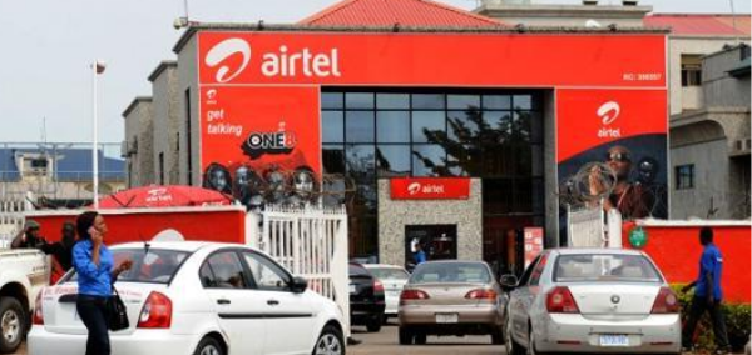
Airtel Nigeria earned ₦3,290 per customer from data, voice and other services in the second quarter of 2026. This is according to a corporate filing by parent company Airtel Africa. The figure rose from ₦2,880 in the same period last year. It shows how deeply data use now shapes the telecom giant’s earnings in Nigeria.
Average revenue per user, or ARPU, measures how much money an operator makes from each subscriber. Airtel Nigeria’s total consumer base stood at 86.5 million as of the second quarter. Data customers made up 37.8 million of that number.
Total revenue for the Nigerian unit reached ₦689.87 billion, or about $501 million. That is a 50.4 percent year on year jump in reported currency. It rose from ₦459 billion a year earlier. The naira’s appreciation also helped. The exchange rate moved from 1,585 to the dollar a year ago to 1,367 in the quarter under review.
Data remained the biggest driver of growth. Airtel Nigeria earned ₦361 billion from data services alone. That marks a 59.9 percent year on year increase in reported currency. Analysts link this surge to rising internet penetration and wider smartphone adoption. Nigerians are also spending more time online. Remote work, content creation and social media all play a part.
Smartphone penetration on the network climbed 4.6 percent to reach 56.1 percent. Data usage per smartphone customer grew too. It hit 14.9 gigabytes a month, up from 11.8GB during the same period last year.
Voice revenue held its ground as well. Mobile calls generated ₦264 billion, up 42.6 percent in reported currency. Still, the gap between data and voice earnings keeps widening in favour of data.
Mobile money told a different story. The SmartCash PSB service brought in ₦6.8 billion, up from ₦2.7 billion a year earlier. But mobile money still contributes less than one percent of total revenue. This shows Airtel’s financial services arm remains a small player. Fintech giants like Moniepoint, OPay, Kuda and Palmpay dominate the space, alongside MTN’s rival MoMo PSB.
Other revenue streams added ₦58 billion to the quarter. These included infrastructure sharing, airtime and data lending, value added partnerships, and wholesale and carrier services.
Airtel Nigeria’s revenue now makes up 27.03 percent of the group’s total earnings across 14 African markets. This cements Nigeria as Airtel Africa’s leading market on the continent.
Profitability improved too. Earnings before interest, tax, depreciation and amortisation reached $292 million, a 58.2 percent rise in reported currency. The EBITDA margin expanded by 305 basis points to 58.8 percent. Strong revenue growth and an ongoing cost efficiency drive both helped. However, rising energy costs continue to weigh on margins.
Across the wider Airtel Africa group, revenue for the quarter grew 31 percent year on year to $1.85 billion. Data revenue contributed $750 million, while voice revenue added $640 million. Mobile money brought in $404 million group wide. Other services added $129 million.
SEE ALSO:Abuja Telecom Summit Sets Africa’s Digital Path to 2031
Group profit after tax rose 27 percent to $198 million, supported by EBITDA of $928 million. The group’s total customer base across its 14 markets grew from 169.4 million to 189 million. Data customers came close to the 90 million mark.
Nigeria’s $501 million contribution remained the largest from any single market. East Africa followed with $854 million in total revenue. Francophone Africa recorded $492 million.
These results build on a strong first quarter. Airtel Africa had reported $1.7 billion in revenue then, a 22.3 percent increase in constant currency. Data revenue drove $705 million of that figure, while voice revenue added $613 million. Profit after tax for that quarter jumped 183.3 percent to $227 million.
Nigerians keep shifting more of their daily lives online. Streaming, mobile banking and remote work all play a role. Airtel’s latest numbers suggest the country’s data economy still has room to grow. Telecom operators stand to benefit the most from that shift.