




Cape Town-based AI startup Verascient has raised $1.2 million. This is the company’s first funding round. The money will help it build faster, smarter teams for its clients using artificial intelligence.
Founder Collective led the round. This investor also backed Uber, Airtable and Whoop in their early days. Andrena Ventures joined too, led by Gideon Valkin, a former commercial director at Monzo. Cambridge Enterprise and Summit Ventures also took part. Angel investors Alan Knott-Craig and Shayne Mann invested as well. In short, the round was oversubscribed.
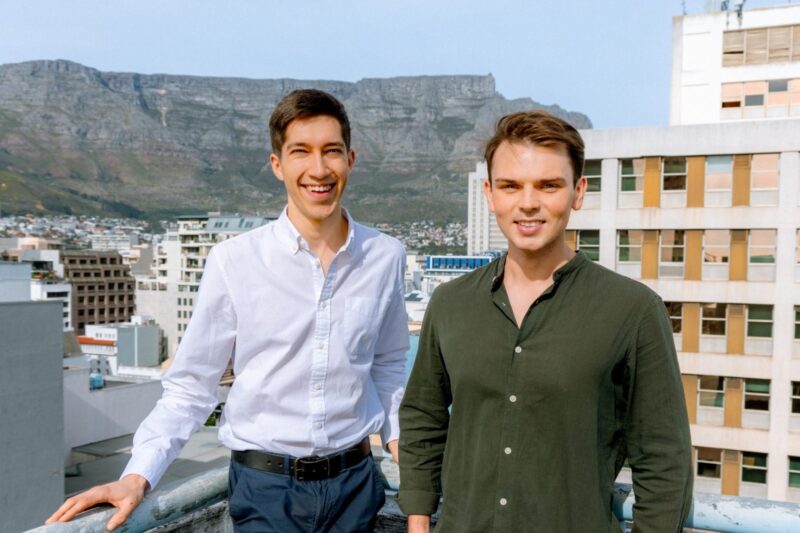
Keagan Stokoe and Emile Ferreira founded Verascient. Both are South African. Together, they built a company that solves a simple but costly problem. Company information is often scattered. It sits in documents, systems and people’s heads. Verascient pulls that information together. Then, it uses it to build AI-powered workflows and agents.
So what problem is Verascient really solving? Many businesses now buy AI tools. But there’s a catch. These tools need good information to work well. Often, that information is scattered everywhere. A customer’s details might sit in one system. Their payment history could sit in another. An important decision might be buried in an email. Meanwhile, the numbers needed to act on it sit in a spreadsheet.
This is the exact gap Verascient fills. The startup pairs its software with real AI engineers. These engineers work directly with client companies. Together, they find inefficient processes. Then, they build AI workflows to fix them. Verascient’s pitch is simple: giving staff access to a tool like ChatGPT isn’t enough. Companies also need the right infrastructure. Without it, AI can’t reach its full potential.
At the heart of the platform is a temporal knowledge graph. This tool organises a company’s institutional knowledge. It also keeps track of history, permissions and where information came from. As a result, scattered data becomes secure. It also becomes easy to find.
Interestingly, Verascient didn’t start here. The company first built a hallucination detector. Later, it pivoted to enterprise AI infrastructure. That early work still shapes its product today.
Stokoe, the company’s co-founder and CEO, explains the strategy simply. “We start with the work that matters,” he said. This includes revenue, operations, customer experience, decision-making and delivery. In other words, Verascient avoids empty hype. Instead, it focuses on everyday business tasks.
DON’T MISS:Vox, Frogfoot Secure $900m to Expand SA Broadband
The startup is also choosy about its first customers. Right now, it targets financial services, insurance and logistics. Why these sectors? Because they handle huge amounts of information daily. This includes emails, documents, spreadsheets, meetings and internal systems. Often, this knowledge builds up over years. Yet it rarely gets written down properly.
On the technical side, Verascient already has strong reach. Its platform includes more than 1,000 integrations. It’s also built to work with existing business systems. This means companies can adopt it easily. They won’t need to replace tools they already use.
So, where will the new funding go? Mainly, into growth. Verascient plans to expand its engineering team. It will also keep improving its technology. This will help it support more enterprise clients. At the same time, the founders are focused on local hiring.
That hiring goal is ambitious. Stokoe wants South Africa’s “top 1%” of AI talent. He’s especially looking for people who can own tough technical and business problems. This comes at a competitive time. African tech firms increasingly compete with global companies for skilled engineers.
Still, funding alone doesn’t guarantee success. Yes, $1.2 million gives Verascient room to grow. But it doesn’t prove the product works at scale. The real test comes next. Can Verascient turn scattered company data into real business value?
If it can help an insurer process claims faster, that’s a win. If it helps a logistics firm skip between systems less often, that’s another. For now, though, the hardest work is just beginning.