


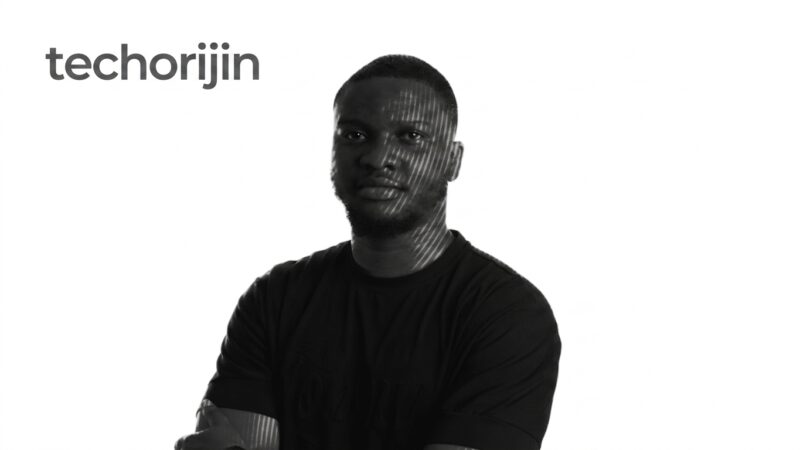
Peter Otobong did not grow up around software engineers. His world was full of accountants, government workers and people in the oil industry. Nobody close to him had turned a love for computers into a career. Still, one borrowed laptop changed everything.
In 2014, an uncle handed him an HP Mini laptop. For the first time, Otobong had a computer he could explore freely. So he started teaching himself to code. He picked up C++ and slowly learned how web applications worked. Even then, though, software engineering did not feel like a real career option to him.
His interest actually began much earlier. In primary four, his school introduced a computer lab to teach basic programs like Word and Excel. While his classmates focused on the lessons, Otobong kept wondering what was happening underneath the screen. That curiosity never left him.
By 2015, it was time to choose a university course. He picked electrical and electronics engineering at the University of Port Harcourt. A family friend suggested it, and it felt like a safe bridge between machines and computers. He spent five years on the course. But an internship outside the classroom shaped his future far more.
In 2019, Otobong interned at Atopets Automation, a robotics company in Port Harcourt. He worked with microcontrollers, Arduino boards and Raspberry Pi devices. Slowly, he realised he loved the software behind the hardware even more. That discovery led to his final year project, a facial recognition system built to control a smart door.
CHECK OUT ALSO:Nigeria’s Internet Subscriptions Rise to 157.4 Million as Broadband Penetration Reaches 56.1%
Then came a real turning point. In 2020, he became a Google Student Developer Lead at his university. Through that role, he met developers across Africa who were building full careers out of software. For the first time, he could picture himself doing the same.
After graduating in 2021, Otobong joined the African Blockchain Centre for Developers. He applied expecting to simply learn blockchain basics. Instead, the organisation noticed his technical skill and his gift for bringing people together. So they invited him to join the team. Gradually, he grew from a learner into a technical lead.
While there, Otobong also built something outside pure code. He got involved with Blacks In Technology, a global nonprofit supporting Black professionals in tech, and helped launch a Nigerian chapter. He wanted to help young developers get equipment, since his own journey had started with a borrowed laptop. But a planned $10,000 laptop fund fell apart after transfers to Nigeria kept getting flagged and reversed. So the chapter turned to virtual events and online learning partnerships instead. Within a short time, the chapter grew to nearly 500 members and became the fastest growing international chapter in 2022.
In January 2024, Otobong joined LTO Network, a Dutch blockchain company, as a senior software engineer. He worked on GoLand Registry, a project that let property owners create verifiable digital land records. He also helped adapt the platform for Burkina Faso. That meant thinking beyond code alone. He had to consider limited internet access, government processes and how people would actually use the system.
At LTO, he also built the project he is most proud of. It was a relay protocol that let digital wallets exchange files and assets, not just cryptocurrency. Watching real users depend on it gave him a strong sense of purpose.
In 2026, Otobong joined Esca Finance, a fintech company focused on cross-border payments and currency liquidity. There, he learned that good software alone is never enough. He also had to understand compliance, fraud prevention and how money actually moves across borders.
One project taught him this lesson clearly. At Fraqtion Finance, his team designed a system to let people pool funds for real-world trade, such as financing lithium purchases from Nigeria. The technology worked fine. But questions around licensing, regulation and financial partnerships stalled everything, and the project never launched. That failure, he says, reshaped how he views his profession.
Today, Otobong no longer sees himself simply as a coder. Instead, he describes himself as a systems engineer, someone who thinks not just about whether code works, but whether the wider system around it can survive contact with the real world.
Looking back, he admits one regret. He wishes he had trusted his path sooner instead of keeping his options open for so long. He still believes the path he chose was right. He just wishes he had pursued it with more conviction, earlier.
From a borrowed laptop to cross-border financial systems, Otobong’s story shows how curiosity, community and steady learning can shape a career in ways no early plan could predict.