



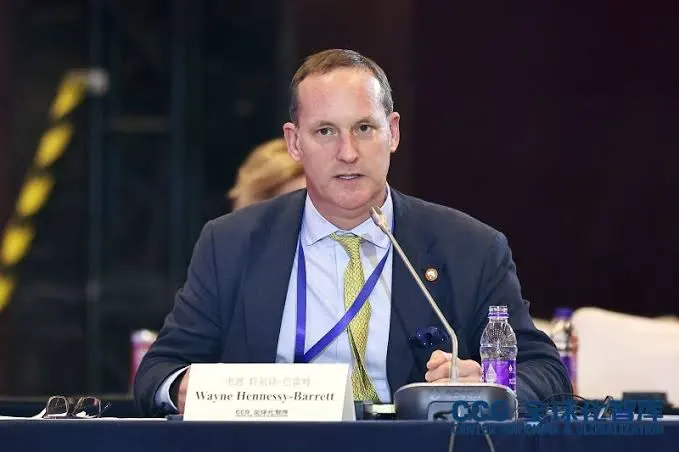
Thirteen years ago, Wayne Hennessy-Barrett walked into Kenya’s informal markets. He had no bank, no loan book, and little finance experience. But he had one question for the traders he met. What did they need?
The answers were simple. He said he walked around and asked people what they needed. They told him they needed a loan right away, to buy stuff and sell it.
That conversation sparked 4G Capital. It is the Kenya-based lender Hennessy-Barrett built for small businesses that traditional banks turned away. Today, the company has disbursed more than one billion dollars across over seven million loans. It has also kept a repayment rate of about 95 percent.
These traders never lacked demand for money. Instead, they needed it constantly. They needed it to restock goods, seize a good buying opportunity, or keep trading when cash sat tied up elsewhere. However, most had neither the collateral nor the financial records that banks usually demand.
So Hennessy-Barrett looked for a better way to judge who deserved credit. Rather than asking traders to prove their worth through assets or years of paperwork, he flipped the model. First, 4G Capital would lend traders working capital. Then, the company would watch how they repaid it. Finally, it would use that repayment behaviour to decide how much they could borrow next.
It was a simple idea. Still, it helped grow the company from a 100 dollar loan in its early days to over a billion dollars in total loans.
Before finance, there was the military. Hennessy-Barrett served in the British Army. He worked in conflict zones across the Balkans, the Middle East, and South Asia. That experience taught him something important. Communities recovering from conflict need more than security. They also need jobs, working businesses, and access to capital.
After leaving the army, he joined a South African startup. The company sent him to East Africa to build an unsecured lending business from scratch. He arrived in 2013 without a typical finance background. Looking back, he believes that gap actually worked in his favour.
He explained that his lack of formal finance training kept him open-minded. As a result, he could see opportunities that a conventional banker might have missed.
So he started where his customers already were. Hennessy-Barrett walked through Kenya’s busy informal markets. He talked to traders and learned what was missing from their businesses. These conversations shaped 4G Capital’s first product: a 100 dollar working capital loan, repayable over 30 days.
To decide who qualified, he built small field teams. These teams moved from business to business through the markets. Prospective borrowers answered about 40 questions. Their answers then fed into a credit calculator, which determined how much they could realistically borrow.
Eighteen months later, Hennessy-Barrett led a management buyout. This move let him take ownership of the business. Soon after, the company began trading as 4G Capital in 2015.
ALS READ:16-Year-Old Nigerian Belusochim Ugochukwu Joins Apple
Many startups feel pressure to expand quickly once they find early traction. Often, they pivot into new products too soon. But 4G Capital chose a different path. Instead of chasing new ideas, the company sharpened the one it already had.
According to Hennessy-Barrett, the company landed on strong product-market fit on its first attempt.
As 4G Capital issued more loans, it gathered more data on repayment habits. Eventually, that data grew into Eva, the company’s proprietary underwriting algorithm. This system studies factors like repayment history and seasonal trading patterns. From there, it calculates how much a customer can safely borrow and how likely they are to repay. Today, Hennessy-Barrett said, the underwriting process runs almost entirely on automation.
The company also noticed a pattern. Many customers struggled with basic bookkeeping and stock management. This struggle limited their ability to grow or qualify for bigger loans. So, 4G Capital added enterprise training alongside its lending. The goal was simple: help entrepreneurs build stronger, more bankable businesses.
Over time, the company also learned how goods move between distributors and informal retailers. As a result, it introduced a supply chain finance product. Through this offering, distributors get paid immediately for goods supplied to retailers. Meanwhile, 4G Capital finances the transaction and collects repayment from retailers over an agreed period.
Not every idea made the cut, though. Hennessy-Barrett said the team tested several new products over the years. However, they chose not to roll all of them out. Some promising pilots simply got shelved, since the team already had enough on its plate.
Today, the business looks very different from where it started. What began with 100 dollar loans has grown into an operation with over a billion dollars in total disbursements. The average loan size now sits between 120 and 130 dollars.
Meanwhile, customers with a long repayment history can borrow up to 2,000 dollars. The company’s supply chain finance arm carries average loan sizes of about 400 dollars.
Even so, Hennessy-Barrett believes the real opportunity is still much bigger. Kenya has an estimated 7.2 million micro, small, and medium enterprises. Yet 4G Capital has served just under 800,000 of them. On top of that, small businesses across the region face a financing gap worth billions of dollars. This gap leaves him convinced there is plenty of room left to grow.
In fact, he says the company has barely begun.
More than a decade after he first walked through Kenya’s markets, Hennessy-Barrett says one thing remains true. The traders’ answer to his original question hasn’t changed. What has changed is 4G Capital’s ability to answer it.