




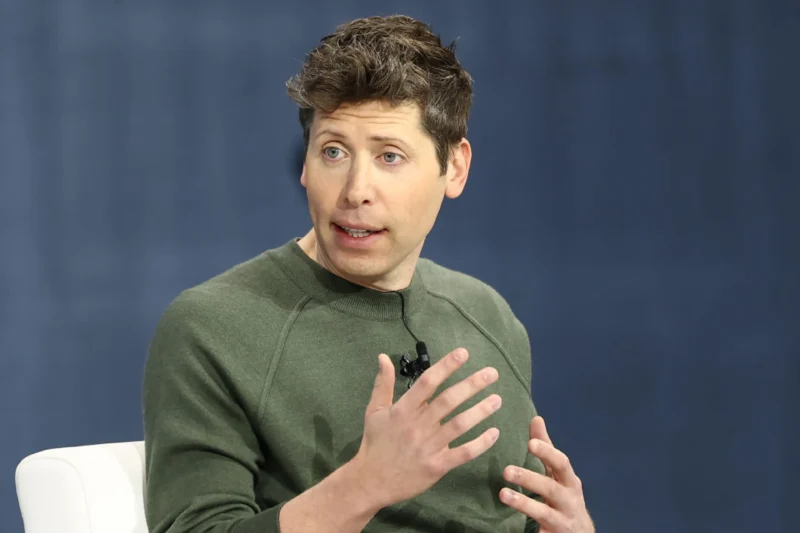
OpenAI CEO Sam Altman has sparked fresh conversation across the technology world after describing the company’s newest artificial intelligence model as “an autistic genius,” as first reported by Watcherguru a phrase he used to emphasize the system’s unusual reasoning ability, pattern recognition and problem solving strengths.
The comment reflects the growing perception that modern AI systems are moving beyond simple chatbots into tools capable of advanced reasoning, coding, research assistance and complex decision making. While Altman’s wording has generated debate online, the broader point was clear: OpenAI believes its newest generation of AI models represents a major leap in capability compared to earlier systems.
Over the past few years, OpenAI has evolved from a relatively niche research organization into one of the most influential technology companies in the world.
Founded in 2015 by a group of tech leaders including Sam Altman and Elon Musk, OpenAI initially positioned itself as a research lab focused on ensuring artificial intelligence would benefit humanity. At the time, AI was still largely viewed as an experimental field dominated by academic institutions and large tech firms.
That perception changed dramatically following the release of ChatGPT in late 2022. The chatbot quickly became one of the fastest-growing consumer technology products in history, introducing millions of people to generative AI for the first time.
Since then, OpenAI has rapidly expanded its technology ecosystem. Its models are now capable of:
-
writing and analyzing code
-
generating human-like text
-
assisting with medical and legal research
-
creating images and videos
-
translating languages
-
automating business workflows
-
powering AI assistants across industries
SEE ALSO: Meta Strengthens AI Ambitions With Acquisition of Humanoid Robotics Startup
The company’s partnership with Microsoft also accelerated its global influence, with OpenAI technology becoming integrated into products such as Microsoft Copilot, Azure cloud services, and enterprise productivity tools.
Today, AI systems developed by OpenAI are being used in education, healthcare, software engineering, finance, customer service, and media production. Businesses increasingly rely on generative AI to reduce costs, improve productivity, and automate repetitive tasks.
The rise of OpenAI has also intensified the global AI race. Major companies, including Google, Meta, Anthropic, and xAI, have invested billions of dollars into developing competing models, turning artificial intelligence into one of the defining technological battles of the modern era.
At the same time, concerns surrounding AI continue to grow. Experts and governments have raised questions about:
-
job displacement
-
misinformation
-
privacy
-
copyright
-
AI safety
-
and the long-term societal impact of increasingly powerful systems
Altman himself has repeatedly warned that advanced AI could transform society at a scale comparable to the internet or electricity, while also calling for global regulation and safety standards.
Despite the debates, OpenAI’s influence on the technology landscape is undeniable. What began as a research experiment less than a decade ago has become a company reshaping how people work, communicate, and access information around the world.
With each new model release, OpenAI continues pushing artificial intelligence further into mainstream life, reinforcing the idea that AI may become one of the most transformative technologies of the twenty-first century.