



For nearly a decade, the foldable smartphone market has felt like an unfinished experiment. Companies like Samsung, Huawei, Motorola and Oppo have spent years trying to convince consumers that phones that bend are the future. As apple prepares to enter the market the question is will Apple’s Foldable iPhone Be a Success or a Flop?
The results have been mixed.
Foldables generated excitement, headlines, and impressive engineering breakthroughs, but they never truly became mainstream. Many consumers still see them as luxury gadgets rather than essential devices. Some complained about thick designs, fragile screens, visible creases, high prices, and software experiences that often felt unfinished.
Now, in 2026, the company that famously waits before entering a category is finally preparing to arrive. According to reports from Bloomberg and multiple industry analysts, Apple is on track to unveil its first foldable iPhone in September 2026 alongside the iPhone 18 Pro lineup.
And that raises the biggest question in the smartphone industry today:
Will the iPhone Fold become Apple’s next billion-dollar success story or the product that finally proves foldables are still a niche idea searching for a purpose?
Apple Is Entering at a Strange Time
Ironically, Apple’s foldable iPhone is arriving just as the foldable market itself appears uncertain.
Research firms like Counterpoint Research say foldable smartphone shipments are expected to grow again in 2026, partly because Apple’s arrival could push the category into the mainstream. IDC forecasts also point to strong growth over the next few years.
But behind those optimistic forecasts lies a more complicated reality.
Counterpoint previously reported that the foldable smartphone market stalled in 2024 and 2025 after years of hype, with adoption rates falling below expectations.
That slowdown exposed a difficult truth about foldables: many consumers admire them, but far fewer actually buy them.
For most people, traditional flagship smartphones already do almost everything they need. A standard iPhone or Galaxy device is thinner, cheaper, more durable, and easier to carry. Foldables, meanwhile, often cost nearly twice as much while introducing new concerns around hinges, battery life, repairability, and long-term durability.
That is the environment Apple is stepping into.
But Apple has never really cared about being first.
The company was not first with smartphones, smartwatches, wireless earbuds, or tablets. Instead, Apple’s strategy has usually been to wait until the technology matures, then refine the experience so aggressively that consumers begin treating the category as mainstream.
That may be exactly what Apple believes it can do with foldables.
The Real Bet Is Not the Hardware, It’s the Apple Ecosystem
Most Android foldables today are sold primarily as hardware innovations.
Apple’s advantage could be something deeper.
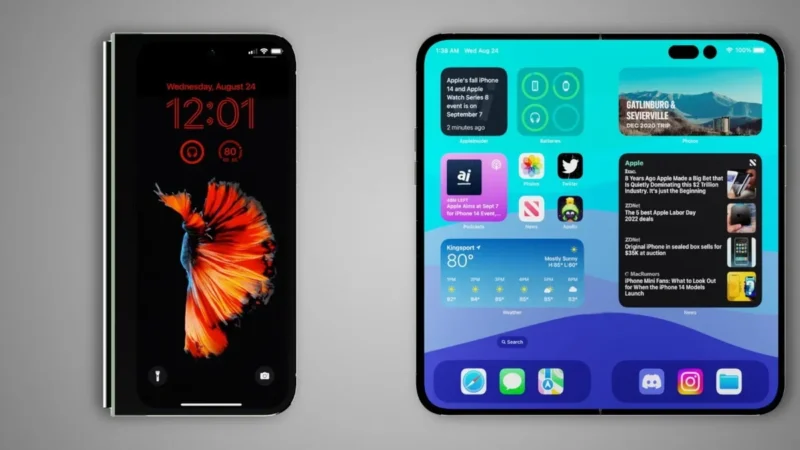
Reports suggest Apple’s foldable device may feature a nearly crease-free display, slimmer construction, and a wider book-style design closer to a small tablet than a narrow folding phone.
But the bigger story may be software integration.
For years, foldable phones have struggled with a simple problem: users often do not know why they truly need a larger folding screen. Many owners end up using foldables exactly like regular smartphones.
Apple could change that if it successfully connects the foldable iPhone into its wider ecosystem of iPads, Macs, AirPods, iCloud services, AI tools, and productivity features.
If Apple positions the device not just as a phone, but as a hybrid between an iPhone and an iPad mini, the appeal becomes more understandable.
Imagine opening your phone into a mini workstation for editing documents, multitasking, gaming, video calls, AI-assisted workflows, or content creation, all synchronized seamlessly with other Apple devices.
That is where Apple historically wins: not necessarily by inventing new categories, but by making them feel practical and polished.
Why Apple Could Succeed Where Others Struggled
There are at least five reasons why the iPhone Fold could become a massive success.
1. Apple’s Customer Loyalty Is Different
Apple has one of the most loyal customer bases in consumer technology.
Millions of users upgrade iPhones almost automatically every few years. That built-in demand gives Apple a major advantage over Android competitors that had to convince consumers to trust entirely new form factors from scratch.
Analysts at Counterpoint Research even project Apple could capture nearly half of North America’s foldable market shortly after launch.
That prediction may sound aggressive, but Apple’s ecosystem power makes it believable.
2. Apple Is Arriving After Years of Industry Experimentation
Samsung has already spent seven generations refining foldable hardware. Chinese brands like Huawei and Oppo have also accelerated innovation around hinges, crease reduction, battery design, and thinness.
Apple benefits from entering later.
Instead of educating the market from scratch, Apple can study years of consumer complaints and simply avoid the biggest mistakes.
3. The Timing May Finally Be Right
Earlier foldables often felt bulky and fragile.
But the industry is improving rapidly. Devices are becoming thinner, lighter, and more durable. Some recent foldables, like the Samsung Fold 7, now look surprisingly close to normal flagship phones when folded.
That matters because consumers were never rejecting the idea of foldables. They were rejecting awkward execution.
4. Apple’s AI Push Could Make Foldables More Useful
The AI era may unexpectedly help foldables succeed.
As smartphones evolve into AI-powered assistants capable of multitasking, summarizing, editing, generating content, and managing workflows, larger screens suddenly become more valuable.
A foldable display paired with advanced AI tools could feel far more useful in 2026 than it did in 2020.
5. Apple Understands Premium Markets Better Than Most Companies
Even if the foldable iPhone costs around $2,000, Apple may still succeed because it dominates the premium smartphone segment globally.
Many Apple customers are already accustomed to paying premium prices for Pro Max iPhones, MacBooks, Apple Watches, and AirPods.
For Apple, the foldable iPhone may not need to become a mass-market product immediately. It simply needs to become a highly desirable luxury device.
But There Are Serious Reasons the iPhone Fold Could Struggle
Despite all the optimism, there are genuine risks.
And some of them are bigger than Apple fans may want to admit.
Foldables Still Solve a Problem Most Consumers Don’t Have
This remains the category’s biggest weakness.
Most people do not wake up wishing their phone could fold.
Unlike smartphones replacing feature phones, or laptops replacing desktops, foldables do not yet offer a dramatic lifestyle transformation for average users.
For many consumers, they remain impressive but unnecessary.
Price Could Become a Major Barrier
A foldable iPhone will almost certainly be expensive.
Some analysts believe pricing could start around $2,000 or even higher, depending on storage configurations.
At that price, consumers are no longer comparing it only to smartphones. They are comparing it to laptops, tablets, gaming devices, and even travel expenses.
That limits the addressable market significantly.
Durability Concerns Will Follow Apple Closely
Apple customers are accustomed to devices that feel durable and polished.
Foldables introduce moving parts, flexible displays, and long-term wear concerns. Even with major improvements, durability anxiety still affects consumer confidence.
If early reports reveal hinge issues, screen failures, or battery concerns, the narrative around the iPhone Fold could shift very quickly.
Apple Is Joining a Market That Already Has Strong Competitors
Samsung is not standing still.
In fact, reports suggest Samsung itself is redesigning future foldables with wider displays that resemble Apple’s rumored direction.
Huawei, Oppo, Honor, and other manufacturers have also become extremely aggressive in foldable innovation.
By the time Apple enters, the competition may already be years ahead in hardware refinement.
The Software Challenge Is Bigger Than It Looks
Building foldable hardware is difficult.
Building software that fully justifies foldable hardware may be even harder.
Apple will need developers to optimize apps for multitasking, split-screen experiences, and larger displays. Otherwise, users may simply end up running stretched iPhone apps on a bigger screen.
That would weaken the entire value proposition.
The Most Likely Outcome? Somewhere Between Revolution and Niche Luxury
The most realistic scenario is that the iPhone Fold will probably not “flop.”
But it may also not instantly redefine smartphones the way the original iPhone did in 2007.
Instead, Apple’s foldable device could become something more strategic:
A high-end premium product that gradually reshapes consumer expectations over several years.
That alone could still transform the industry.
Because when Apple enters a category, competitors react. Suppliers react. Developers react. Consumers react.
Even rumors of Apple’s foldable have already influenced the wider market, with manufacturers redesigning devices and analysts forecasting renewed foldable growth ahead of Apple’s arrival.
The bigger impact may not simply be the iPhone Fold itself.
It may be the fact that Apple’s entry finally convinces the broader industry that foldables are worth taking seriously again.
And if Apple succeeds in solving the issues that held foldables back, thickness, creases, battery compromises, weak software optimization, and unclear purpose, then 2026 could become the moment foldables stop being experimental gadgets and start becoming mainstream computing devices.
But if even Apple cannot convince consumers they truly need a folding phone, then the entire category may face a much harder future than the industry expected.