



MTN is buying back what it once sold ,and the impact could be huge for Francophone West Africa.
MTN Group, Africa’s largest mobile operator, has announced a proposed all-cash acquisition of IHS Towers, one of the continent’s largest owners of telecom infrastructure. The deal would see MTN acquire 100% of IHS’s shares and take the company private, at an enterprise value of approximately $6.2 billion. But this isn’t just a big money deal. It’s a power shift ,and Francophone West Africa sits right at the center of it.
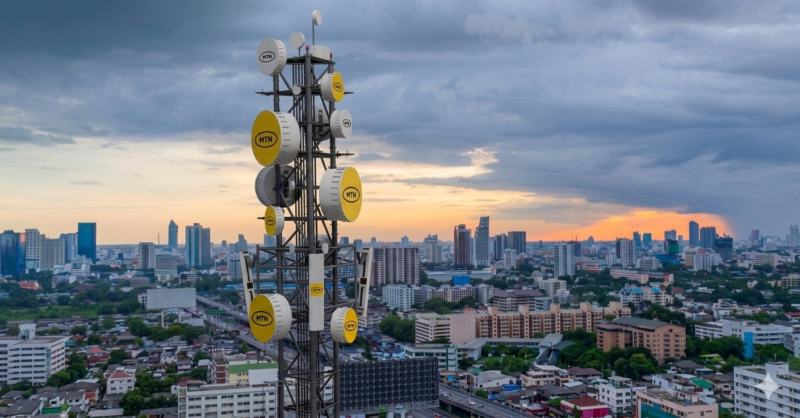
To understand why this matters, you need to know what IHS Towers controls. IHS manages roughly 2,678 towers in Côte d’Ivoire and 2,500 in Cameroon. These towers carry signals for multiple telecom operators. They are the backbone of mobile internet and voice calls across the region. Since 2013, IHS Towers has acquired MTN-owned towers in Côte d’Ivoire, Cameroon, Zambia, Rwanda, and Nigeria. MTN sold those towers to raise cash and cut costs ,a smart short-term move. But now, MTN wants them back.
MTN previously owned and operated most of its telecom towers directly. Starting in the early 2010s, the company began selling thousands of towers to IHS as part of a strategy to reduce costs and focus on its core business of delivering connectivity and digital services. MTN sold the towers, received immediate cash, and then leased the same towers back to continue providing network coverage. That arrangement worked for a while. But macroeconomic pressures including foreign exchange volatility, inflation, and rising energy costs , have made tower leasing increasingly expensive and unpredictable. By reintegrating the tower assets, MTN will be able to cut the margin currently paid to IHS, improve cost predictability, and unlock long-term value.
Simply put: it’s cheaper to own than to rent, especially when the rent keeps going up.
Here is where things get interesting and a little concerning. IHS Towers currently operates as a neutral infrastructure provider. That means any telecom operator ,Orange, Moov, or anyone else; can rent space on those towers to deliver their services. MTN owning those towers changes that dynamic completely. According to Segun Cole, CEO of Maasai VC, “We are now moving from a market of independent TowerCos to a market of captive TowerCos.”
In Côte d’Ivoire and Cameroon, MTN’s competitors already rely on IHS towers to serve their customers. Once MTN takes full ownership, those competitors will essentially be renting infrastructure from their biggest rival. That raises serious questions about fair pricing, access, and competition. Making the situation harder, tenants on IHS towers cannot easily switch to new tower companies. Towers are fixed, location-specific infrastructure. Moving to another provider would require building new sites, securing permits, and investing in new equipment, all of which is costly and slow.
Regulators may step in. Nigerian regulators have already said MTN’s full acquisition of IHS Towers will be subject to a thorough assessment. Similar scrutiny is expected in other markets, and the transaction still requires approvals from IHS shareholders and regulators before it can close. MTN expects the process to be completed sometime in 2026.
- Regulators in Côte d’Ivoire and Cameroon now face a key question: should one operator control the towers that its competitors depend on?
MTN’s acquisition of IHS Towers is more than a financial deal. In Francophone West Africa, it could decide who gets affordable access to tower infrastructure, and who doesn’t. If regulators fail to set clear rules around fair access, smaller operators could face higher costs, and those costs will eventually reach everyday consumers. The price of mobile data in Abidjan or Douala could quietly go up,not because of government taxes, but because of who owns the towers your signal passes through. This deal is still pending, but the conversations happening right now in boardrooms and regulatory offices will shape connectivity across the region for years to come.