




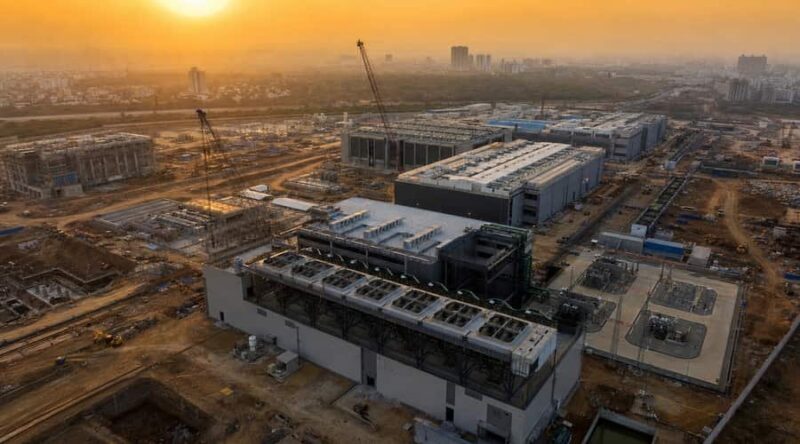
From massive data centers and specialized chips to power plants and fiber networks, the race to dominate artificial intelligence is becoming one of the largest infrastructure investments in technology history.
Every few weeks, another headline grabs attention with a staggering figure. One company announces a $20 billion expansion of its AI capabilities, another commits $50 billion to new data centers, while another unveils plans for a massive computing campus designed to power the next generation of artificial intelligence.
To many people, these numbers seem almost impossible to justify. After all, how much computing power could a chatbot really need?
The answer is that technology giants are not simply investing in chatbots or virtual assistants. They are building the digital infrastructure that could power the next era of computing, much like broadband networks and cloud services transformed the internet over the last two decades.
AI Runs on Infrastructure, Not Magic
Artificial intelligence often feels invisible. A user types a question into an app and receives an answer within seconds, creating the impression that AI exists entirely in software.
Behind that simple interaction is an enormous physical network of specialized hardware.
Every AI request is processed by thousands of advanced processors working together inside massive data centers. These facilities rely on high-speed networking equipment, enormous storage systems, sophisticated cooling technology, and a constant supply of electricity to deliver responses in real time.
As AI models become larger and more capable, the amount of computing power required to train and operate them increases dramatically. A single modern AI model can require months of continuous processing and millions of dollars in computing resources before it is ready for public use.
This is why infrastructure has become just as important as the models themselves.
The Data Center Has Become the New Battleground
For years, technology companies competed by building better software and attracting more users. Today, the competition extends far beyond applications.
The real race is taking place inside AI data centers.
These facilities are designed specifically to handle the enormous workloads generated by artificial intelligence. Instead of serving simple websites or cloud storage, they process billions of calculations every second, enabling AI systems to generate text, create images, analyze data, write code, and assist millions of users simultaneously.
Building these campuses is expensive, but owning them gives companies greater control over performance, reliability, and long-term costs.
As demand for AI continues to grow, infrastructure is becoming a strategic advantage rather than just a business expense.
Chips, Electricity, and Fiber Are the New Strategic Resources
The AI boom has also changed what technology companies compete for.
Instead of focusing only on software talent, they are now investing heavily in advanced chips, fiber-optic networks, land for new facilities, and reliable sources of electricity.
This shift reflects a simple reality: artificial intelligence cannot scale without physical resources.
Every new AI feature, whether it powers a search engine, a coding assistant, or a personal productivity tool, requires computing power running somewhere in the background. As millions of people begin using these services every day, the demand for infrastructure grows just as quickly.
Electricity, once considered an operational detail, is now becoming one of the most valuable resources in the AI economy. Some new AI campuses are expected to consume as much power as small cities, leading companies to explore renewable energy projects, nuclear partnerships, and dedicated power agreements to secure their future capacity.
Why Tech Giants Cannot Afford to Slow Down
The massive spending is not simply about keeping up with competitors. It is about securing a position in what many believe will be the next major computing platform.
The company with the strongest infrastructure can deliver faster AI services, support more users, reduce operating costs, and attract developers building new applications.
That creates a powerful cycle.
Better infrastructure leads to better performance. Better performance attracts more customers. More customers generate more revenue, which funds even larger investments in infrastructure.
This is why companies continue announcing multi-billion-dollar AI projects despite already spending record amounts.
They are investing not only for today’s products but for the technologies that may define the next decade.
READ ALSO: Every new iOS 27 feature that’s worth knowing about.
What This Means for Everyone Else
Most people will never set foot inside an AI data center, but they will experience the effects of these investments every day.
More computing capacity should lead to faster and more capable AI assistants, smarter productivity tools, improved search experiences, and new software that can automate increasingly complex tasks.
The infrastructure boom is also creating demand for engineers, construction specialists, data center operators, energy providers, cybersecurity professionals, and AI researchers, demonstrating that the impact extends far beyond the technology sector itself.
At the same time, the rapid expansion of AI raises important questions about energy consumption, sustainability, and the long-term environmental cost of supporting increasingly powerful computing systems.
The Bigger Picture
It is easy to view artificial intelligence through the lens of chatbots and image generators because those are the products people interact with every day.
Technology companies, however, are playing a much longer game.
They are investing hundreds of billions of dollars to build the infrastructure that could become as essential to the future as cloud computing, smartphones, and the internet itself. Data centers, specialized chips, power grids, and fiber networks may not generate the same excitement as a new AI assistant, but they are the foundation that makes every AI breakthrough possible.
The AI race is no longer just about creating the smartest model. It is about building the infrastructure that will power the next generation of digital experiences, and the companies laying that foundation today may be shaping the future of technology for years to come.