



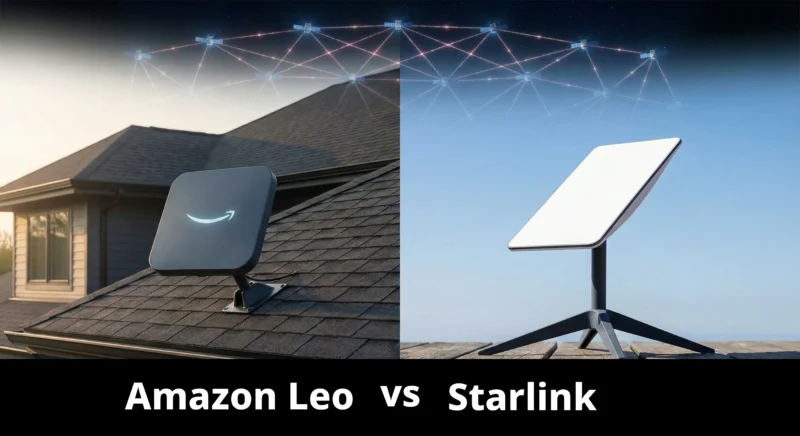
Starlink is no longer the only satellite internet company knocking on South Africa’s door. Communications Minister Solly Malatsi has confirmed that several other low earth orbit satellite operators are also seeking licences to operate in the country, widening a regulatory battle that has so far centred almost entirely on Elon Musk’s company.
In a letter addressed to ANC MP Khusela Diko, who chairs the Portfolio Committee on Communications and Digital Technologies, Malatsi named MzansiSat, Amazon Leo, China Satellite Network Company, Spacesail and Space24 as operators actively pursuing entry into the South African market alongside Starlink. The letter, titled “Setting the record straight” and dated Sunday, appears to be Malatsi’s latest attempt to push back against accusations that he has been quietly favouring Starlink through private meetings and efforts to soften local ownership laws.
The disclosure comes at a sensitive moment for the minister. Diko had issued Malatsi a formal demand the previous Wednesday, giving him until Monday to provide a full written account of his dealings with Starlink and the public affairs firm Resolve. Malatsi’s response leans on the argument that meeting with industry players broadens his understanding of the sector without dictating his decisions. He also used the letter to reject claims that Resolve, chaired by former DA leader Tony Leon, played any mediating role in his engagement with Starlink.
SEE ALSO: Uganda Grants Starlink Licence After Restrictions
At the heart of the dispute is South Africa’s Electronic Communications Act, which requires companies holding network service licences to have at least 30 percent ownership by historically disadvantaged South Africans. Starlink, wholly owned by SpaceX, has resisted this rule globally and has instead pushed for an equity equivalent programme as an alternative route to compliance. Diko has criticised this push as an attempt to bend the law in Starlink’s favour, drawing comparisons to how private interests shaped government decisions during the state capture era.
Other operators appear to be approaching the same regulatory hurdle differently. Amazon Leo, for instance, has taken the route of partnering with already licensed local players such as Vodacom and Vanu rather than pursuing a licence of its own, a strategy that sidesteps the ownership dispute entirely. Whether Spacesail, Space24, MzansiSat and China Satellite Network Company will follow a similar partnership model or seek direct licensing remains unclear for now.
The growing list of interested operators signals just how attractive South Africa’s connectivity market has become. With large parts of the country still underserved by fibre and traditional mobile infrastructure, satellite backhaul and direct to consumer broadband represent a real commercial opportunity, and none of these companies appear willing to sit out the race while the ownership debate plays out in parliament.
For now, the spotlight remains on Malatsi and how he navigates the perception of insider access, even as the list of companies waiting for regulatory clarity keeps growing.