




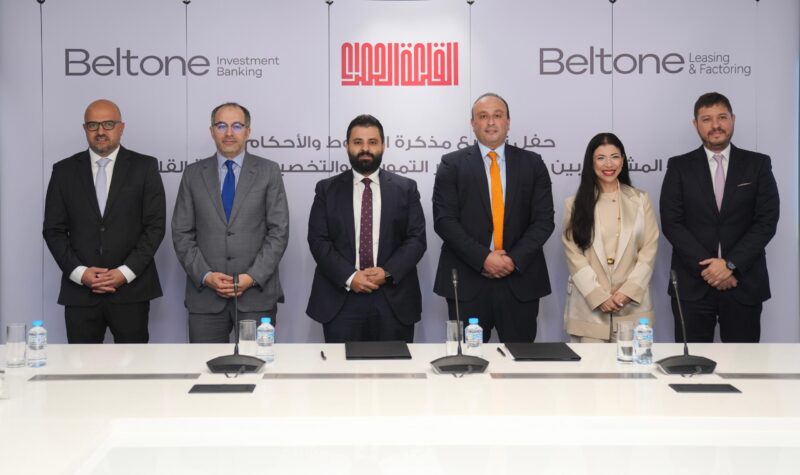
Egypt’s investment landscape is changing fast, and a new partnership between two of the country’s most recognised financial names is set to accelerate that shift in a significant way. Beltone Asset Management, a subsidiary of Beltone Financial Holding and one of Egypt’s most established investment banks and asset managers, has announced a strategic partnership with Telda, the fast-growing Egyptian fintech platform known for its digital financial services.
The collaboration will allow Telda users to access Beltone’s full suite of investment products and mutual funds directly through the Telda mobile app, making professional-grade investing available to millions of Egyptians for the first time without stepping into a bank branch or filling out a single paper form.
SEE ALSO:Agenz Raises $5M to Drive Morocco’s Real Estate Digital Transformation
The deal is straightforward in design but significant in what it means for ordinary Egyptians looking to grow their savings. Under the partnership, Telda users can open investment accounts digitally using only their national ID, with no paperwork or branch visits required.
Once the account is set up, users can invest in a range of funds managed by Beltone Asset Management and receive redeemed proceeds directly on their Telda cards. That level of convenience has historically been reserved for wealthier or more financially sophisticated investors who could navigate Egypt’s traditional brokerage and asset management systems.
The investment products available through the partnership include the Meya Meya fund, the Sabayek gold investment fund, B-Secure which is a liquidity-focused fund, and Wafra EGX 33, a Shariah-compliant equity fund that targets performance through companies listed on the Egyptian Exchange.
A selection of sector-focused investment funds is also part of the offering. Users can monitor stock prices in real time and buy and sell through the app with zero commission fees, excluding precious metals funds, which removes one of the most common financial barriers that has kept retail investors on the sidelines.
Executives from both organisations have been clear about what they want this partnership to achieve. Khalil El Bawab, CEO of Local and Regional Markets at Beltone Holding, said the partnership reflects the company’s commitment to broadening access to investment solutions while evolving how investors engage with financial services.
Ahmed Sabbah, CEO of Telda, described the deal as an important step toward delivering a more integrated financial experience for users by bringing together everyday financial services and investment solutions within a single platform.
The timing of this partnership is not accidental. In 2025, Egypt’s Financial Regulatory Authority approved the use of fintech across brokerage operations at firms including Telda, Beltone, and Thndr, allowing investors to open accounts and access investment services entirely online. That regulatory green light opened the door for exactly this kind of collaboration, and both companies have moved quickly to take advantage of it.
The numbers behind Egypt’s retail investing boom tell the broader story. The number of investor accounts registered on the Egyptian Exchange surged 215 percent year-on-year in the first quarter of 2026, according to FRA data.
Net asset value across all investment funds rose to EGP 410.6 billion, equivalent to roughly 8.1 billion US dollars, by the end of that quarter. The number of active funds grew to 187, and fund certificates held by investors more than doubled over the same period.
For Beltone Asset Management, this alliance opens a critical new distribution channel to reach digitally engaged Egyptians who may never have considered investing before.
For Telda, it strengthens its push to become Egypt’s most complete financial super-app. With millions of Egyptians already relying on mobile apps for daily payments and money transfers, the next logical step has always been bringing investing into that same experience.
This partnership does exactly that, and at a moment when both market conditions and regulatory support are firmly pointing in the right direction.