


Africa’s biggest mobile operators are no longer just building networks. They are now building the future of artificial intelligence in languages millions of Africans actually speak, and a major new report from the GSMA has put the full picture into focus.
According to the GSMA’s Mobile Economy Africa 2026 report, mobile technologies and services contributed $240 billion to Africa’s economy in 2025, equivalent to 7.8% of GDP, supporting approximately 13 million jobs and generating $45 billion in public revenues. That backdrop makes the AI push from operators even more significant.
ALSO READ :Flutterwave Valued at $3.25 Billion Following Strategic Investment From Ripple
Across the continent, operators are evolving beyond their traditional role as connectivity providers to become digital transformation partners, deploying artificial intelligence, expanding digital services and opening network capabilities to developers through standardised APIs. According to GSMA Intelligence research, 79% of operators in Africa identify becoming a digital transformation partner as a primary enterprise objective.
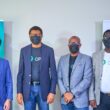
At the heart of this shift is a continent-wide collaboration announced under the banner “AI Language Models in Africa, By Africa, For Africa.” The GSMA, together with Airtel, MTN, Vodacom, Orange, Axian Telecom, Ethio Telecom, Cassava Technologies, Lelapa AI, Awarri, Masakhane African Languages Hub, Pawa AI, Qhala, the African Population and Health Research Center, and the World Sandbox Alliance, announced the initiative to strengthen Africa’s AI ecosystem by developing inclusive African AI language models.
The urgency behind this push is hard to ignore. Africa is home to more than 2,000 languages, yet only a small fraction feature in digital systems or AI models, and this exclusion risks deepening existing digital and economic divides. The world’s most powerful large language models were largely built around a handful of dominant global languages, leaving billions of Africans without AI tools that understand their words, context, or culture.
The initiative aims to enable the creation of AI-driven applications in areas such as education, healthcare, public service delivery, creative industries, and customer service, and it follows a feasibility study which confirmed that African-led language models are both technically feasible and economically viable.
The project covers everything from major indigenous languages to Africanised English, French, and Arabic dialects, and it prioritises broader ecosystem collaboration rather than duplicating siloed language models. In April 2026, that work produced a concrete output when Pleias and the GSMA released CommonLingua, an open-source language identification model purpose-built to unlock African language data at scale, designed to support more than 60 African languages.
The GSMA’s Mobile Economy Africa 2026 report also highlights growing momentum behind GSMA Open Gateway, which enables operators to provide standardised network APIs to developers and enterprises, helping unlock new digital services while supporting fraud prevention, identity verification and digital trust across financial services, e-commerce and digital government.
Mobile’s economic contribution is forecast to reach $290 billion by 2030, and the GSMA warns that Africa’s defining digital challenge is no longer network coverage but closing the usage gap, with approximately 63% of Africans covered by mobile broadband but not yet using mobile internet. The AI language push is part of a broader effort to make that internet feel relevant, usable, and culturally familiar to hundreds of millions of people.
Angela Wamola, Head of Africa at the GSMA, captured the intent plainly. “Africa’s diversity of languages and cultures is one of our greatest strengths, yet it has too often been overlooked in the development of global AI systems. This initiative is about turning that challenge into an opportunity, building African-led AI capacity, empowering innovation across local industries, and ensuring Africa shapes the digital future on its own terms,” she said.
The GSMA and its partners have committed to showcasing progress at upcoming events, with the broader goal of building an AI ecosystem that belongs to Africa, not just one that reaches it.