




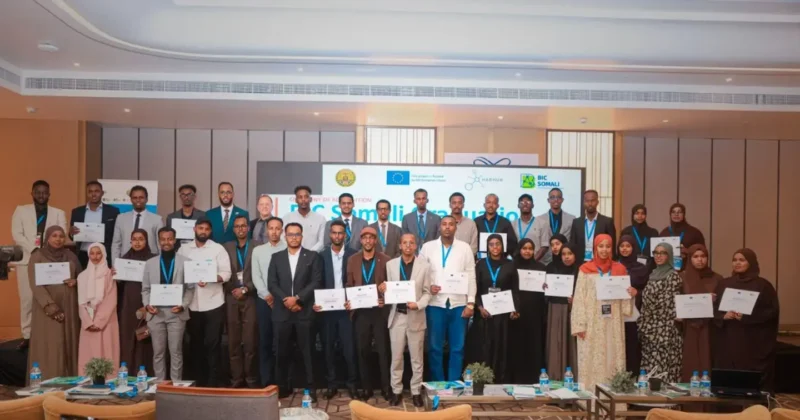
Somalia has launched a national startup network to connect entrepreneurs, investors, innovation hubs, and business organizations as the country works to strengthen its entrepreneurship ecosystem.
The platform aims to create a more connected environment for startups by bringing founders, incubators, investors, and support organizations together. It will help participants share resources, build partnerships, and improve access to business support.
The network was launched during the BIC Somali Innovation Forum in Mogadishu as part of the BIC Somali Project. The initiative focuses on strengthening entrepreneurship and innovation across Somalia.
Building a More Connected Startup Ecosystem
Somali entrepreneurs face challenges common to many emerging startup ecosystems. These include limited access to funding, fragmented support systems, and fewer links to investors and established business networks.
The new startup network aims to address these challenges by creating stronger connections between key players in the ecosystem.
The BIC Somali Network brings together innovation hubs in Mogadishu and Hargeisa with chambers of commerce in Kismayo, Baidoa, and Bosaso. It creates a wider support structure for entrepreneurs across different regions of Somalia.
The network builds on the work of the BIC Somali Project, which has already supported hundreds of entrepreneurs through training, incubation programmes, and business development initiatives.
The programme received more than 3,600 applications across three cohorts. It trained around 500 entrepreneurs, supported more than 200 entrepreneurs through incubation programmes, and assisted 75 businesses in its latest cohort.
Supporting Somalia’s Entrepreneurship Goals
The BIC Somali Project is supported by the European Union and implemented by the United Nations Industrial Development Organization (UNIDO). The programme aims to strengthen Somalia’s entrepreneurship and innovation capacity.
Through the new network, Somalia hopes to improve access to mentorship, investment opportunities, and partnerships that can help early-stage businesses grow.
The move reflects a wider trend across Africa, where governments and development organizations are investing in startup infrastructure to support digital businesses and young entrepreneurs.
The network is still in its early stages, but its impact will depend on how effectively it connects founders with the resources they need to scale.
For Somalia, building stronger links between entrepreneurs, support organizations, and investors could create new opportunities and contribute to long-term economic growth.