




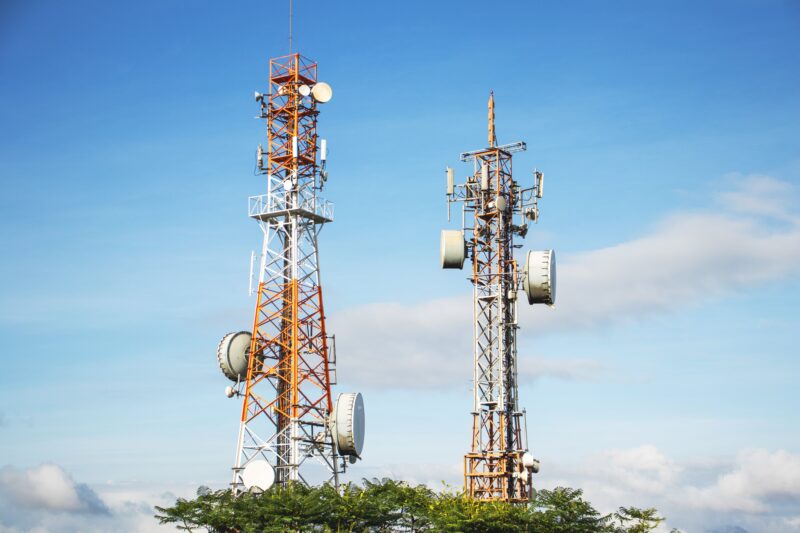
The Federal Government will begin deploying about 3,700 telecommunications towers across rural Nigeria starting in October 2026. The move is designed to bring mobile and internet coverage to more than 20 million citizens who currently live without any form of connectivity.
The Minister of Communications, Innovation and Digital Economy, Bosun Tijani, made the disclosure during a briefing in Abuja. He said President Bola Tinubu had personally sanctioned the project. According to him, it has been one of the toughest infrastructure efforts the ministry has undertaken so far.
DON’T MISS:Abuja Telecom Summit Sets Africa’s Digital Path to 2031
“Mr President also sanctioned that project. Today we’re in a place where, before the end of the year, we’ll also start to deploy close to 3,700 towers,” Tijani said. He added that assembling the funding and logistics behind the rollout took considerable effort. Even so, deployment will now begin around October.
The tower project has been on the government’s radar since December 2025, when it was first announced. At the time, officials said the towers would connect over 23 million Nigerians in previously unserved communities. As a result, these citizens would gain access to mobile services, the internet, and e-government platforms for the first time.
Earlier this year, the ministry said it was targeting at least 1,000 of the 3,700 towers within 2026 alone. Officials described that milestone as an important early marker for the wider connectivity push. The towers are part of the Nigeria Universal Communication Access Project. Tijani has described it as a wholly green network, built to run on sustainable power rather than the diesel generators many operators currently rely on.
Alongside the tower rollout, the government is also laying 90,000 kilometres of fibre optic cable nationwide. Officials say this will improve connectivity across every state, local government, and ward in the country. Tijani linked both projects to a broader set of reforms under the Tinubu administration. These include the designation of digital infrastructure as Critical National Infrastructure, adjustments to telecom tariffs, and the harmonisation of taxes affecting the sector.
Despite recent progress, Nigeria’s rural connectivity gap remains significant. Industry data shows rural median upload speeds rose by more than 47 percent between September 2025 and March 2026. Still, a large share of rural communities across Africa have no mobile broadband coverage at all. Many others are limited to slower 2G or 3G networks. Telecom operators point to high diesel costs, low population density, and community-level friction as reasons many rural areas have been passed over for commercial investment. This is why direct government funding has become central to closing the gap.
Finally, Tijani used the briefing to confirm another milestone. Nigeria will launch an alphanumeric postcode system on October 1. This places the country among a small group of nations using that level of addressing technology, a development he tied to the same digital transformation agenda driving the tower and fibre rollouts.