



SpaceXAI is turning to NVIDIA’s Vera CPU as it prepares to scale its next generation of agentic AI infrastructure across Earth and, eventually, into space.
NVIDIA announced Monday that SpaceXAI will deploy Vera CPUs for the work surrounding its next generation of AI applications. The move will support agentic AI workloads while SpaceXAI expands the infrastructure behind Grok toward gigawatt-scale computing capacity.
The partnership is notable because AI infrastructure has traditionally placed much of its attention on GPUs. But as AI systems become more autonomous, the work happening around the models is becoming increasingly important.
AI agents need to do more than generate responses. They must orchestrate tools, execute code, process data and run simulations between model calls. NVIDIA designed Vera to accelerate these CPU-heavy workloads while helping keep the GPUs running at full utilization.
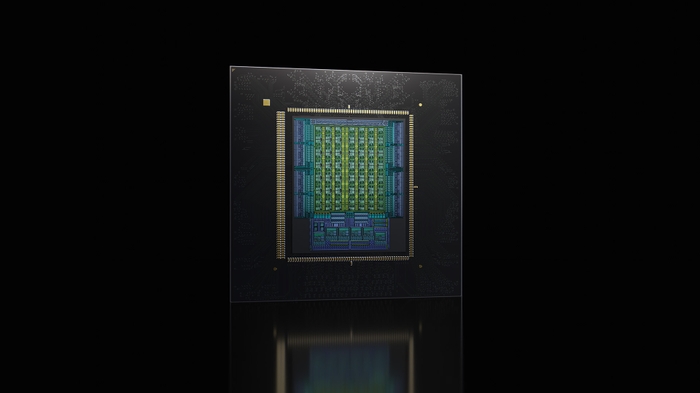
NVIDIA describes Vera as its first CPU built specifically for AI agents. The processor features 88 NVIDIA-designed Olympus cores and LPDDR5X memory capable of delivering up to 1.2TB per second of memory bandwidth.
According to NVIDIA, Vera can deliver up to 1.8 times faster task completion than x86 CPUs across workloads including agentic AI, reinforcement learning and data processing. Because this is NVIDIA’s own performance claim, it should be viewed in that context rather than as an independent benchmark.
For SpaceXAI, however, Vera is only one part of a much larger computing strategy.
The company plans to expand the AI infrastructure behind Grok using NVIDIA’s Vera Rubin platform as it scales toward gigawatts of computing capacity. Vera is the CPU component of that broader architecture, working alongside NVIDIA’s accelerated computing and networking technologies to support large-scale AI workloads.
But the most unusual part of the partnership comes next.
SpaceXAI plans to take an optimized version of the Vera Rubin architecture beyond Earth. Its first-generation Starmind AI satellite is being designed around an optimized NVIDIA Vera Rubin NVL72 system, extending the same rack-scale computing architecture into orbit.
That means the partnership is not simply about putting more processors into conventional data centers. SpaceXAI is exploring an AI infrastructure model that can operate across radically different environments, from terrestrial computing facilities to specialized systems in space.
Orbital computing brings its own set of challenges. Hardware has to operate within strict power, thermal, physical and reliability constraints, while the system must also communicate with infrastructure on Earth.
NVIDIA and SpaceXAI are therefore working to adapt the Vera Rubin architecture for those conditions rather than simply placing a conventional data-center rack on a satellite. The Starmind system remains a planned deployment, meaning the orbital infrastructure is not operational yet.
The move also highlights how the rise of agentic AI is changing the infrastructure race.
As AI agents become capable of taking actions, using external tools and completing multi-step tasks, the computing required between model calls becomes more significant. That puts greater pressure on the CPUs responsible for coordinating those operations, even as GPUs continue to handle the heavy model workloads.
For SpaceXAI, that demand is now being addressed at enormous scale.
The company is expanding its Grok infrastructure toward gigawatts of computing capacity on Earth while planning to extend NVIDIA’s Vera Rubin architecture into orbit through Starmind. Recent reporting puts the first Starmind AI1 launch target in the fourth quarter of 2027, although the orbital deployment remains a future plan.
The bigger story, then, is not simply that SpaceXAI has chosen a new NVIDIA CPU.
It is that the AI infrastructure race is beginning to stretch beyond the traditional data center. As companies look for more computing power to support increasingly autonomous AI systems, the next generation of AI factories could eventually exist not only on Earth, but above it.
For SpaceXAI, NVIDIA’s Vera CPU is becoming part of that broader push — helping power the agents on the ground today while the company works toward a future where AI computing can extend into orbit.