




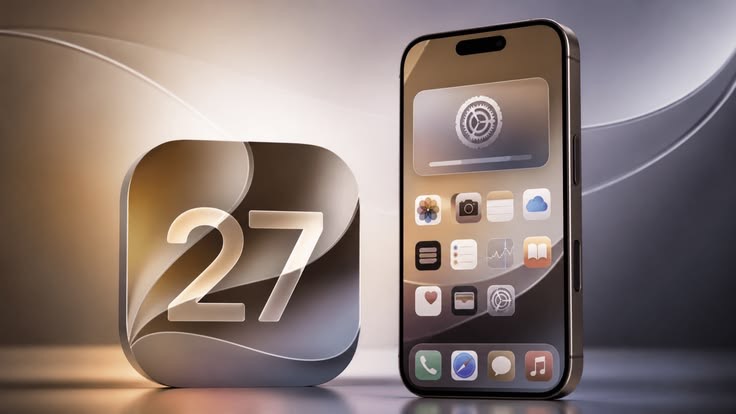
Apple has officially pulled back the curtain on iOS 27, introducing a sweeping overhaul to its mobile operating system. Unveiled at the Worldwide Developers Conference (WWDC), the software update shifts away from incremental cosmetic changes to focus deeply on foundational performance, a major reimagining of parental controls, and a complete reconstruction of its virtual assistant into a conversational chatbot known as “Siri AI.”
Craig Federighi, Apple’s Senior Vice President of Software Engineering, summarized the release during the keynote, stating:
“We’re delivering the next generation of Apple Intelligence across our platforms; introducing Siri AI, a profoundly more intelligent, knowledgeable, and capable Siri; expanding child safety features with intuitive new tools for families; and making our software platforms faster, more reliable, and more delightful than ever.”
For users looking to navigate the extensive list of changes, several core features stand out as the definitive updates worth knowing.
The most dramatic shift in iOS 27 is the complete rebuilding of Siri. Rebranded as Siri AI, the assistant transitions from a voice activated command tool into a sophisticated chatbot. Developed in collaboration with Google and running securely within Apple’s Private Cloud Compute infrastructure, Siri AI now handles complex, multi-step actions and understands context across various apps.
Crucially, Siri now has its own standalone app on the Home Screen. The app functions similarly to other modern generative AI platforms, offering a chat-style interface that logs past conversations and syncs across devices via iCloud. Users can also upload files and photos directly into the chat for analysis. Additionally, a new “Visual Intelligence” mode integrated into the Camera app allows users to photograph real-world items—such as meals for nutritional breakdowns or business cards for contact saving and receive instant information from Siri.
Responding to growing calls for robust digital wellness tools, Apple has introduced its most comprehensive suite of parental controls to date. The Screen Time interface has been fully redesigned to provide parents with an instant, clear view of their child’s device usage.
New “Time Allowances” let guardians enforce distinct boundaries around three primary categories: entertainment, games, and social media. These schedules are customizable by day and time, utilizing guidelines recommended by clinical and child development experts. Furthermore, a new “Ask to Browse” protocol blocks children from visiting unapproved websites or adding new contacts in Messages, FaceTime, and Phone without explicit real-time approval from a guardian. On the security front, Apple’s Communication Safety feature now active-filters violent content and gore in shared media, building on its existing nudity-blurring protocols.
Beyond artificial intelligence, iOS 27 offers substantial daily usability improvements. The platform introduces a unified “Liquid Glass” user interface, featuring a dedicated transparency slider in the settings to let users adjust the translucency and readability of menus. For the first time, iPhone users can also decouple audio settings, setting individual volumes for ringtones, alarms, and alerts independently.
Under the hood, Apple has optimized performance metrics significantly. System actions are noticeably snappier, with the company noting that new image captures in the Photos app load up to 70 percent faster. The software also adapts more smoothly between cellular and Wi-Fi networks to proactively reduce dropped calls.
The standard performance, design, and parental safety features of iOS 27 will be widely accessible, supporting all devices that previously ran iOS 26 (requiring an A13 Bionic chip or newer). However, the resource-heavy Apple Intelligence and Siri AI features remain strictly gated. Due to local processing requirements, advanced AI tools will require an iPhone 15 Pro or newer models equipped with at least 8 GB of RAM. Furthermore, Apple confirmed that Siri AI will face a delayed rollout in China and the European Union while the company navigates ongoing regional regulatory requirements.