




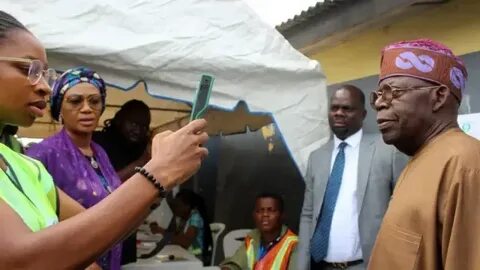
Nigeria’s approach to modernizing its elections has created a curious paradox: the more technology the Independent National Electoral Commission introduces, the heavier the financial burden becomes. The 2023 general elections marked Nigeria’s most technologically advanced ballot in the Fourth Republic’s history, yet the costs tell a troubling story about the nation’s dependence on imported systems and foreign infrastructure that drain resources from an already strained budget.
The numbers paint a stark picture. Nigeria spent $625 million on the 2015 general elections, a figure that translates to $9.33 per voter according to data from the National Institute for Legislative Studies. This cost exceeded spending by India, the world’s largest democracy with a population six times larger than Nigeria’s. The financial commitment only intensified for 2023. A significant portion of these expenditures went toward information technology systems and infrastructure, voter registration databases, training programs, and the deployment of biometric devices across over 170,000 polling units nationwide. The scale of investment reveals how expensive it has become to simply administer elections in Nigeria, particularly when nearly every critical component relies on technology purchased from abroad.
YOU CAN ALSO READ:African Fintech Enters New Era as Industry Leaders Chart Path Forward Following Milestones
The Bimodal Voter Accreditation System, or BVAS, emerged as the centerpiece of Nigeria’s digital election strategy. This biometric device reads permanent voter cards and authenticates voters using fingerprint and facial recognition technology. Alongside it came the INEC Results Viewing Portal, known as IReV, designed to upload and display results in real time from polling units across the country. Both systems require consistent power supply, functional internet connectivity, and trained personnel to operate effectively. Neither comes cheaply, and neither can be fully developed domestically.
The imported nature of this technology reveals a critical vulnerability that compounds costs at multiple levels. Nigeria lacks the technical capacity to manufacture these systems locally, forcing INEC to procure them internationally at foreign exchange rates that make them increasingly expensive as the naira weakens. Training election officials to operate equipment designed elsewhere, purchased elsewhere, and maintained by foreign contractors multiplies the financial burden. When the 2011 biometric voter registration exercise rolled out, Nigeria spent roughly $576.9 million in three weeks to register 70 million voters. Bangladesh, a developing country of comparable size, conducted a far more comprehensive biometric registration over eleven months for just $65 million. The disparity exposes how inefficient Nigeria’s procurement process has become and how much of the money spent on imported technology never strengthens the electoral system itself.
Beyond equipment acquisition, Nigeria shoulders the cost of inadequate infrastructure that makes imported technology harder to deploy effectively. Weak broadband networks, patchy internet connectivity, and reliance on aging 3G networks in many regions mean that the real-time transmission of results,a core promise of the new systems, often fails to materialize. Election officials in remote areas struggle with devices designed for digital environments they cannot access. The servers hosting election data operate on Amazon Web Services, an international platform that adds another layer of foreign dependency and ongoing costs. Personnel training remains perpetually expensive because staff turnover is high and technical expertise remains scarce across INEC’s workforce.
Nigeria’s experience illustrates a painful truth: importing technology without building the foundational capacity to support it creates spiraling costs. As the country pursues increasingly sophisticated electoral systems, the financial burden grows heavier while the domestic capacity to manage, repair, or evolve these systems remains underdeveloped. Until Nigeria develops the local technical infrastructure and expertise to reduce dependence on imported solutions, elections will continue consuming resources at a rate that rivals far wealthier democracies.