




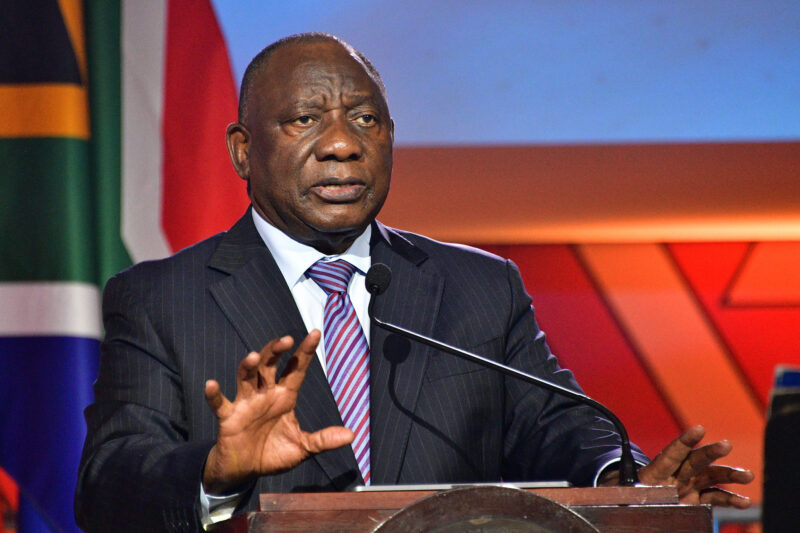
President Cyril Ramaphosa will officially launch South Africa’s new digital immigration system on Wednesday. The event takes place at OR Tambo International Airport. It puts machine learning and biometric screening at the centre of the country’s efforts to control who crosses its borders.
The system is called the Electronic Travel Authorisation, or ETA. The Presidency describes it as a modern digital immigration ecosystem. It pairs biometric verification with machine learning and an upgraded Electronic Movement Control System. The aim is simple: tighten border security while speeding up entry for genuine visitors.
READ ABOUT:South Africa Turns to WhatsApp to Get Gen Z Voters Back to the Ballot Box
In fact, the system has quietly been running since May, well before this formal rollout. Home Affairs Minister Leon Schreiber says it has already processed more than 203,000 applications. Of those, officials rejected over 5,500 fraudulent submissions. The flagged cases included forged passports and tampered documents. Machine learning models built into the platform caught them.
So how does the technology actually work? According to Schreiber, it starts long before a traveller reaches passport control. The system checks roughly 40 parameters to confirm a passport is genuine. It also uses liveness detection, matching an applicant’s selfie against their passport photo. Then, once travellers land, South Africa’s Border Management Authority adds a second layer of checks. Facial recognition confirms identity and visa status right at the point of entry.
Industry watchers see this as overdue rather than groundbreaking. Guy Leitch, a Johannesburg-based aviation analyst, put it plainly: automated passport control has existed in Europe for years, and Africa is only now catching up. Still, he was careful not to oversell it. The ETA only covers travellers who use official entry points, he noted. It does nothing for people who avoid them entirely, such as those wading across rivers or slipping through areas like Kruger National Park. In his view, the technology mainly makes formal processing faster and harder to exploit. It won’t seal every gap along South Africa’s borders.
That distinction matters right now. Immigration has become a genuinely volatile issue in South Africa this year. Anger over undocumented migration and weak border enforcement fuelled anti-immigration protests, and some turned violent. The tension even spilled into diplomacy. Both Ghana and Nigeria raised concerns about how their citizens were being treated during the unrest. In June, a group called March and March urged undocumented foreigners to leave the country by month’s end.
For his part, Ramaphosa has tried to draw a clear line. He insists everyone living in South Africa must do so legally. At the same time, he has warned citizens against taking enforcement into their own hands.
Home Affairs treats the ETA as a first step, not a finished product. Ndileka Cola, the department’s head of communications, confirmed that infrastructure is going in across the country’s entry points. However, she declined to share further detail ahead of Wednesday’s launch. Looking ahead, the department wants to grow the ETA into a full digital visa platform. Eventually, it would cover visitor, work and study visas, phasing out the paper-based systems that have long slowed processing and invited fraud.
So what will travellers actually notice first? Speed, most likely. Tourism Minister Patricia de Lille said earlier this year that applicants using dedicated ETA lanes were cleared in under a minute, with a 94 percent approval rate. Still, one question remains unanswered. Can this system do more than shorten queues? Whether it truly dents the fraud and irregular migration driving South Africa’s immigration debate is something only time will tell.