




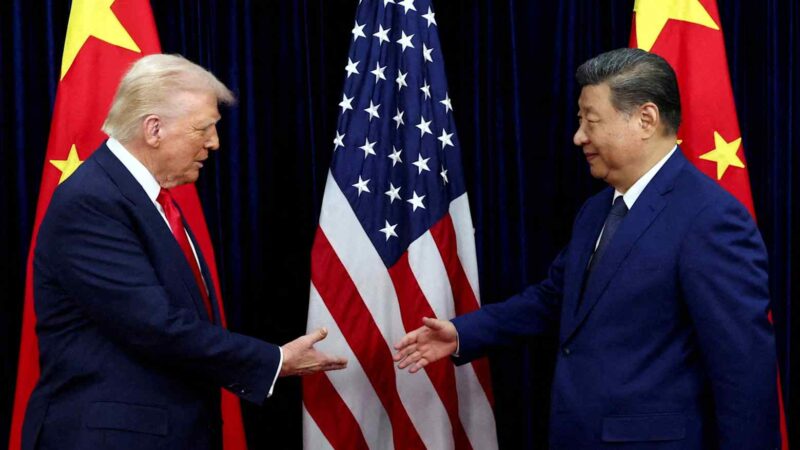
Artificial intelligence and advanced technology are expected to be part of broader discussions during upcoming high-level talks between US President Donald Trump and Chinese President Xi Jinping scheduled for Thursday, May 14 and Friday, May 15, 2026. While the meeting covers a wide range of diplomatic and economic issues, growing global attention around AI development, semiconductor access, and digital security has placed technology at the center of international policy discussions. Over the past few years, AI has moved from being a purely commercial technology into a strategic asset that influences national competitiveness, security planning, and industrial policy. As a result, any major dialogue between the United States and China is now increasingly viewed through the lens of technological competition as much as traditional diplomacy.
SEE ALSO: AI Agents: The Rise of AI Agents and the Shift Away From just chatbots
One of the key underlying themes expected to shape the broader conversation is artificial intelligence safety and governance. Governments around the world are becoming more involved in how advanced AI systems are developed and deployed, particularly as models grow more capable and widely used across industries. The United States and China remain the two largest players in global AI development, and both countries are investing heavily in model training, infrastructure, and applied AI systems. While no formal agenda has been fully detailed, AI-related concerns such as system safety, competitive balance, and long-term technological leadership are widely seen as relevant to ongoing diplomatic and economic discussions between the two powers.
Another major area of attention is semiconductor access and export controls, which remain one of the most sensitive points in US–China technology relations. Advanced chips are essential for training and running modern AI systems, and restrictions on semiconductor exports have become a key policy tool in managing technological competition. Recent debates have also focused on whether companies like NVIDIA should be allowed to sell high-performance chips, such as the H200 series, to China. Supporters of tighter restrictions argue that limiting access helps maintain technological advantages in AI development, while critics warn that overly strict controls could fragment global supply chains and slow innovation. This ongoing debate reflects the broader tension between economic interdependence and national security priorities in the AI era.
Beyond chips and hardware, the discussions are also expected to reflect growing concerns about how AI systems may influence future security and economic stability. AI technologies are increasingly being used in areas such as cybersecurity, data analysis, automation, and content generation, making them strategically important at both commercial and governmental levels. Policymakers in both countries are now paying closer attention to how AI could be used in sensitive domains, including critical infrastructure and information systems. This has led to a wider push for regulatory frameworks and risk management strategies, even as companies continue accelerating development of more advanced models.
The upcoming meeting therefore highlights a broader shift in global affairs, where artificial intelligence is no longer treated solely as a technology sector issue, but as a core component of international relations. The intersection of AI development, semiconductor supply chains, and geopolitical strategy is increasingly shaping how countries engage with one another at the highest level. While the outcomes of the talks remain uncertain, the inclusion of technology-related concerns underscores how central AI has become in shaping modern economic and security discussions. As both nations continue to advance their AI capabilities, the balance between cooperation, competition, and control is likely to remain a defining feature of US–China relations in the years ahead.