



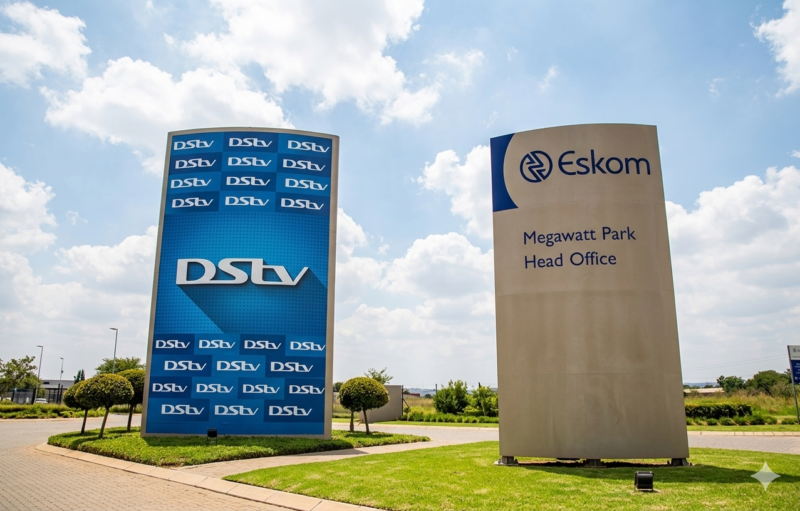
Two big stories are making the rounds in South Africa this week, and both carry real weight for everyday households. One signals the slow but steady sunset of Eskom’s grip on the country’s electricity grid. The other is a notable update to what millions of budget-conscious South Africans watch on their TVs every evening.
Starting with Eskom, the writing has been on the wall for some time, but the numbers are now telling a very clear story. Eskom is in its last decade as the major producer of electricity in South Africa.
MUST READ:Flutterwave Partners with Tempo to Launch Multi-Rail Stablecoin Payment Solutions
The National Transmission Company projects a sharp decline in Eskom’s supply share, as independent producers and the utility itself plan a combined 283 GW of new renewable capacity, with Eskom accounting for just 20 GW of that total, roughly 7%. That means private South African companies are on course to produce four times more power than Eskom’s entire current fleet.
That is a remarkable shift from the era when Eskom held an almost unchallenged monopoly over how the country kept its lights on. Years of load shedding, rising tariffs, and mounting debt have pushed households and businesses toward solar, batteries, and independent suppliers at a pace nobody fully anticipated a decade ago. Eskom’s steep electricity price increases gutted demand for its product, and promises of single-digit increases going forward have come far too late to stop the decline. The utility is not disappearing overnight, but its days of dominance are clearly numbered.
On the DStv front, the changes are more immediate and, for many, more welcome. Canal+, MultiChoice’s new owner, aims to invest nearly R2 billion in annual cost savings into growth, and the plan is to use that investment to lower decoder prices, increase content offerings, and improve distribution across the continent.
For subscribers on the more affordable end of the DStv lineup, this matters directly. DStv has strengthened its more affordable packages by adding new channels, broadening the entertainment mix available to viewers.
The Access package, which sits at the bottom of the pricing ladder, is one of the tiers getting attention under this broader strategy. Canal+ took control of Multichoice in September 2025 following a lengthy acquisition process, and in January 2026, the new parent group laid out a broad strategic plan to optimise operations and stem subscriber losses. Multichoice had a peak of roughly 23.5 million subscribers in the 2023 financial year, and Canal+ says it is best placed to help the group return to that pre-2023 growth trajectory.
What ties both stories together is a broader truth about South Africa right now. Institutions that once operated without serious competition are being forced to adapt or step aside.
Eskom built its legacy over a century, and DStv dominated pay television for three decades. Both are now operating in a world where alternatives exist and consumers have real choices. The question going forward is whether the changes being made are enough, and fast enough, to remain relevant to the millions of South Africans who still depend on them daily.