



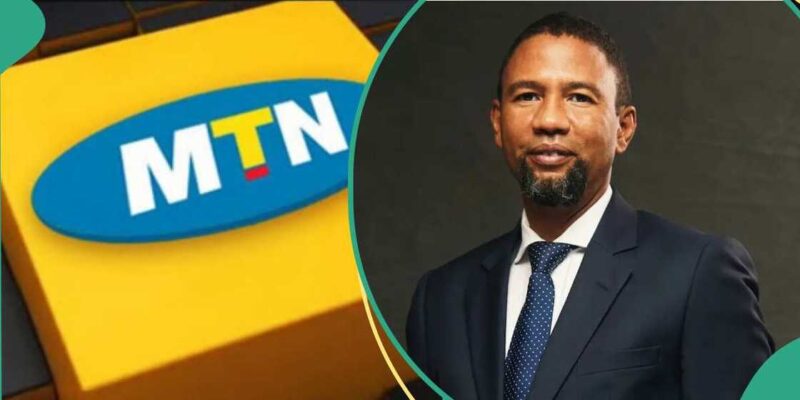
Karl Toriola, the Chief Executive Officer of MTN Nigeria, has offered one of his most direct explanations yet for why truly unlimited data plans remain unavailable on Nigeria’s mobile networks, tying the issue directly to the financial survival of telecom operators in the country.
Toriola made the remarks on Saturday, June 6, 2026, during a high-profile public hearing tagged “Data on Trial,” held at MTN’s headquarters in Ikoyi, Lagos. The courtroom-style session, moderated by media personality Ebuka Obi-Uchendu and attended by popular content creators and influencers including Peller, Jarvis, Taaooma, and Mr Macaroni, brought together consumers, technology experts, and network engineers to examine how mobile data is measured, consumed, and billed.
The event was convened against a backdrop of mounting frustration among Nigerian subscribers who believe their data bundles deplete too quickly. Complaints intensified following the Nigerian Communications Commission’s approval of a 50% telecoms tariff hike in January 2025, which led to a significant rise in airtime and data costs, leaving many Nigerians more concerned about getting full value from their spending.
READ ALSO:Why MTN Paid More Tax in Ghana Despite Bigger Revenue in Nigeria
Addressing the question of unlimited mobile plans directly, Toriola was unambiguous about where the industry currently stands. He revealed that before the recent pricing changes, MTN was functionally facing severe insolvency challenges, struggling to cover basic operational invoices for diesel, site rentals, and software licenses, and was on the verge of shutting down sites. That reality, he argued, makes offering unlimited mobile data plans financially impossible without first stabilizing the sector’s economics.
Toriola defended the cost of mobile data in Nigeria, saying the country remains among those with the cheapest data rates globally despite the recent tariff adjustment, challenging critics to compare Nigeria’s bundle prices against what subscribers pay in Kenya, Congo, and other countries around the world.
The CEO also pushed back on subscriber perceptions that data disappears suspiciously fast, insisting that device behavior is largely to blame. He advised users to disable automatic app updates and cloud backups over mobile networks, describing these background processes as significant data drains that many users do not notice.
He shared an anecdote about a senior MTN chief officer who was shocked by the scale of their data consumption, only to discover that WhatsApp had been configured to run a 126GB to 156GB backup nightly, and another case involving a general manager whose children were continuously streaming high-definition YouTube videos through a 5G router at home.
Toriola and the panel vigorously defended how modern network speeds inherently accelerate data usage, with the CEO using a clear analogy comparing basic network connections to a small car and advanced 5G networks to a high-powered V8 engine, explaining that faster speeds naturally consume more data in the same amount of time.
On the infrastructure front, Toriola confirmed that MTN is not pulling back despite the pressure. The company invested N1 trillion in network capacity in 2025, more than doubling its prior-year capital expenditure of N443.5 billion, a move made possible by the 50% tariff hike which came with a regulatory condition requiring operators to deliver improved service quality. MTN has also committed to spending another N1 trillion in 2026.
As reported by TechNext24, African telcos, particularly between 2024 and 2026, have had to navigate a difficult collision between the need for high capital expenditure to expand infrastructure and the pressure to keep services affordable for a largely low-income user base, making unlimited mobile data plans a structural challenge rather than a business choice.
For now, truly unlimited mobile data on Nigerian networks remains restricted to fixed broadband and fibre connections. Whether Toriola’s transparency offensive at events like “Data on Trial” will shift public opinion remains to be seen, but the MTN CEO has made clear that survival comes before sentiment when it comes to pricing decisions in Africa’s largest telecom market.